Start a Project

Anodizing Services

Anodizing SerPrototek's Advanced Finishing and Post-Processing Solutions

What is anodizing?

It is an electrochemical process that converts the surface of a metal, such as aluminum. Anodizing makes the surface more durable, corrosion-resistant, and electrically insulating. Unlike coatings or platings, the anodizing layer is grown from the metal itself. The process was developed and patented in the 1920s to protect seaplane parts from saltwater corrosion.
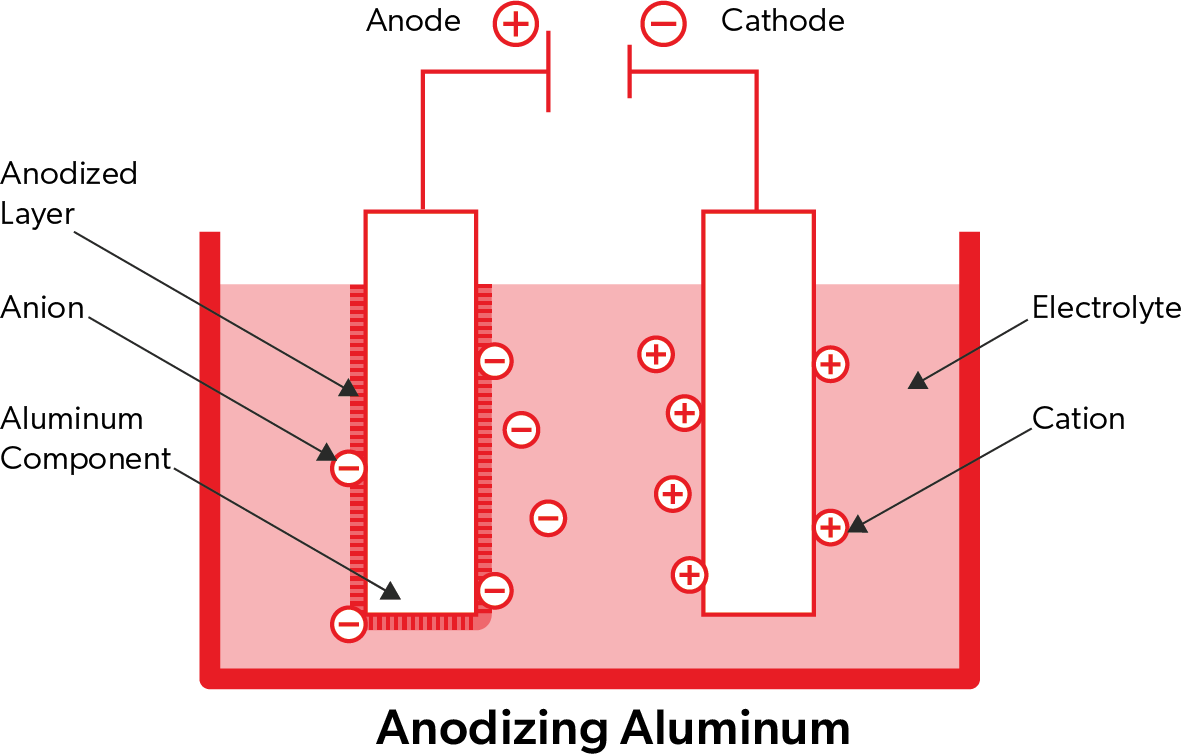
What is the electrochemical oxidation process behind anodizing?

  • How does it work? The metal acts as the anode in an electrolytic cell. Immersing the part in an acid electrolyte, such as sulfuric or chromic acid, and applying a direct current, the oxygen ions combine with the metal atoms on the surface. They form a controlled porous oxide layer.
  • What is the result? The chemically stable oxide layer is highly adherent. Sealing it or dying it is achievable for additional properties.

Types of anodizing

  • Type I: Chromic Acid has a thickness of 0.5-7.6 µm. It is thin, ductile, corrosion-resistant, and can be used in aerospace applications.
  • Type II: Sulfuric Acid has a thickness of 1.8-25.4 µm. It is the most common, offers good protection, accepts dyes, and is typical in decorative applications.
  • Type III: Sulfuric Acid 1has a thickness of 2.7-115 µm. It is the hardest, thickest, with the most wear and corrosion resistance. Common in the industrial and defense industries.

What properties does Anodizing offer?

  • Thickness: Generally ranges from Type I at 0.5 µm up to Type III at 115 µm.
  • Hardness: Typically can achieve up to 60-70 Rockwell C for hardcoat anodizing.
  • Corrosion Resistant: Excellent for harsh environments.
  • Wear Resistance: Enhanced, especially for hardcoat, otherwise known as Type III.
  • Electrical Insulation: It is non-conductive, which is valuable in electronics.
  • Aesthetic Versatility: Type II offers a wide range of colors.
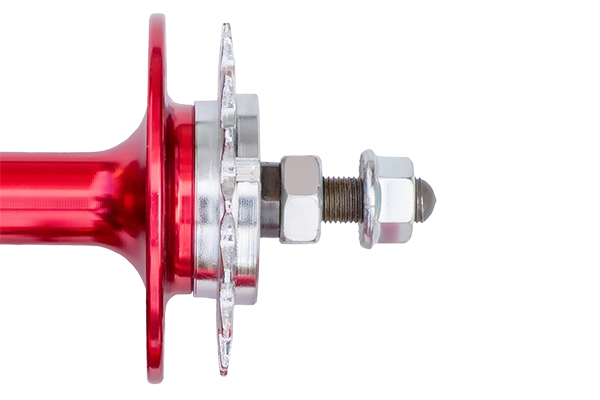
CNC Machine Shop Services: Finish -Aluminum Bike Parts Anodized

What is the step-by-step process of anodizing?

  1. Pre-Treatment
    • Cleaning and Degreasing: Remove oils and contaminants for the most uniform results.
    • Etching: Remove the natural oxide and minor imperfections with caustic solutions.
    • Desmutting: Remove residues from alloying elements with acidic baths.
  2. Anodizing Bath Setup
    • Electrolyte: Typically sulfuric acid that’s 15-20% by volume.
    • Voltage or Current: 12-18 volts for standard anodizing and higher voltage for hardcoat anodizing.
    • Temperature: The standard temperatures are 20-25° C and lower for hardcoat anodizing.
    • Setup: Use lead or stainless steel for the cathode, which completes the circuit if the part is the anode.
  3. Electrochemical Reaction
    • Oxide Layer Formation: The oxygen ions will combine with the metal. By doing this, it creates a porous aluminum oxide, AL2O3, layer.
    • Thickness Control: The time, current, and temperature determine the thickness.
  4. Post-Treatment
    • Rinsing: Removes any residual acids that may be on the part.
    • Dyeing and Coloring (Optional): The pores will absorb the dyes or metallic salts. It gives way to vibrant, durable coloring.
    • Sealing: Nickel acetate or boiling water will close the pores, lock in the color, and enhance corrosion resistance.
  5. Quality Control
    • Thickness Measurement: Eddy current or micrometers measure the thickness.
    • Adhesion and Abrasion Tests: Measure the durability of the part.
    • Color Consistency: Spectrophotometric and visual checks.
    • Corrosion Resistance: Measured by salt sprays or acid immersion testing.
Anodizing Aluminum Metal Parts

What are some applications for anodizing across the industries?

  • Aerospace: Aircraft components and structural parts benefit from anodizing due to the lightweight, durable, and corrosion-resistant surfaces.
  • Automotive: Anodizing engine parts, trim, and wheels gives those parts additional wear resistance, corrosion protection, and decorative finishes.
  • Consumer Electronics: Anodizing laptops, smartphones, and tablets will give them a premium finish that’s scratch-resistant and offers color options.
  • Medical Devices: Anodizing surgical instruments and implants offers biocompatibility, corrosion resistance, and color coding options.
  • Defense: Anodizing equipment housings and structural housings gives them durability, corrosion resistance, and keeps them lightweight.
  • Sporting Equipment: Anodizing bike frames, golf clubs, and outdoor gear gives them lightweight, durable, and decorative finishes.
  • Marine: Marine hardware and boat fittings benefit from anodizing because of the high corrosion resistance.

Comparing anodizing with alternative finishes

Property Anodizing Powder Coating Electroplating Painting
Corrosion Reistance
Excellent
Good (Can Chip)
Good (Can Flake)
Fair (Least Durable)
Wear Resistance
High (Type III)
Moderate
Varies (Can Chip)
Low
Color Options
Wide and Durable
Very Wide
Metallic Only
Very Wide
Environmental Impact
Low (No VOCs)
Moderate (Some VOCs)
High (Heavy Metals)
Moderate-High (VOCs)
Maintenance
Minimal
Moderate
Moderate-High
High
Anodizing Services
Ready to get your project started?
