
Sheet Metal Service:
Bending & Forming
Our sheet metal bending and forming services offer the following:
- Repeatability
- High Dimensional Tolerances
- Custom Prototypes and End-Use Parts
- Instant and Engineer-Assisted Quotes
- Certifications: ISO 9001:2015, AS9100D, ITAR, and CMMC Level 2
- Instant and Engineer-Assisted Quotes
- Certifications: ISO 9001:2015, AS9100D, ITAR, and CMMC Level 2
-
Instant and
Engineer-Assisted
Quotes - 100+ Materials
-
40+ Surface
Finishes -
Certifications:
ISO 9001:2015,
AS9100D, ITAR,
and CMMC Level 2 -
In-House Services: 3D Printing,
CNC Machining, Urethane Casting,
and Sheet Metal Fabrication
Digital Manufacturing Made Simple.
Upload your manufacturing project’s CAD file.
We review your file and provide manufacturability design (DFM) feedback.
We complete precision manufacturing using certified processes.
Our team ships the finished project to you anywhere in the USA.
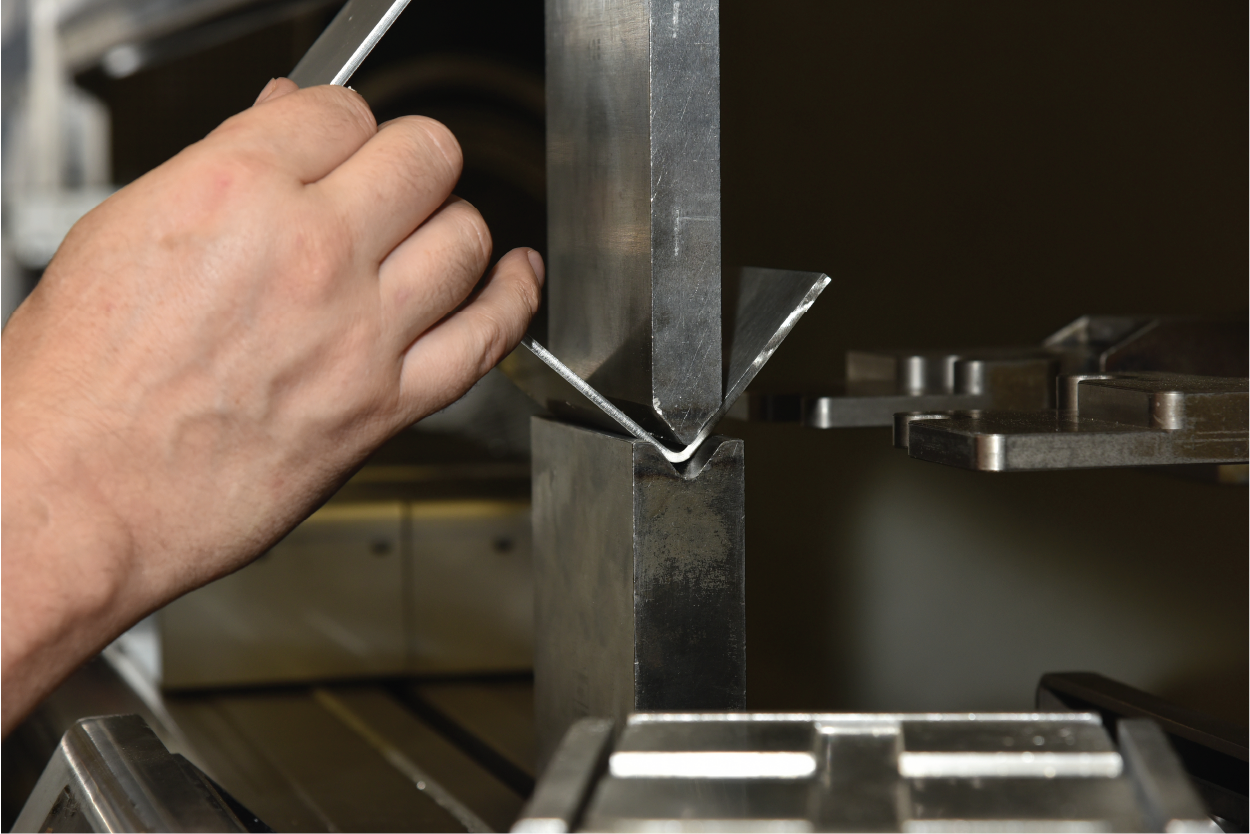
What is sheet metal bending?
Sheet metal bending is a fundamental process in manufacturing that helps create precise shapes and structures by applying force at a specific point to flat metal sheets. This process utilizes various tools and machines, including press brakes, rollers, and bending machines. The bending angle and degree of curvature can be adjusted according to the desired outcome, which is crucial for ensuring product functionality and structural integrity. Prototek’s expert sheet metal bending processes create durable, high-quality metal products for multiple industries and applications. Our facilities are equipped with precision machinery, offering a practical capacity that meets the majority of production-grade sheet metal needs. We also provide fast and reliable turnaround times that adhere to your prototyping, pilot run, and production bridge timelines.
We are a one-stop shop for your machining needs, offering a wide range of thickness capabilities, from thin, cosmetic parts to robust structural components, which leads to faster turnaround times, reduced risks, and quality, as all Prototek parts are produced under one roof.
How does sheet metal bending work?
Sheet Metal bending is a standard metal forming process that involves manipulating metal sheets using various tools and machines. During the bending process, the sheet metal is often clamped between a punch and die and then pressed to create a bend at a specific angle. Several factors determine the amount of force needed to achieve the desired turn, including the type of metal used, the sheet thickness, and the bend angle.
There are various methods for metal bending, including air bending, bottom bending, coining, roller bending, and V-bending. Each technique offers unique advantages and is selected based on the project’s specifics. After bending, technicians remove the excess material using various machining processes, such as trimming and cutting. Overall, bending sheet metal is a crucial process that creates durable, high-quality metal products for multiple industries and applications.
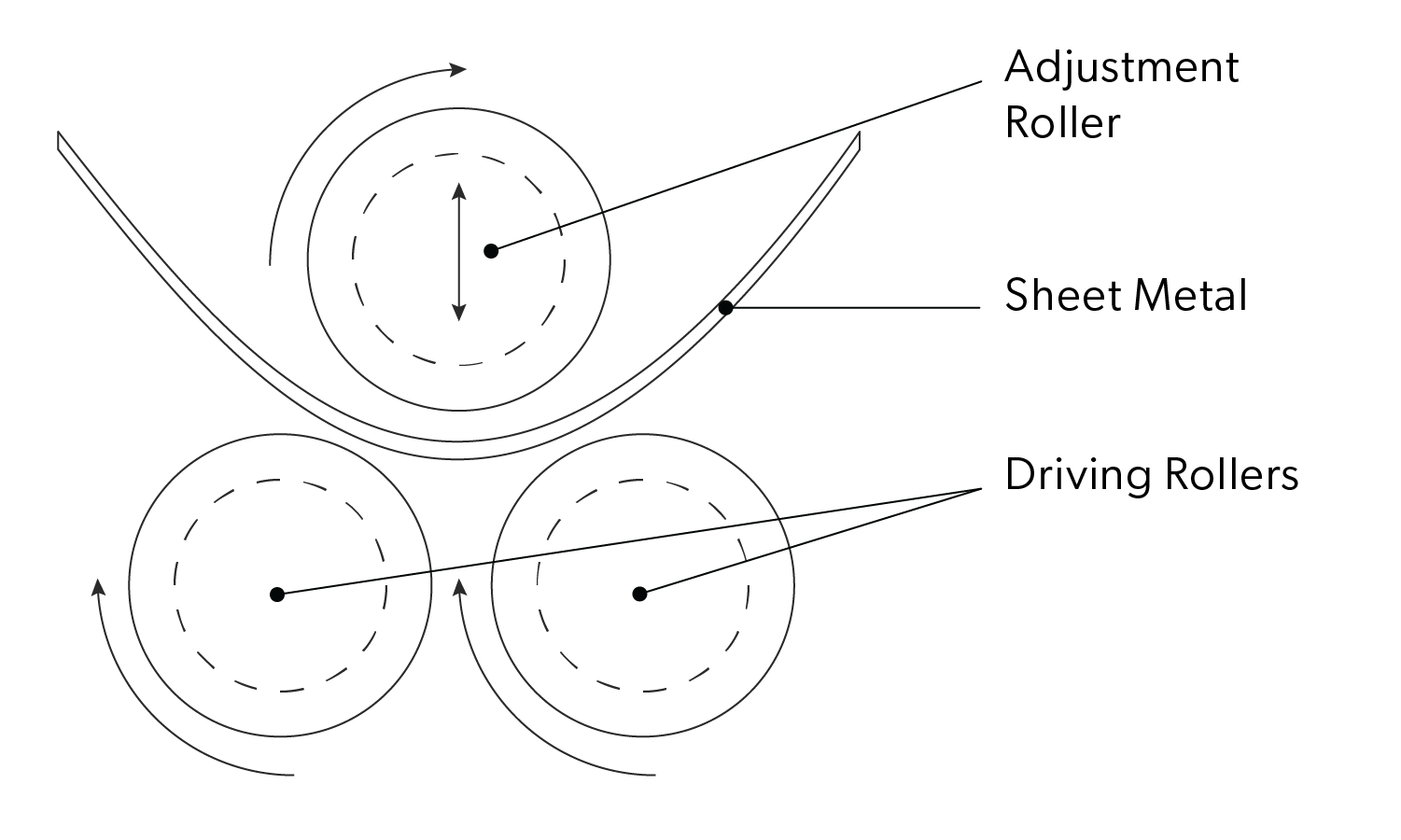
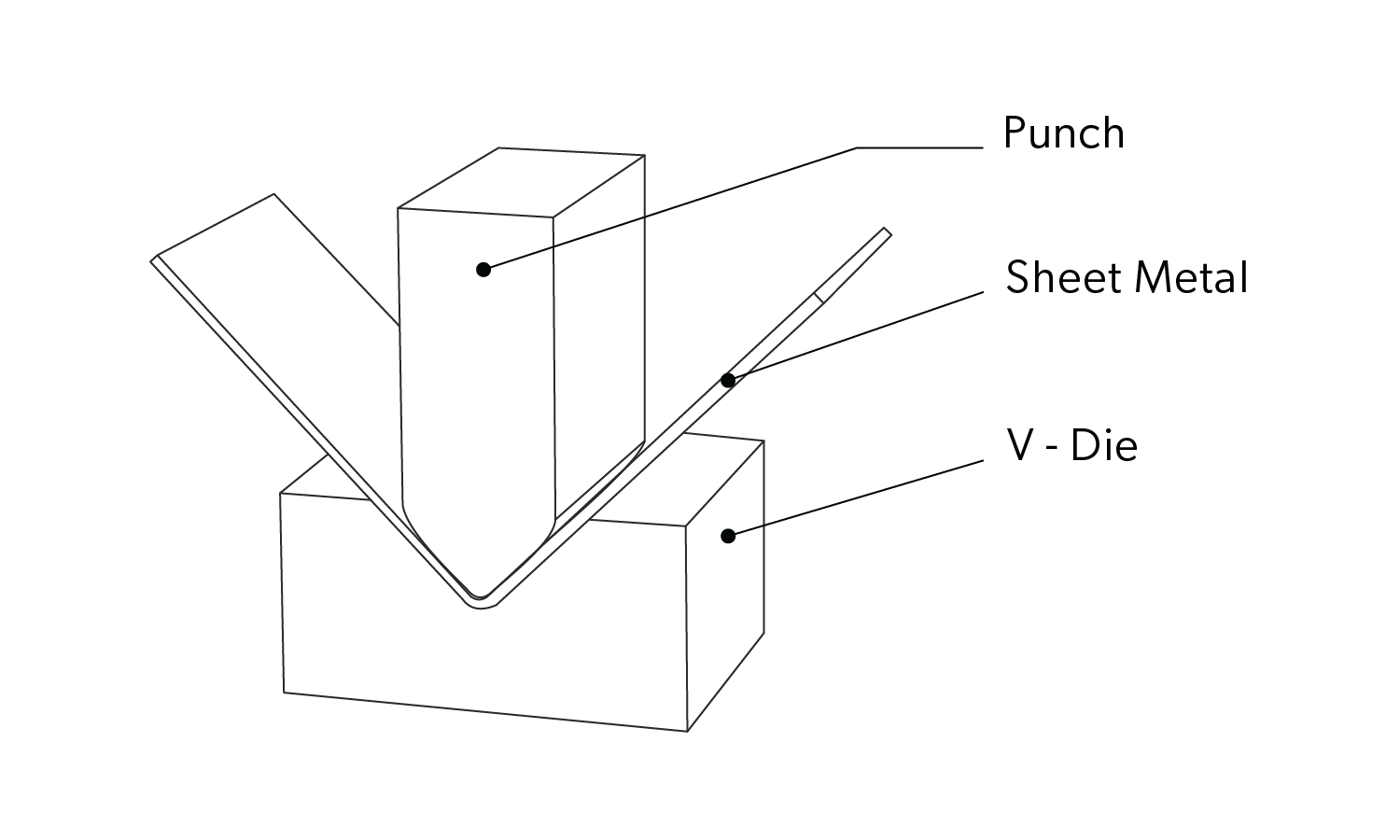
Sheet Metal Bending & Forming Advantages
Some key advantages of partnering with Prototek for reliable bending of manufactured parts include:
- Reduced costs with a simplified manufacturing process.
- Minimal material waste compared to other methods.
- Enhanced material strength for durable and lightweight structures.
- Customization and creation of diverse shapes and profiles.
- Accurate, fast, and repeatable production through automation.
Sheet Metal Bending & Forming Considerations
While there are a lot of advantages to bending and forming, there are also some disadvantages to consider:
- Bad Designs - Can add stresses, distortions, and thinning.
- Labor Intensive - Each bend means more steps to each project.
- Are you ready to make your manufacturing project a reality, or do you have questions?
Sheet Metal Bending & Forming Capabilities at Prototek
OEM:
Amada
Lead Time:
1 – 15 Days
Max Dimensions:
Press Brake Tonnage: 90 tons
Maximum Sheet Metal Bend Length: 10 ft
Sheet Thickness: 0.003 in – 0.375 in
General Tolerances:
Tolerances on sheet metal parts will be held to ISO 2768 standards or ±0.020 in (±0.508 mm), unless otherwise specified.
Precision Tolerances:
Prototek can manufacture and inspect to tight sheet metal tolerances, including sub ±0.005 (±0.127 mm) tolerances, as per your drawing specifications and GD&T callouts.
Surface Finish:
The Standard surface finish for sheet metal parts is to remove the tabs and deburr the part.
Tapped Holes:
Prototek can accommodate any standard tapped hole thread size in sheet metal parts.
Material:
Aluminum, Copper, Stainless Steel, Titanium, and several other metals.
Custom Sheet Metal Materials
Our experienced team works with a variety of materials to bring your designs to life, from standard steels and aluminum to specialty alloys and more. We have the equipment and expertise to handle your sheet metal needs, regardless of their complexity or material.
Metals
- Aluminum
- Brass
- Bronze
- Copper
- Nickel-Based High Temperature Alloys:
- Inconel
- Invar
- Kovar
- Nitronic 60
- Stainless Steel
- Steel
- Titanium
- Tool Steel
Does Your Project Require Different Materials?
Prototek offers complete production flexibility. We can accommodate material requests and provide you with a customized quote. It may extend quoting times while we source the material.
Design Recommendations
Sheet metal bending is a complex process that involves several steps, including material selection, tooling, and setup. To achieve quality bends, it is necessary to consider several factors, including the material’s strength, elasticity, and thickness, as well as the required bend radius, angle, and tolerance necessary for the final product. These factors can impact the quality of the bend and lead to defects such as cracking, buckling, or wrinkling. Therefore, it is essential to understand the material properties and choose the right tools and equipment to ensure optimal outcomes.
One critical aspect of sheet metal fabrication is the k-factor, a mathematical ratio used to calculate the neutral axis of a bend. This ratio separates the stretched and compressed regions of metal during the bending process and determines the amount of sheet metal material displaced during bending. Various factors influence the k-factor, including the type of material, bend radius, thickness, and the bending method used.
By considering the k-factor, fabricators can create accurate flat patterns to cut the sheet metal to the correct size before it is bent. The balanced patterns calculate the bend allowance, the additional material required to compensate for the stretching of the material during the bending process. Designers and fabricators can use this information to ensure the final product meets the required specifications and tolerances.
| K-Factors | Soft Metals | Medium Metals | Hard Metals |
|---|---|---|---|
|
Air Bending |
|
|
|
|
0 – Mt |
0.33 |
o.38 |
0.40 |
|
Mt – 3Mt |
0.40 |
0.43 |
0.45 |
|
> 3Mt |
0.50 |
0.50 |
0.50 |
|
Bottoming |
|
|
|
|
0 – Mt |
0.42 |
0.44 |
0.46 |
|
Mt – 3Mt |
0.46 |
0.47 |
0.48 |
|
> 3Mt |
0.50 |
0.50 |
0.50 |
|
Coining |
|
|
|
|
0 – Mt |
0.38 |
0.41 |
0.44 |
|
Mt – 3Mt |
0.44 |
0.46 |
0.47 |
|
> 3Mt |
0.50 |
0.50 |
0.50 |
Mt (material thickness) | > (greater than)
Our Sheet Metal Fabrication Finishes
Sheet metal fabrication finishes are crucial for both appearance and protection. Each option presents its benefits and drawbacks, so consider essential factors such as application, metal type, budget, and environmental impact. Some of our sheet metal fabrication finishes available include:
- Powder coating: This coating is made with heated and fused dry powder, which protects metals from chipping, cracking, and fading.
- Anodizing: We create an oxide layer that improves corrosion resistance and appearance. For maximum protection, we offer anodizing levels II and III.
- Chem film: This specialized finish adds a layer of chromate that enhances corrosion resistance and significantly increases part lifespan.
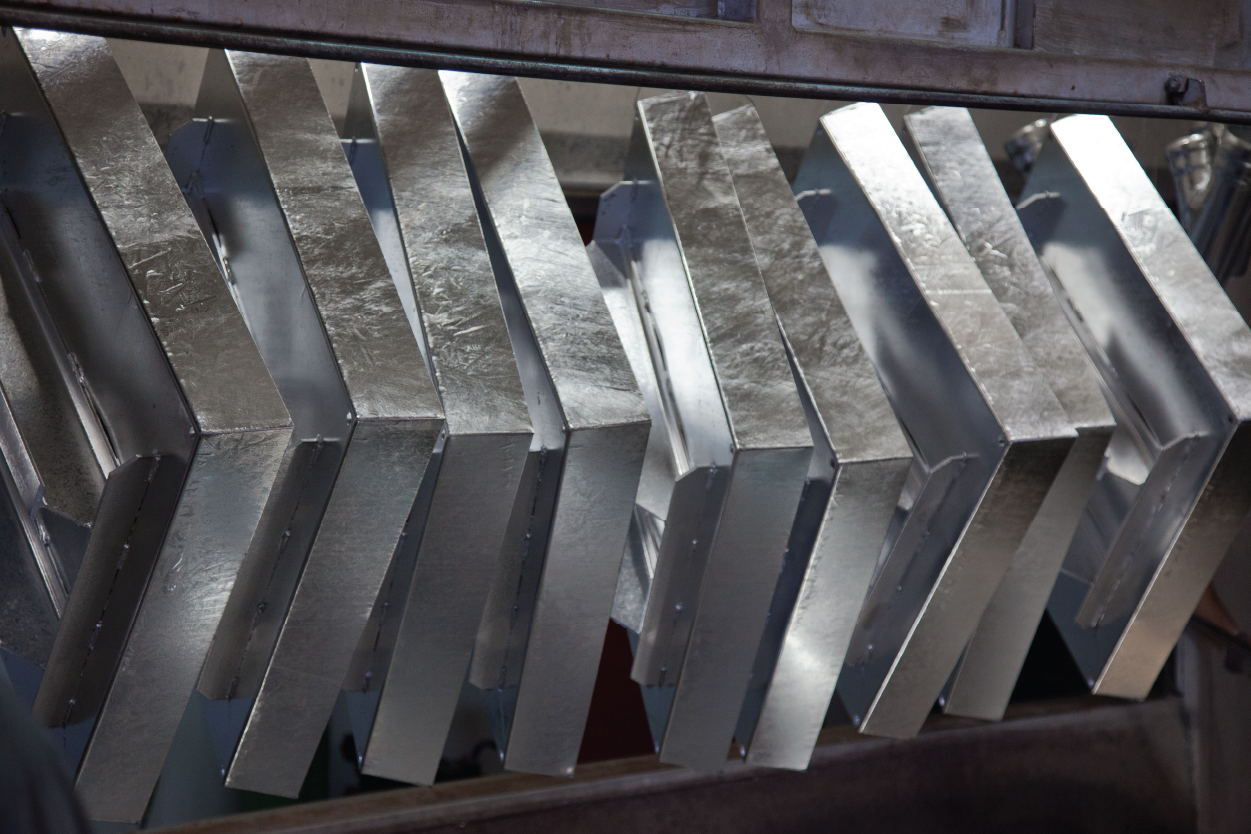
- Zinc plating: Our experts electroplate a thin layer of zinc onto the metal to shield it against corrosion and enhance paint adhesion.
- Electroless nickel plating: We deposit a nickel layer on the metal through a chemical process to improve corrosion resistance and the hardness of the piece.
Learn More About Sheet Metal Fabrication
Through our resources, you can discover the complexities of sheet metal fabrication and gain insights into creating top-notch designs specifically tailored for this cutting-edge technology.
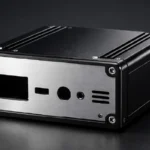
Electronics Enclosure Fabrication: Why the Last Steps Should Come First
Finishing and assembly are not afterthoughts. Learn how integrated planning can improve electronics enclosure fabrication, quality, lead time, and delivery.
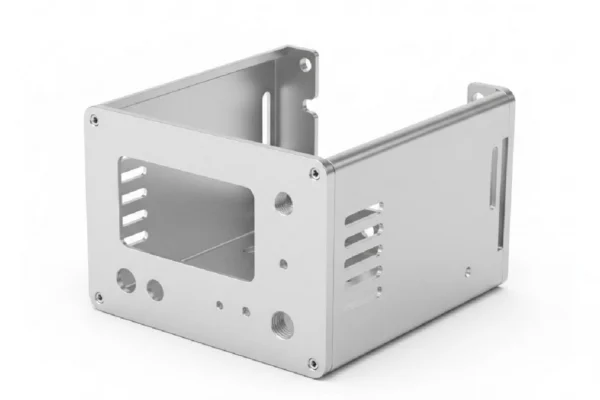
Sheet Metal Design: 10 Mistakes to Avoid
Understanding what not to do in sheet metal design is crucial for creating manufacturable, cost-effective parts, which keeps readers engaged and focused on practical outcomes.

5 Reflective Materials for Laser Cutting
From the sleek shine of stainless steel to the vibrant allure of acrylic mirrors, these materials offer unique challenges and stunning design possibilities. Learn how...
Prototek's
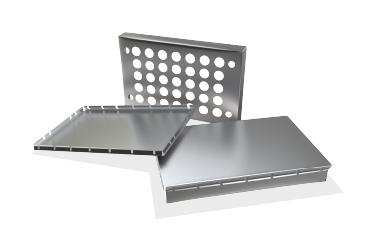
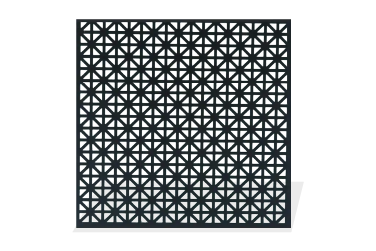
Other Sheet Metal and Fabrication Capabilities
Why choose Prototek for your sheet metal bending next project?
At Prototek, we are committed to delivering exceptional client satisfaction. Our teams and facilities adhere to strict quality assurance protocols, ensuring product reliability and compliance with industry-specific requirements and international standards.
Some of the certifications and registrations we offer across our facilities include:
- AS9100D aerospace quality management system certification
- International Organization for Standardization (ISO) 9001:2015
- First article inspection (FAI) and acceptable quality limit (AQL) inspections
- Coordinate measuring machine (CMM) inspection services
- Quality engineering to ensure manufacturability and repeatability
Partnering with Prototek means gaining access to the technology, expertise, and materials to achieve project goals efficiently, effectively, and to the highest quality. Request a quote or contact our expert team today and learn more about our custom metal bending solutions.