
3D Printing Service:
Selective Laser Sintering
Our selective laser sintering (SLS) services offer:
- No Support Structure Necessary
- Superior Mechanical Properties
- Fast Turnaround
- Instant and Engineer-Assisted Quotes
- Certifications: ISO 9001:2015, AS9100D, ITAR, and CMMC Level 2
- Instant and Engineer-Assisted Quotes
- Certifications: ISO 9001:2015, AS9100D, ITAR, and CMMC Level 2
-
Instant and
Engineer-Assisted
Quotes - 100+ Materials
-
40+ Surface
Finishes -
Certifications:
ISO 9001:2015,
AS9100D, ITAR,
and CMMC Level 2 -
In-House Services: 3D Printing,
CNC Machining, Urethane Casting,
and Sheet Metal Fabrication
Digital Manufacturing Made Simple.
Upload your manufacturing project’s CAD file.
We review your file and provide manufacturability design (DFM) feedback.
We complete precision manufacturing using certified processes.
Our team ships the finished project to you anywhere in the USA.
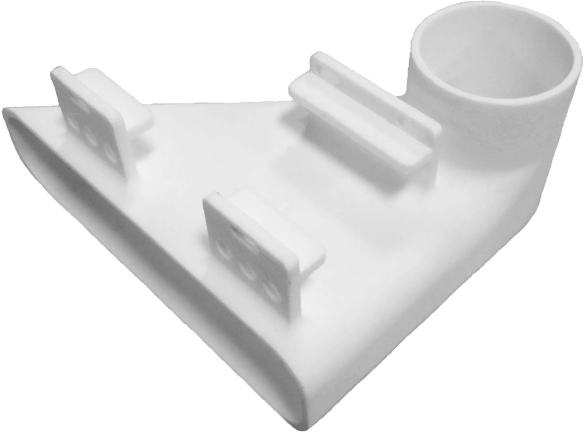
What is selective laser sintering?
SLS is an additive manufacturing process that uses sophisticated lasers to fuse layers of powdered materials. This technology creates a solid, three-dimensional object without the need for support structures. The non-sintered material surrounds the component in the powder bed, keeping its shape.
A selective laser sintering printer allows for the production of intricate designs and complex geometries with high precision. Its versatility makes it valuable across various industries, from rapid prototyping to the manufacturing of end-use components. SLS works with a wide range of materials, achieving exceptional detail, making it a preferred 3D printing technology for innovators and engineers who are pushing the boundaries of additive manufacturing.
How does a selective laser sintering printer works?
SLS printing begins with our additive manufacturing (AM) technicians uploading your CAD file into the system. Once the software breaks down the CAD file layer by layer, the process begins:
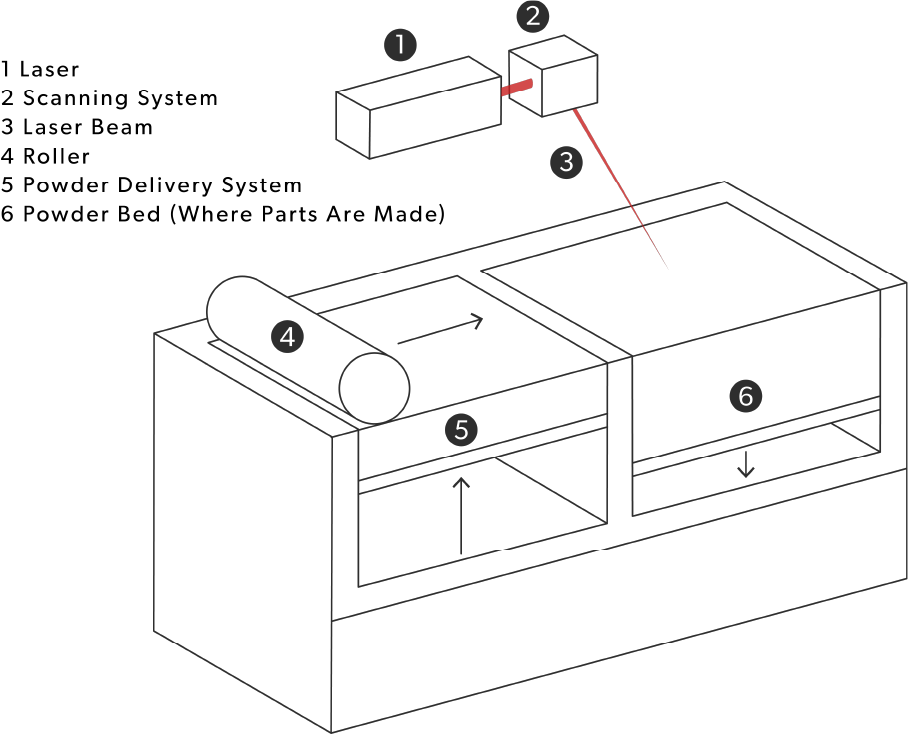
- Inside an enclosed, heated chamber, a CO2 laser draws each layer of the part onto a powder bed, fusing the material below its melting point.
- Upon each layer, a roller applies a thin new layer of powder.
- The process repeats until the SLS parts are complete.
- After the build process, the entire powder bed is removed and taken to a breakout station.
- AM technicians manually remove each part and brush off any excess powder.
- Components are placed into a container and subjected to a blasting process to remove any remaining powder.
- Parts produced then go to the finishing department, where, depending on your project specifications, they undergo sanding, priming, painting, or other post-processing and finishing techniques.
Advantages of Selective Laser Sintering
SLS technology has revolutionized the way products are designed and manufactured. Selective laser sintering offers numerous advantages:
- Support-free manufacturing for complex geometries
- Materials with excellent mechanical properties
- Automated vapor smoothing for improved appearance and durability
- Compatibility with dyeing, coloring, and other finishing processes
Considerations for Selective Laser Sintering
While there are a lot of advantages to laser sintering, there are also some disadvantages to consider:
- Finishing and post-processing are necessary to smooth surfaces
- Fewer material options than other additive technologies
Selective Laser Sintering Services at Prototek
At Prototek, our approach to selective laser sintering focuses on simplicity and scalability. Bring us your innovative ideas, and we will handle the details. Once you upload your CAD file and receive a quote, our experienced team will review your design and begin production using our cutting-edge SLS technology.
We serve as your partner through every phase, whether you need a single prototype or full-scale production and even relpacement parts. Our comprehensive services also include advanced material selection and finishing options, guided by our AM experts.
Selective Laser Sintering Machine Companies:
EOS and 3D Systems
Selective Laser Sintering File Types:
Preferred Files: Solid, STEP, and DFX
Max Build Chamber Size:
26 x 13.5 x 21.8 in
Lead Time:
3 – 5 Days
Available Materials:
Carbon-Filled Nylon, Fire Retardant Nylon 11, Glass-Filled Nylon 12, Nylon 12, and Ultrasint® TPU 88A
Tolerances:
First Inch ± 0.005 in and ± 0.002 in/in additional inches
Layer Thickness:
Eos: 0.005 in
3D Systems: 0.004 in
- Are you ready to make your manufacturing project a reality, or do you have questions?
Selective Laser Sintering Materials
Prototek offers SLS materials to suit your project requirements. Choose from industry-leading options, such as Nylon 12 or specialty blends, designed for superior performance.
Do you need assistance finding the right material for your project? Prototek’s experts can help you select the ideal SLS material based on required mechanical properties, chemical resistance, flexibility, and application needs.
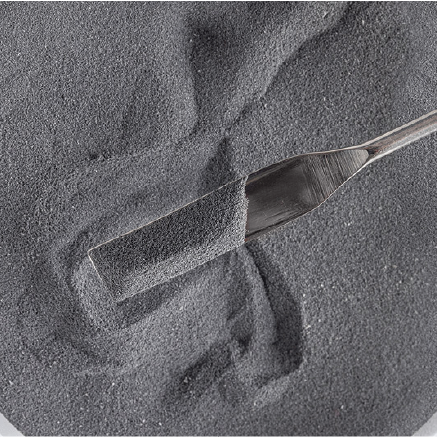
Carbon-filled nylon from Advanced Laser Materials (ALM) is a strong and lightweight material used in industrial applications. It is perfect for projects that need both strength and reduced weight.
Tensile Strength
12,238 psi
Tensile Modulus
1,145,797 psi
Elongation @ Break
4%
Flexural Strength
N/A
Flexural Modulus
1,329,995 psi
Heat Deflection @ 264 psi
343° F
Fire-retardant nylon 11 is a strong and fire-resistant material. Due to its excellent mechanical properties, it is suitable for many uses. This material meets the strict FAR 25.853 60-second burn requirement, which makes it a safe choice for situations where safety and reliability are essential.
Tensile Strength
6,700 psi
Tensile Modulus
202 ksi
Elongation @ Break
38%
Flexural Strength
N/A
Flexural Modulus
195 ksi
Heat Deflection @ 264 psi
158° F
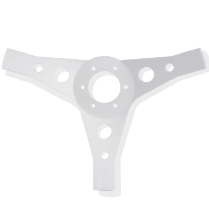
Fortified with glass beads, SLS Glass-Filled Nylon 12 creates plastic parts with higher thermal stability and stiffness than regular Nylon 12. It also has excellent impact and chemical resistance and is biocompatible*.
Tensile Strength
7,397 psi
Tensile Modulus
464 ksi
Elongation @ Break
9%
Flexural Strength
10,588 psi
Flexural Modulus
421 ksi
Heat Deflection @ 264 psi
205° F
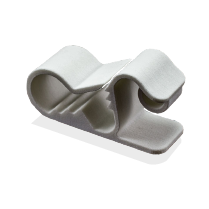
SLS Nylon 12 is a highly versatile and durable laser sintering thermoplastic material with a wide range of exceptional physical properties, making it ideal for numerous applications across various industries.
Tensile Strength
7,252 psi
Tensile Modulus
247 ksi
Elongation @ Break
20%
Flexural Strength
N/A
Flexural Modulus
218 ksi
Heat Deflection @ 264 psi
N/A
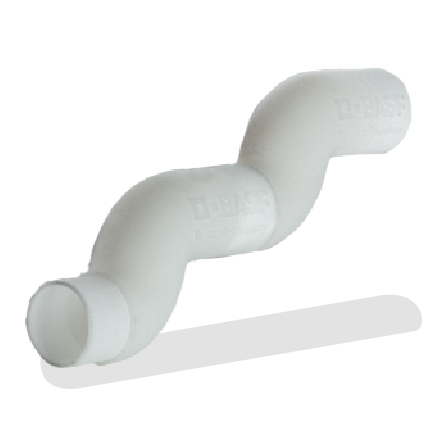
SLS Ultrasint® TPU 88A is a specialized thermoplastic polyurethane (TPU) powder with a rubber-like feel that offers excellent flexibility and shock absorption. Combined with the design freedom of additive manufacturing, this material allows for the printing of highly detailed yet functional parts.
Tensile Strength
1,160 psi
Tensile Modulus
12,328 psi
Elongation @ Break
360%
Flexural Strength
N/A
Flexural Modulus
N/A
Heat Deflection @ 264 psi
N/A
Please Note: Biocompatible materials are only biocompatible in their natural state. Once a finish that coats the material is applied (priming, painting, and clear coating), it is no longer biocompatible. Special processing may be required. Please notify us of any biocompatibility needs.
Designing SLS Parts
Several key considerations are crucial for successful printing when designing parts for laser sintering. By considering these, our team can optimize your part designs for successful selective laser sintering:
Structural integrity: Firstly, our technicians ensure that the parts have sufficient structural integrity and support to withstand the forces of the sintering process.
Accuracy: Proper nesting and orientation of the parts in the SLS 3D printers minimizes distortion and improves print accuracy.
Quality: To enhance print quality and reduce the need for post-processing, it is essential to design internal features or cavities with ample clearance and draft angles.
Material selection: Selecting appropriate materials and powder properties can significantly impact print quality and final part properties.
Design constraints: It is essential to understand the limitations of 3D printing technology and design functional parts within these constraints.

Design Recommendations
| Feature | Measurements | |
|---|---|---|
|
|
Connecting & Moving Parts |
Connecting: 0.006 in |
|
|
Escape Holes |
0.04 in |
|
|
Embossing & Engraving |
Width: 0.04 in |
|
|
Holes & Openings |
0.03 in |
|
|
Horizontal Spans |
Supports Not Required |
|
|
Minimum Features |
0.03 in |
|
|
Pin Diameter |
0.02 in |
|
|
Supports & Overhangs |
Supports Not Required |
|
|
Walls (Supported) |
0.028 in |
|
|
Walls (Unsupported) |
Supports Not Required |
Laser Sintering Finishes
Prototek’s cutting-edge selective laser sintering capabilities deliver excellent results. By utilizing our state-of-the-art additive manufacturing processes, we guarantee remarkable consistency in quality and performance for all your essential and demanding applications. Furthermore, our technology produces high-precision, exceptionally durable parts with outstanding surface finishes.
We offer a wide range of post-processing techniques to complement these superior results, ensuring the part’s appearance and functionality match its intended use. Speak with our team to learn more about controlled vapor smoothing for a glossy look, dyeing and coloring in a range of vibrant colors, and other laser sintering finishes.

| Finish | Description |
|---|---|
|
Natural |
Matte, white finish. |
|
Standard |
Matte finish, dyed black. |
|
Tumbled |
Surface smoothed with media for an eggshell finish. |
|
Smoothed and Sealed |
Bead blasted and vapor smoothed for a sealed, satin, watertight finish. |
|
Dyed |
Dyed, please specify the color. |
|
Smoothed, Sealed, and Dyed |
Vapor sealed and dyed (specify color) for a satin, watertight finish. |
|
Primed Exterior |
Exterior/cosmetic surfaces smoothed and coated in grey primer. |
|
Painted |
Smoothed, primed, and painted (provide paint specifications in drawing). |
|
Custom |
Custom finish. Let us know if your project requires special finishing. Please fill out our engineer-assisted quote. |
Why Choose SLS 3D Printing?
If your business needs to produce complex, high-performance parts, SLS is an excellent additive manufacturing option. This process is widely used in industries where precision and reliability of components are critical — such as aerospace, medical devices, automotive, and consumer products.
With SLS 3D printing, you will experience many production benefits.
Unmatched Design Freedom
SLS enables the fabrication of intricate and interlocking designs that are impossible or costly with conventional manufacturing. Internal channels, lattice structures, undercuts, and complex assemblies are all easily achievable.
Outstanding Material Performance
Our SLS service primarily uses engineering-grade nylon powders (PA12, PA11, and composites) known for their toughness, chemical resistance, thermal stability, and excellent surface finish. SLS parts are suitable for functional prototypes, end-use components, and even direct replacement parts.
Scalability
Whether you need one prototype or a small to medium-volume production run of thousands, SLS adapts to your needs. The process is ideal for:
- Product development cycles.
- Bridge manufacturing.
- Custom, on-demand parts.
Learn More About 3D Printing
With our resources, you can explore the intricacies of 3D printing and gain valuable insights into designing top-notch products tailored to this cutting-edge technology.
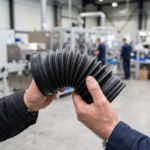
Not Every Flexible Part Needs a Mold
When a part needs to flex, bend, cushion, seal, or absorb impact, it is easy to jump straight to molding. But the manufacturing decision gets...
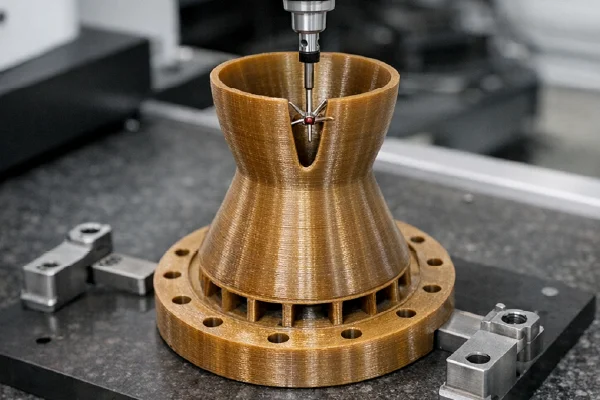
Beyond the Printed Part: Choosing an Additive Manufacturing Partner for Defense
Additive manufacturing for defense requires more than printing capability. Learn how engineering support, secondary operations, quality, security, and supplier readiness can support demanding defense programs.
Is Your Additive Prototype Production-Ready?
A successful additive prototype is only the first step. Learn what changes when an additive part moves into repeatable production.
Prototek's
Other Additive Manufacturing Capabilities
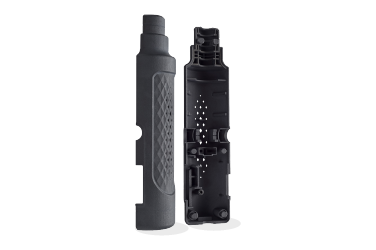
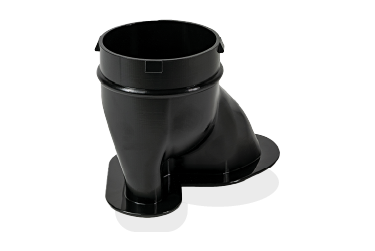
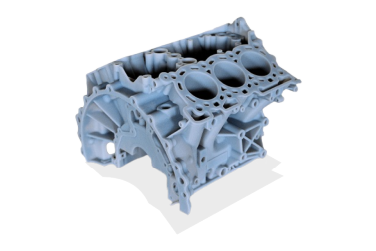
Partner With Prototek for Selective Laser Sintering Services
In the world of advanced industrial 3D printing, Prototek leads the way in innovation and customer support. Our state-of-the-art technology allows us to produce the highest-quality products engineered to your exact specifications. That means robust functionality in the most demanding applications. Our fast turnaround times and on-demand production capabilities make us the go-to choice for organizations that need to reduce time to market or scale demands.