CNC Milling Machining Service
Our high-precision computer numerical control (CNC) milling services offer the following:
- Repeatability
- High Dimensional Tolerances
- Custom Prototypes and End-Use Parts
- Instant and Engineer-Assisted Quotes
- Certifications: ISO 9001:2015, AS9100D, and ITAR
- Instant and Engineer-Assisted Quotes
- Certifications: ISO 9001:2015, AS9100D, and ITAR
-
Instant and
Engineer-Assisted
Quotes - 100+ Materials
-
40+ Surface
Finishes -
Certifications:
ISO 9001:2015,
AS9100D, and ITAR -
In-House Services: 3D Printing,
CNC Machining, Urethane Casting,
and Sheet Metal Fabrication
Our Simple Process
Upload your project’s CAD file.
We review your file and provide design for manufacturability (DFM) feedback.
We complete precision manufacturing using certified processes.
Our team ships your product anywhere in the USA.
What is CNC milling?
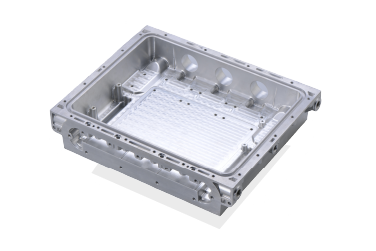
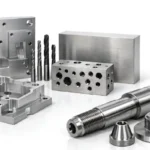
CNC milling is an efficient manufacturing process that uses computer-controlled machines rather than manual machines to shape and cut materials like metals, plastics, and composites. This technology precisely controls the movement of the cutting tools, allowing for the creation of complex shapes with high accuracy and consistency. Industries such as aerospace, automotive, medical, and consumer goods use CNC milling to produce high-quality components that meet strict requirements.
How does a CNC milling machine work?
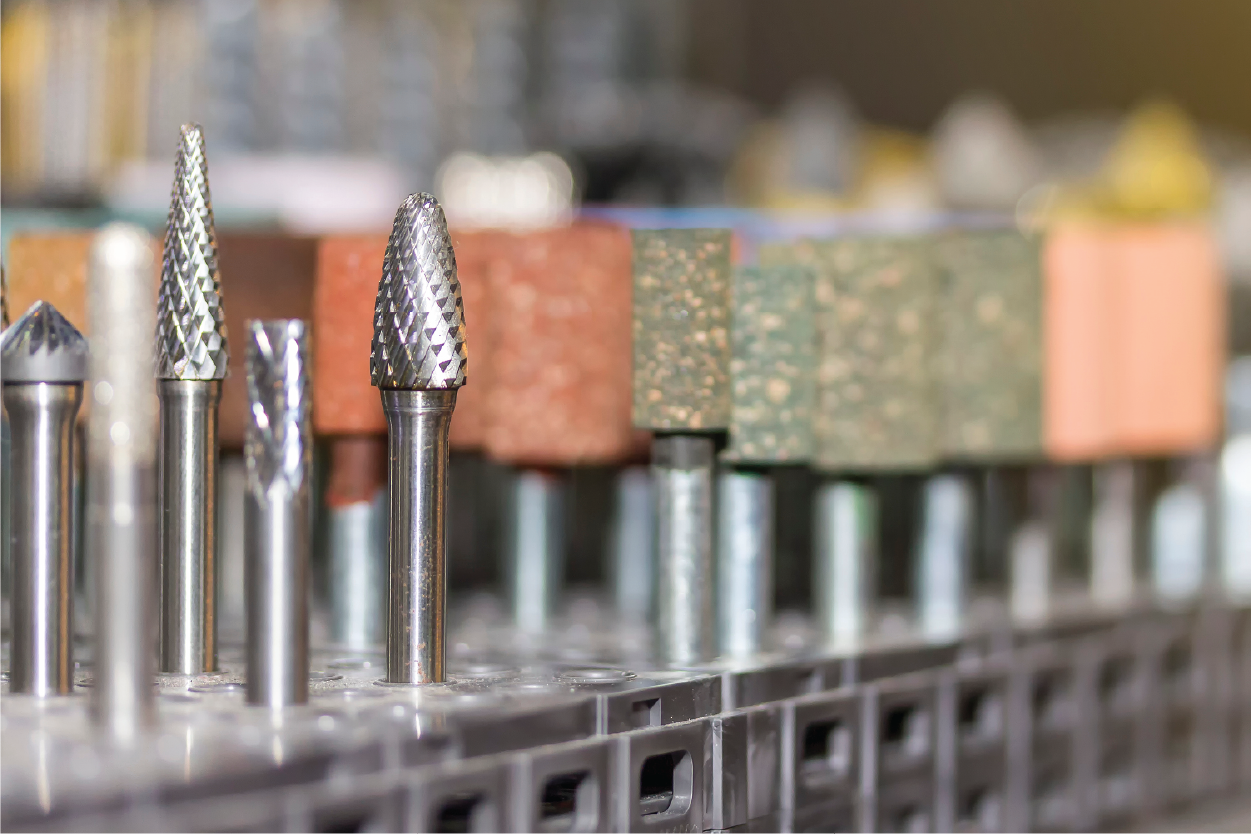
The customer gives us a CAD drawing of their project. Our engineers use CAM software to create a CNC program from this drawing. Next, we set up the CNC machine with the right cutting tools and secure the material to the worktable with a vice. The type of milling machine we choose depends on the part’s specifications and complexity. Once everything is ready, the machinist enters the code using the computer interface and starts the machining process. The machine then uses high-speed rotating cutting tools to remove material from the workpiece until the final part is ready. After milling, the part goes to our finishing department for additional work to ensure it meets the required specifications.
What are the components of a CNC milling machine?
A CNC milling machine has several main parts:
- The spindle holds and rotates the cutting tool.
- The worktable secures the workpiece.
- The axes control the movement of the spindle and the table.
- The CNC control panel or display unit manages the machine’s operations.
- The enclosure provides safety and containment.
Other components may include an automatic tool changer, a coolant system, sensors, and feedback mechanisms.
Types of Milling Machines at Prototek
The different milling machine types we use include:
- Vertical Milling: In vertical milling, the drill press and tools rotate up and down.
- Horizontal Milling: Horizontal milling machines function similarly to vertical machines, but their tools rotate side to side. Both milling machine types use identical tools.
- 3-Axis CNC Milling: In 3-axis milling, the part stays still while the cutting tool moves along three axes. This milling type is best for making shapes, holes, and sharp edges.
- 4-Axis CNC Milling: 4-axis milling machines move more than 3-axis machines. They can rotate around one additional axis, called the A-axis. This feature allows for cutouts on the sides of a workpiece.
- 5-Axis CNC Milling: 5-axis milling machines use all four axes of 4-axis machines and add one more rotational axis, the B-axis. They can make complex parts for different industries.
- 9-Axis Mill-Turn: A 9-axis milling machine has similar functions to a 5-axis machine but can also perform angle milling and balanced turning. These machines use both the B-axis and extra tools to create detailed parts.
CNC Milling Advantages
CNC milling has many benefits that make it a top choice for producing high-quality parts across a range of industries. These include:
- Accuracy: CNC milling machines can achieve very tight dimensional tolerances, often down to sub-thousandths of an inch, which is essential for creating complex parts that require a high degree of precision.
- Repeatability: CNC milling's automated and computer-controlled nature ensures that each part produced is virtually identical to the last. The consistency is critical for mass production, where uniformity is key.
- Versatility: CNC milling can machine a wide range of materials, including metals, plastics, and composites. It can also create complex geometries, intricate features, and various surface finishes.
- Efficiency: Once the programming happens, the CNC machine operates continuously, reducing production time and labor costs, allowing for rapid prototyping and quick turnaround on large-scale production runs.
- Safety: The enclosed nature of most CNC milling machines, combined with automated operation, significantly reduces the risk of injury to human operators compared to manual machining.
CNC Milling Disadvantages
CNC milling also has some drawbacks to keep in mind:
- Size limitations: The milling machine's dimensions limit the size of the parts you can create.
- Complex geometries: Creating intricate shapes can be time-consuming and costly due to the need for extensive setup and multiple tools; however, but it remains achievable.
CNC Milling at Prototek
OEM:
Hurco, Kent USA, Mazak, OKK, Doosan, Haas, Daewoo, DMG Mori, Sharp, Sodick, Bridgeport, Brother, Lagun, Matsuura, Akira Seiki, Atrump
Lead Time:
5 – 22 Days
Max Dimensions:
84 x 40 x 30 inches (2134 x 1016 x 762 mm)
At Prototek, we have many machines with varying dimensions, and we use the most significant dimension available.
General Tolerances:
We adhere to ISO 2768 standards or ± 0.005 inches (± 0.127 mm) for metal parts and ± 0.010 inches ( ± 0.254 mm) for plastic and composite parts.
Precision Tolerances:
We can achieve tolerances of sub ± 0.001 inches for precision parts, as specified by your drawings and GD&T callouts.
Threads & Tapped Holes:
We support standard thread sizes and can create custom threads upon request, which may require a manual quote review.
Edge Conditions:
By default, all CNC milling parts are deburred and have broken edges.
Surface Finish:
Our standard finish is As Machined (Ra 126 µin). During the quoting process, you can request other options.
Material:
Metals: Aluminum, Bearing Bronze, Brass, Phosphor Bronze, Silicon Aluminum Bronze, Bronze, Carbon Steel, Copper, Stainless Steel, Steel, Titanium
Plastics: Polypropylene, Radel, Ultem, ABS, Acrylic, Acetal, HDPE, Nylon, PEEK, Polycarbonate
Types of Mills:
Vertical Mill, Horizontal Mill, 3-Axis, 4-Axis, 5-Axis, 9-Axis Mill-Turn
Prototek's Machining Materials
At Prototek, we provide CNC milling services using various high-quality materials, including aluminum, stainless steel, engineering plastics, and specialty alloys. Our modern CNC machines can accurately shape these materials to meet your needs. Our skilled team works with you to choose the best material for your project, ensuring excellent results every time.
Metals
Plastics
Other Materials
- G-10
- Machined Ceramics:
- Macor
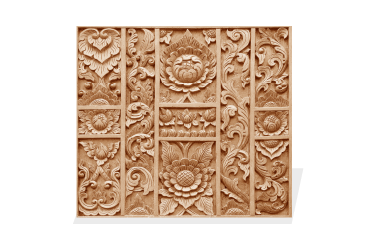
- Wood
Does your project require a material not on our list?
Can’t find your material? If your project requires materials not listed, let us know! We can accommodate other material requests, but please note that the quote may take longer as we source the material for you.
Design Recommendations
CNC milling creates a variety of high-quality surface finishes, each designed for different needs. Smooth finishes provide excellent flatness and tight tolerances, making them perfect for precision parts. Textured finishes look good and offer benefits like better grip and reduced surface area. Techniques like mirror polishing and bead blasting provide ultra-smooth or matte surfaces. Our skilled machinists will work with you to choose the best CNC milling finish that balances appearance, performance, and cost.
CNC Milling Finishes
CNC milling can produce a wide range of high-quality surface finishes, each with unique characteristics to meet your specific application needs. Moreover, smooth-milled finishes offer exceptional flatness and tight tolerances, ideal for precision milling components. Additionally, textured finishes can add visual interest and provide functional benefits, such as improved grip or reduced surface area. Furthermore, specialized techniques like mirror polishing or bead blasting can create ultra-smooth or matte surfaces. Our skilled machinists will work closely with you to select the optimal CNC milling finish that balances aesthetics, performance, and cost-effectiveness.
Learn More About CNC Milling
Our resources provide a deeper understanding of CNC milling, enabling you to develop the expertise needed to produce top-quality designs that seamlessly integrate with this powerful technology.
Top 10 Benefits of CNC Machining in Aerospace Manufacturing
CNC machining is a valuable tool in aerospace manufacturing. It offers high precision and efficiency, which is essential for creating complex shapes needed in aircraft...
Heat-Treatable Alloys in Machining and Sheet Metal Fabrication
Explore heat-treatable alloys, which are essential in industries like aerospace and automotive. These materials improve strength, durability, and resistance to wear through careful heating and...
CNC Machining: Plastic Materials
As industries increasingly demand precision and versatility, our advanced capabilities can turn your ideas into reality. From lightweight and corrosion-resistant acrylic to durable polycarbonate and...
Prototek's
Other CNC Manufacturing Capabilities
Get Quality CNC Milling Services Today
When your project demands exceptional precision, reliability, and speed, Prototek’s CNC milling services are the answer. We combine cutting-edge technology and a team of expert machinists to deliver custom CNC milling prototypes and end-use parts that meet the most stringent industry standards. Our commitment to quality, backed by ISO 9001:2015 and AS9100D certifications, ensures we manufacture every part to your exact specifications.
From complex aerospace components to durable consumer goods, trust us to bring your designs to life with unparalleled accuracy and efficiency. Request a quote today to start your next project and experience the Prototek difference.