
3D Printing Services:
Hybrid PhotoSynthesis
Our HPS 3D printing services offer:
- Part Consolidation
- High Detail & Excellent Surface Finish
- Isotropic Mechanical Properties
- Instant and Engineer-Assisted Quotes
- Certifications: ISO 9001:2015, AS9100D, ITAR, and CMMC Level 2
- Instant and Engineer-Assisted Quotes
- Certifications: ISO 9001:2015, AS9100D, ITAR, and CMMC Level 2
-
Instant and
Engineer-Assisted
Quotes - 100+ Materials
-
40+ Surface
Finishes -
Certifications:
ISO 9001:2015,
AS9100D, ITAR,
and CMMC Level 2 -
In-House Services: 3D Printing,
CNC Machining, Urethane Casting,
and Sheet Metal Fabrication
Digital Manufacturing Made Simple.
Upload your manufacturing project’s CAD file.
We review your file and provide manufacturability design (DFM) feedback.
We complete precision manufacturing using certified processes.
Our team ships the finished project to you anywhere in the USA.
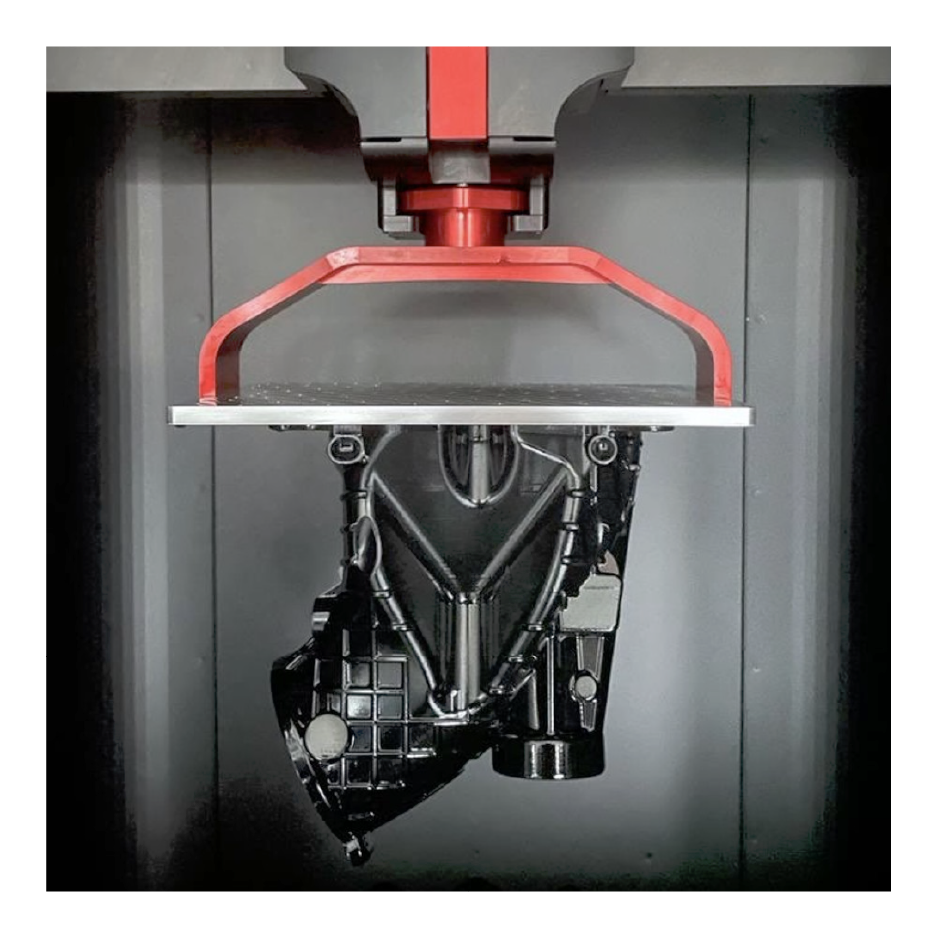
What is hybrid photosynthesis?
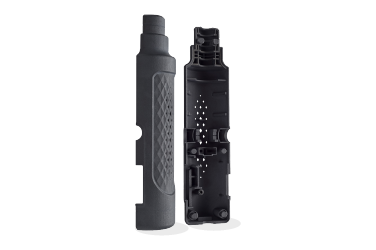
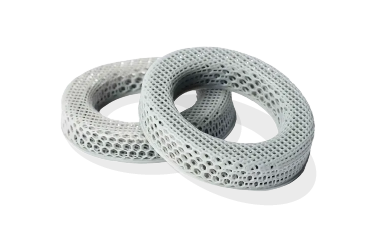
HPS is an innovative 3D printing technique that combines the speed of digital light processing (DLP) with the high resolution of stereolithography (SLA). By blending the technologies of these two methods, we produce intricate and complex 3D models with high detail.
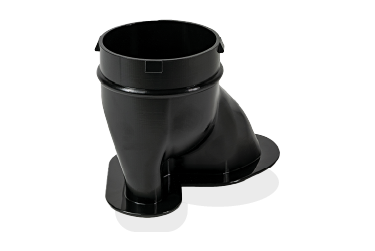
Hybrid photosynthesis technology is ideal for industries such as healthcare, automotive, and aerospace. In health care, HPS can create anatomical models that aid in surgical planning and implant design. This technique can also produce car part prototypes for the automotive industry before mass production. Similarly, in the aerospace industry, it’s used to create detailed models of aircraft parts before large-scale production.
How does hybrid photosynthesis work?
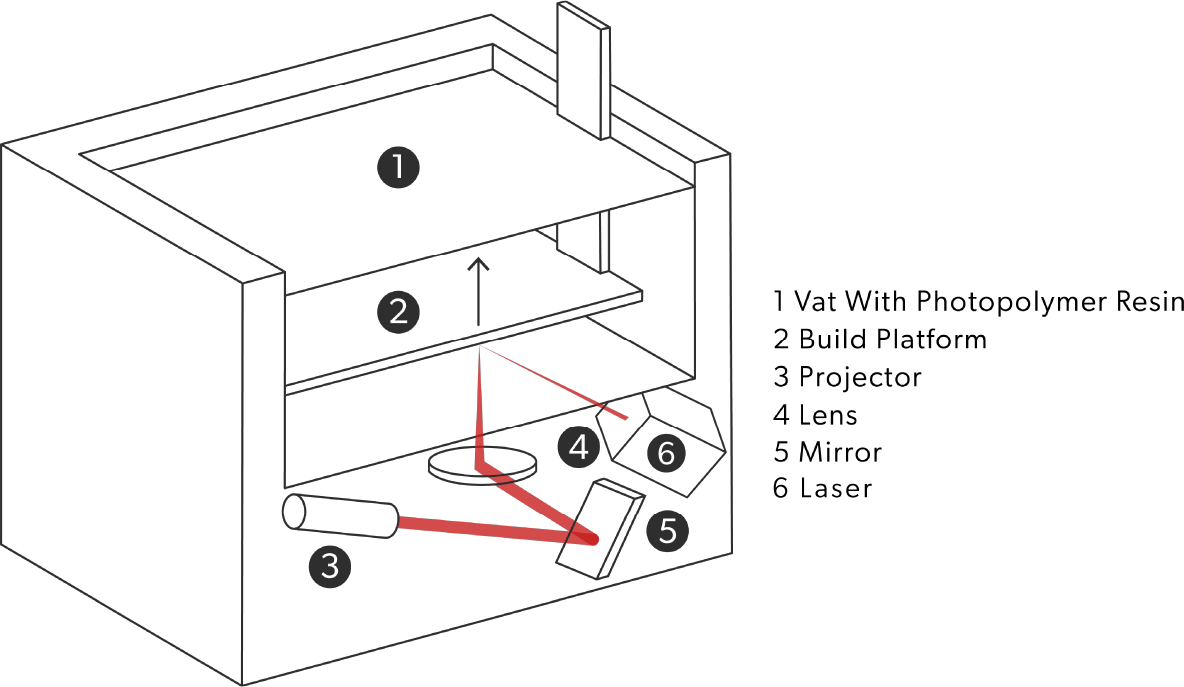
Hybrid photosynthesis 3D printing uses multiple additive manufacturing techniques — including a light projector for rapid curing and a laser for precise contouring — in a single, seamless process. Here’s how our process works:
- Our additive manufacturing (AM) technicians upload your CAD file into the machine.
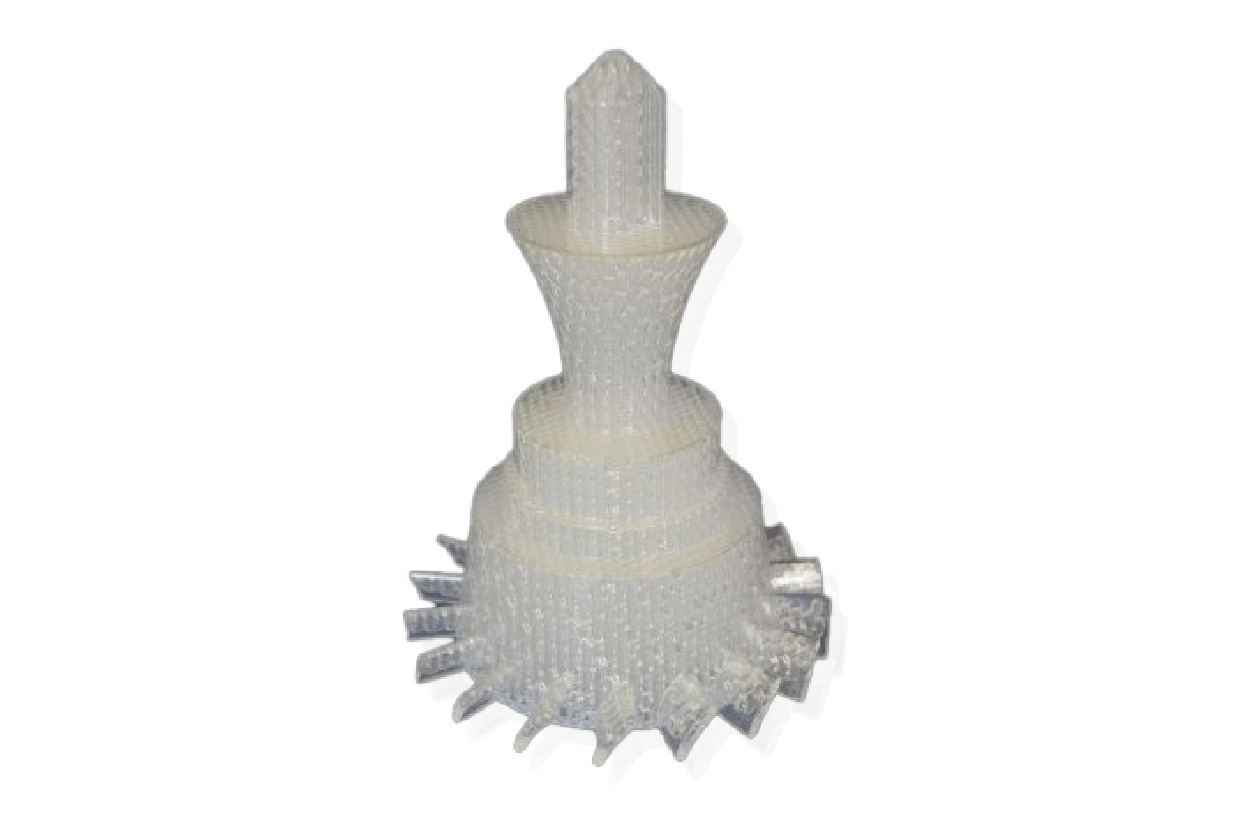
- The technicians determine the best part orientation to maximize quality and minimize the need for support.
- They send the component with supports to the machine’s platform, where it is sliced layer by layer and translated into instructions for the machine to follow.
- The HPS printer uses a photochemical process that combines digital light processing and stereolithography.
- It then projects light through an oxygen-permeable membrane into a UV-curable resin and uses a laser for precise details. This step repeats until the build is complete.
- After producing the parts, our proficient technicians manually remove the platform from the hybrid photosynthesis machine.
- The parts then undergo solvent cleaning and UV curing to solidify the outer surface of the component.
- Finally, the components undergo finishing and post-processing, if necessary.
Advantages of Hybrid PhotoSynthesis
Hybrid PhotoSynthesis technology is a revolutionary way to design and manufacture products with many distinct advantages, including:
- Flexibility to choose the best material for each application.
- Hybrid PhotoSynthesis parts with excellent mechanical properties.
- Excellent surface finishes for improved appearance and performance.
Consideration For Hybrid PhotoSynthesis
While there are a lot of advantages to HybridPhotosynthesis, there are also some disadvantages to consider:
- Supports needed.
- Potential part brittleness.
- Orientation considerations.
Hybrid PhotoSynthesis Services at Prototek
At Prototek, we take a collaborative approach to additive manufacturing, ensuring our customers get exceptional hybrid photosynthesis components of the highest quality.
We serve at the forefront of the newest 3D printing technologies while never losing our customer-centric focus that puts you in the driver’s seat of product creation. From material selection and design to finishing details, we are your one-stop shop for the best people, technologies, and fabrication processes.
Hybrid PhotoSynthesis Machine Company:
Hybrid PhotoSynthesis File Types:
Preferred Files: Solid, STEP, and DFX
Max Build Chamber Size:
9.5 x 5.25 x 19.25 in
Lead Time:
3 – 5 Days
Material:
Loctite3D 3843 and Ultracur3D 3280
Tolerances:
± 0.005 in for the first inch and ± 0.0015 in/in for each additional inch
Layer Thickness:
Standard Resolution: 0.004 in
Fine Resolution: 0.002 in
Prototek's HPS Materials
At Prototek, we offer a wide range of high-quality, in-house-tested materials, enabling you to explore new applications within your industry. Our team partners with you to determine the best material option for your part, ensuring the mechanical, thermal, and chemical properties of the final product match your desired application.
LOCTITE® 3D 3843
With high impact strength and moderate temperature resistance, LOCTITE® 3D 3843 is a versatile, semi-flexible resin for various applications. The high-strength engineering plastic exhibits a superior surface finish.
Tensile Strength
7,329 ± 290 psi
Tensile Modulus
262 ± 6.8 ksi
Elongation @ Break
43 ± 10%
Flexural Strength
N/A
Flexural Modulus
259 ± 6.5 ksi
Heat Deflection @ 264 psi
129° F
Ultracur3D 3280
Ultracur3D 3280 is a high-performance photopolymer resin for 3D printing applications, such as HPS. Businesses looking to produce highly functional parts enjoy this material’s superior mechanical properties, including its high strength and rigid composition.
Tensile Strength
10,153 psi
Tensile Modulus
1,494 ksi
Elongation @ Break
0.7%
Flexural Strength
1,273 ksi
Flexural Modulus
1,273 ksi
Heat Deflection @ 264 psi
324° F
HPS Design Recommendations
When designing for hybrid photosynthesis 3D printing, Prototek carefully considers every aspect of your part’s design to ensure optimal performance and quality. Including essential factors such as:
- Support structures: Designing parts with adequate support structures is crucial to prevent them from collapsing during the HPS printing process. These support structures should be easy to remove after printing and should not damage the final part.
- Part orientation: The part’s orientation during printing is also crucial, as it can significantly affect the surface quality and accuracy of the final product.
- Material selection: Designers should carefully select a resin for HPS that best suits the part’s intended application, considering factors such as strength, flexibility, and resistance to heat and chemicals.
- File formatting: We ensure the design files are correctly formatted and error-free to avoid any issues during the hybrid photosynthesis printing process.
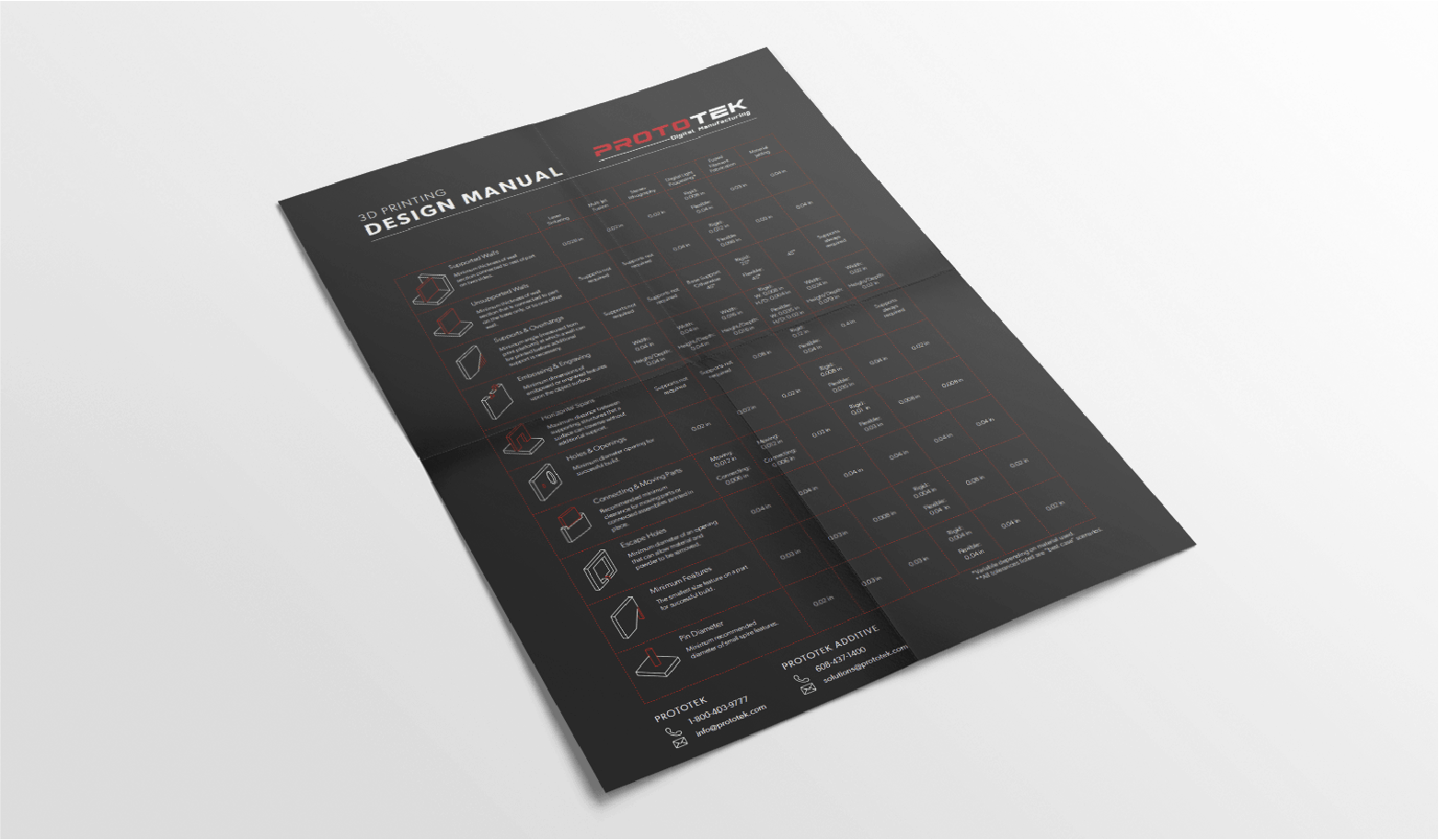
| Feature | Measurement | |
|---|---|---|
|
|
Connecting & Moving Parts |
0.03 in |
|
|
Escape Holes |
0.04 in |
|
|
Embossing & Engraving |
Width: 0.016 in |
|
|
Holes & Openings |
0.02 in |
|
|
Horizontal Spans |
0.08 in |
|
|
Minimum Features |
0.008 in |
|
|
Pin Diameter |
0.03 in |
|
|
Supports & Overhangs |
Base Supports Otherwise 45° |
|
|
Walls (Supported) |
0.02 in |
|
|
Walls (Unsupported) |
0.04 in |
Hybrid PhotoSynthesis Finishes
At Prototek, our finishing options enhance the quality of your hybrid photosynthesis 3D-printed parts. Our highly skilled team meticulously executes post-processing services to tailor your parts to your exact specifications, including:
- Meticulous polishing.
- Specialized coating.
- Precise painting.
- Expert plating.
Our expertise allows us to deliver flawless finishes that perfectly complement your project.
Hybrid PhotoSynthesis Finishes
| Level | Process |
|---|---|
|
Unfinished |
Straight off the machine no extra finishing or post-processing. |
|
Natural |
Support faces are sanded, and layer lines are visible. |
|
Standard |
Support faces are sanded, and the entire part is bead-blasted for a matte/opaque finish with some layer lines visible (black will appear grey). |
|
Improved Exterior |
Exterior (cosmetic) surfaces are sanded, and the entire part is bead-blasted for a smooth matte finish. |
|
Improved All |
All accessible surfaces are sanded, and the entire part is bead-blasted for a smooth matte finish. |
|
Clear |
Natural finish with clear coat. The layer lines are still visible. |
|
Improved Clear |
All accessible surfaces are sanded smooth with a clear coat for optimal clarity on transparent materials. |
|
Primed Exterior |
Exterior (cosmetic) surfaces are sanded, bead-blasted, and primed grey. |
|
Primed All |
All accessible surfaces are sanded, bead-blasted, and primed grey. |
|
Painted |
All accessible surfaces are sanded, bead-blasted, primed, and painted (provide a drawing with your paint specifications). |
|
Custom |
Custom finish. Let us know if your project requires special finishing. Please fill out our engineer-assisted quote form. |
Learn More About 3D Printing
Through our resources, you can discover the complexities of 3D printing and gain insights into creating top-notch designs specifically tailored for this cutting-edge technology.

Is Your Additive Prototype Production-Ready?
A successful additive prototype is only the first step. Learn what changes when an additive part moves into repeatable production.
Why Additive Manufacturing Is Winning the Drone Race
Drone programs are pushing beyond the limits of traditional tooling. Learn how additive manufacturing helps engineers accelerate development, reduce weight, and move from prototype to...
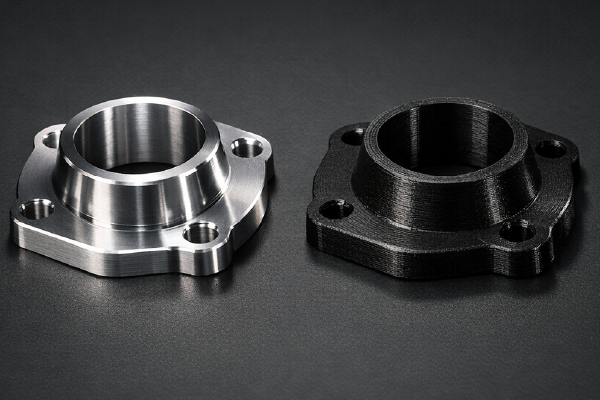
An Overview of CNC Machining vs Additive Manufacturing
When facing the choice between CNC machining and additive manufacturing, you'll have to take a look at your project's requirements. Considerations should include precision, complexity,...
Prototek's
Other Additive Manufacturing Technologies
Choosing Prototek for Hybrid PhotoSynthesis Services
Prototek is the ideal choice for your next hybrid photosynthesis project. With extensive experience in 3D printing services, our team of highly skilled engineers can help bring your project to life. Moreover, our state-of-the-art HPS equipment ensures precision and accuracy, allowing us to produce your project promptly and cost-effectively.
We are committed to providing high-quality services and guarantee that your end product will meet or exceed your expectations. Our personalized customer service ensures that we meet all your unique project requirements. By choosing Prototek, you can have confidence that your project is in the hands of experts.
Are you ready to bring your vision to life? From ideation and concept development to on-demand production, Prototek provides the resources and expert support to bring your hybrid photosynthesis project to life. Reach out to receive an accurate 3D printing quote.