Start a Project

Gold Electroplating Services

Prototek's Advanced Finishing and Post-Processing Solutions

What is Gold Electroplating?

Gold electroplating is a specialty surface finishing technique. Using an electrochemical process called electrodeposition, a thin layer of gold deposits onto a conductive substrate. Not only does this finish enhance the aesthetics of the components, but it also offers functional properties like electrical conductivity, corrosion resistance, and wear protection.

What is the science behind gold electroplating?

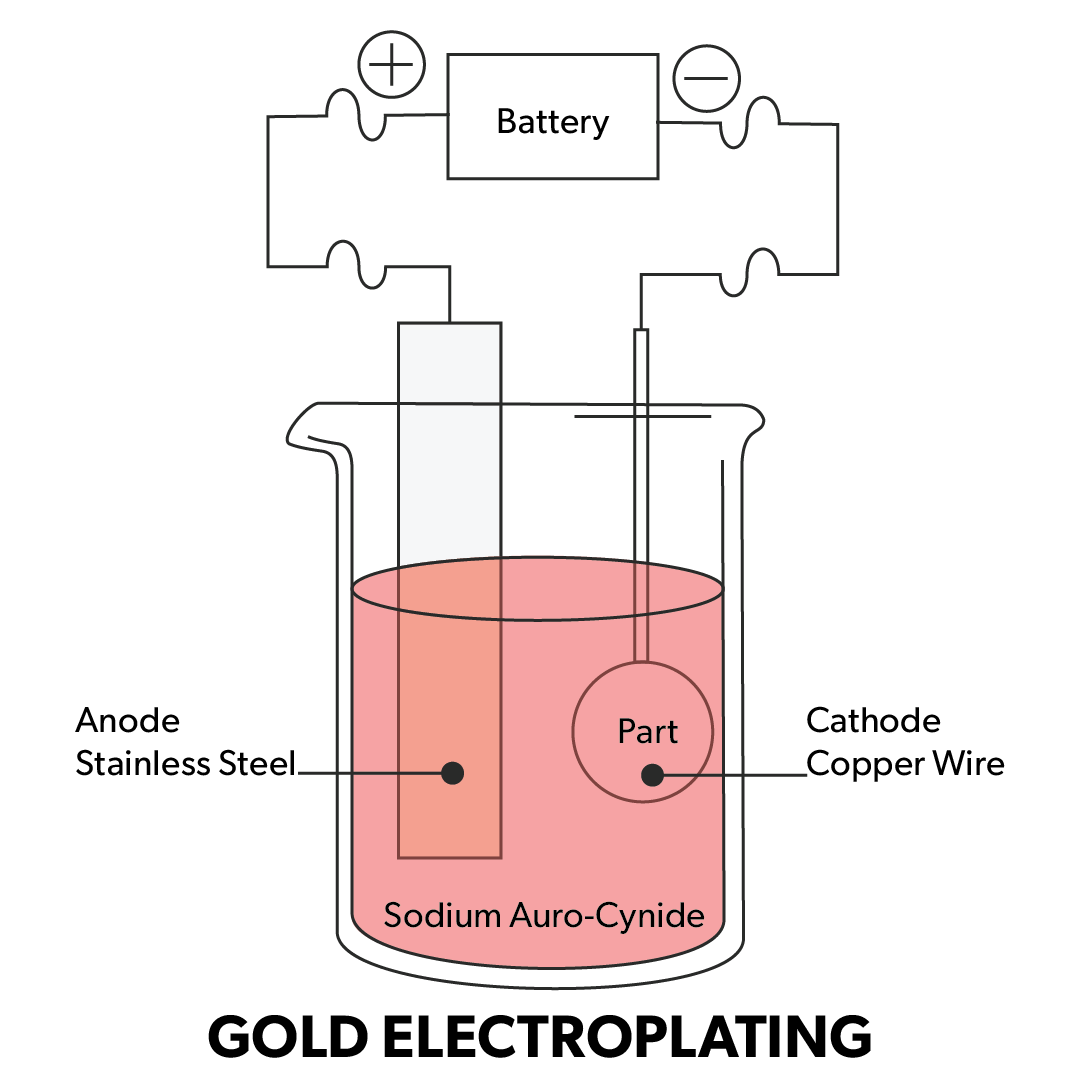
The workpiece, a cathode, is immersed in a gold-containing electrolyte bath. With the application of a direct current, the gold ions in the solution are reduced and deposited onto the substrate. It forms a uniform metallic coating.
Types of gold plating

  • Hard Gold: When alloyed with cobalt or nickel, hard gold provides improved hardness and wear resistance. The typical thickness is 1.0-2.5 microns.
  • Soft Gold: 99.9% pure gold is highly conductive and has excellent solderability. The typical thickness is 0.5-2.5 microns.
  • Flash Gold: The application of a very thin layer of gold for decorative or temporary protection. The typical layer thickness is <0.25 microns.

What are some suitable substrate materials for gold electroplating?

  • Copper and Copper Alloys
  • Nickel and Nickel Alloys
  • Silver
  • Pre-Treated Aluminum
  • Stainless Steel
  • Metalized Ceramics
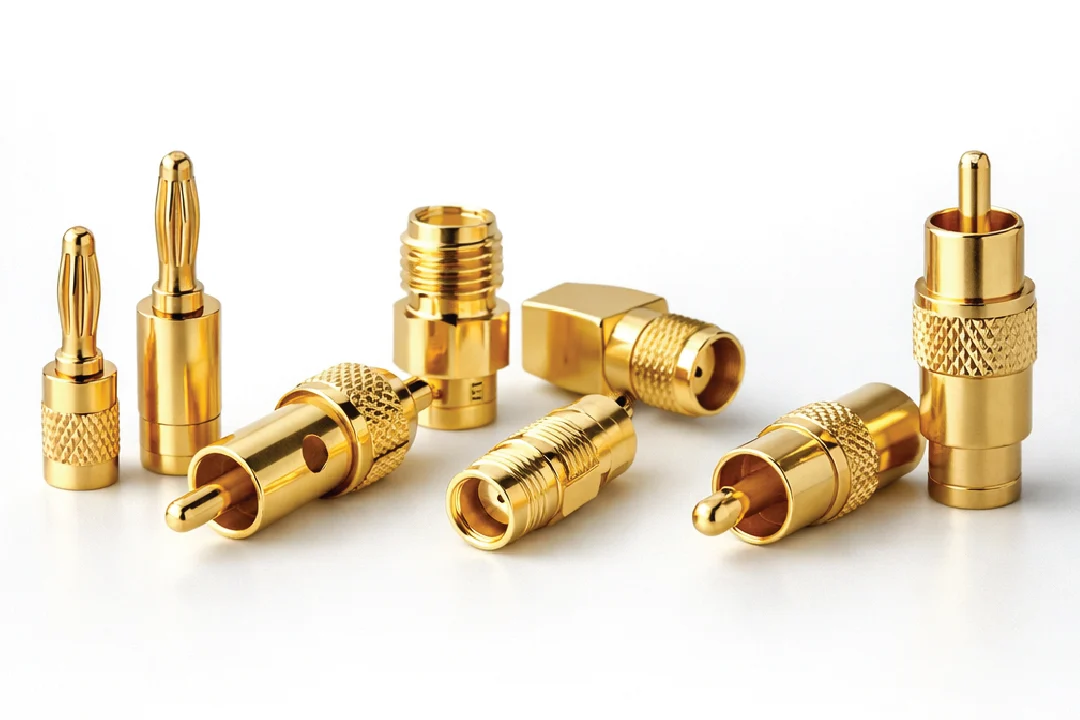
Gold-Plated Connectors - Gold Electroplating Services

What is the step-by-step process for gold electroplating?

It is a multi-stage process requiring thorough control at every stage for optimal results.
 

  1. Surface Preparation and Cleaning:
    • Remove all of the oils, oxides, and contaminants with alkaline cleaners, acid dips, or electrocleaning.
    • This step leads to strong adhesion and defect-free plating.
  2. Pre-Treatment:
    • The acid etching activation or application of an underplate, such as nickel or copper.
    • This step will also lead to strong adhesion and prevent diffusion.
  3. Electrolyte Bath Composition:
    • Potassium gold cyanide or “gold salts”, conductive salts, buffers, and, on occasion, alloying agents go into the bath.
    • The complete control of the pH and composition is a must. For example, the pH needs to be 2.5-3.0 for trivalent gold-cyanide baths.
  4. Current Application:
    • The application of a direct current to a connected substrate and cathode happens now.
    • For the desired plating rate and thickness, adjust both the voltage and current density.
  5. Thickness Control:
    • Managed by plating time, current density, and the composition of the bath.
    • The range goes from “flash,” which is <0.25 microns, to heavy gold plating at >2.5 microns.
  6. Post-Plating Finish
    • Rinsing, drying, and optional treatments, such as passivation or polishing.
    • The substrate undergoes a final inspection for quality and performance.
Gold Electroplating Services at Prototek

What are some gold Electroplating applications?

  • Aerospace: Connectors, sensors, avionics, satellite electronics. Gold-plated materials withstand extreme environments.
  • Connectors and Interconnects: High-reliability connectors for aerospace, medical, and military applications. Gold-plated materials are wear-resistant and have low contact resistance.
  • Defense: Contacts, connectors, and circuit boards. It is dependable in extreme environments.
  • Electronics: Connectors, contacts, switches, and PCB edge fingers. Gold-plated materials offer low-resistance and corrosion-free connections.
  • Medical Devices: Surgical instruments, implantable devices, and electrodes. These plated materials offer biocompatibility and corrosion resistance because they are inert.
  • Semiconductors: Wire bonding and chip packaging. Gold-plated materials maintain electrical conductivity and prevent oxidation.

Why should you choose gold electropating for your project?

  • Corrosion Resistance: Gold doesn’t oxidize or tarnish. It offers long-term reliability even in harsh environments.
  • Electrical Conductivity: Among the best conductors, gold offers minimal signal loss and high-frequency performance.
  • Solderability: Gold-plated surfaces are easy to solder. They are critical for PCB and microelectronic assemblies.
  • Wear Resistance: Alloys with hard gold have excellent wear resistance for connectors and contacts.
  • Aesthetic Appeal: The luster and color of gold are especially notable for luxury and high-end goods.
  • Biocompatibility: The inertness of gold makes it safe for medical implants and instruments.
  • Precision and Uniformity: Electroplating allows for controlled thickness and coverage. It will meet tight engineering tolerances.
  • Longevity and Durability: Gold performs well over decades, which means it reduces maintenance and replacement costs.
  • Cost-Effectiveness: The plating gives the appearance of solid gold, but at a fraction of the cost.

Comparing Gold plating to other plating services

Property Gold Silver Nickel Tin
Conductivity
Excellent
Best
Good
Good
Corrosion Resistance
Excellent
Good
Good
Moderate
Solderability
Excellent
Good
Moderate
Excellent
Wear Resistance
Excellent (Hard Gold)
Moderate
Excellent
Poor
Cost
High
Moderate
Low
Low
Biocompatibility
Excellent
Good
Moderate
Moderate
Aesthetic Appeal
Excellent
Good
Moderate
Poor
Gold Electroplating Services
Ready to get your project started?
