Start a Project

"As Machined" Service

Prototek's Advanced Finishing and Post-Processing Solutions

What is "as machined"?

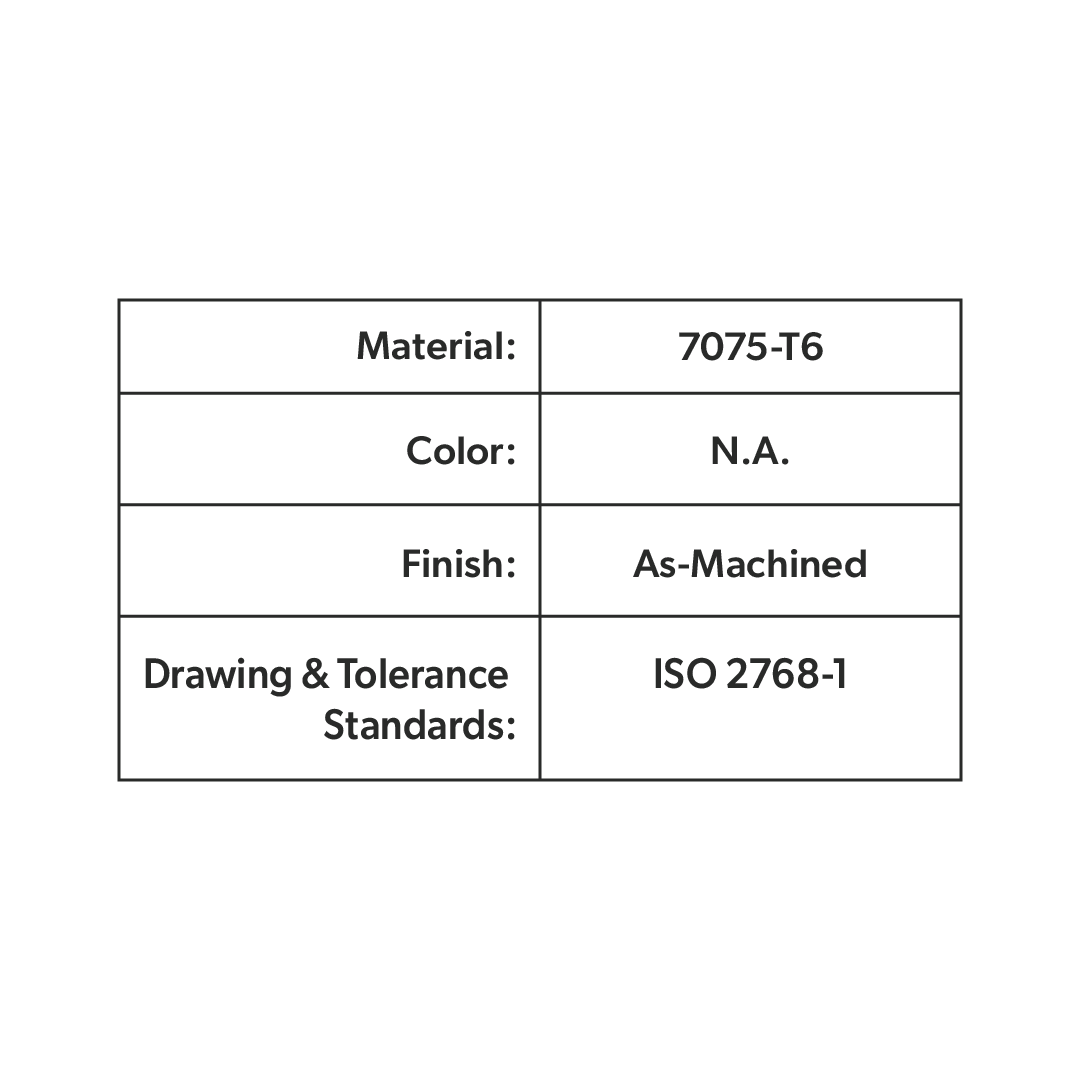
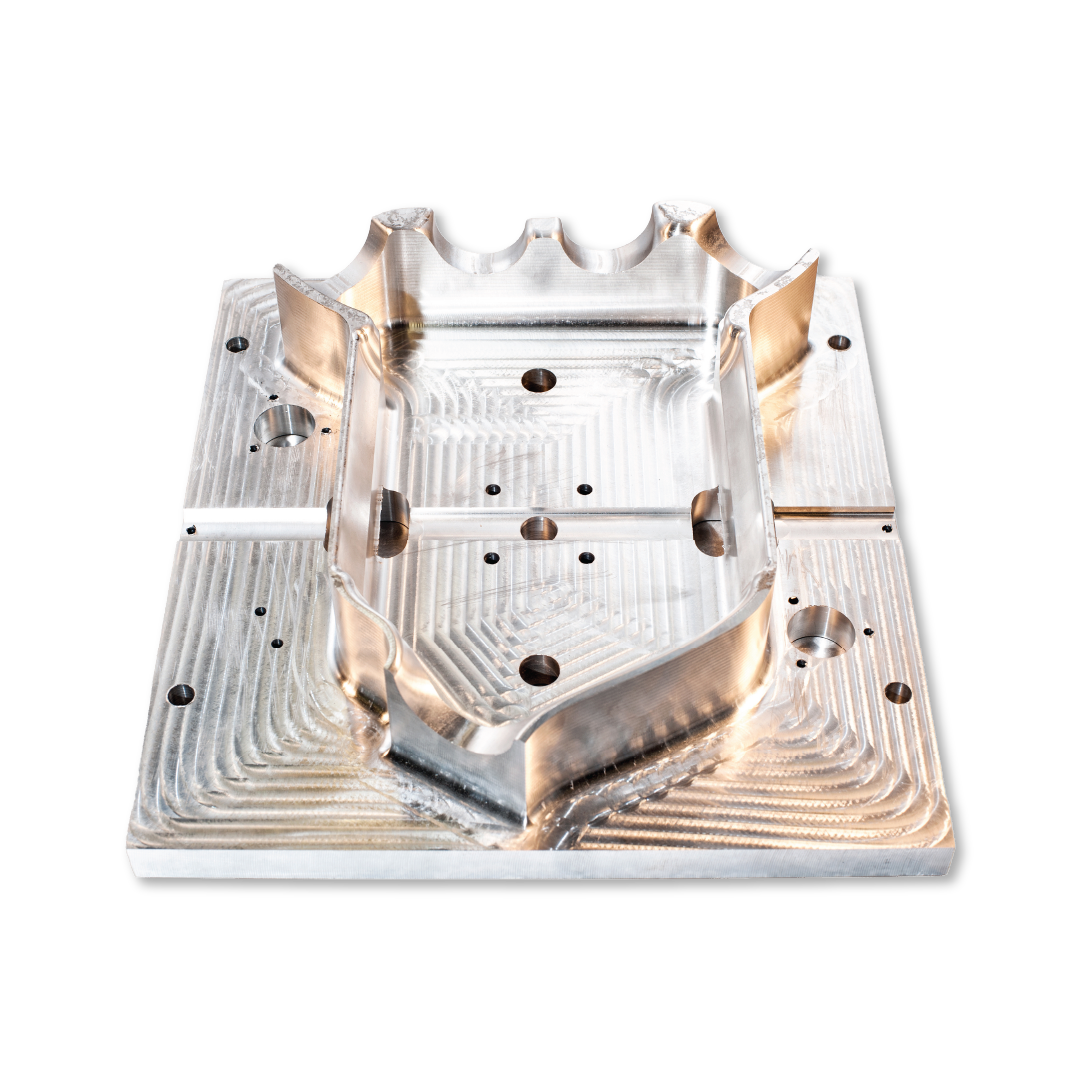
“As Machined” refers to the condition of a part’s surface immediately after CNC machining. Pre any additional finishing treatments such as bead blasting, polishing, or anodizing. The component will display visible tool marks and texture.
Characteristics

  • Surface Roughness: Ra 1.6-3.2 μm or 63-125 μin is standard. The tool marks are present.
  • Tolerances: ±0.005 in or 0.127 mm for metals and ±0.010 in or 0.254 mm for plastics. These are tight and reliable.
  • Appearance: Metallic or matte, with swirls or patterns made from the tool during the machining process.
  • Surface Finishes: The roughness of the part, for example, fine irregularities, waves, or larger deviations, and lay, which is the pattern direction.
  • Industry Standards: Ra 1.6 μm is widely acceptable for general CNC-machined parts. SPI specifies 3.2 μm for injection molding molds.
CAD Drawing Callout for As Machined

What is the step-by-step process for "As Machined"?

  1. Design and Preparation
    • CAD Modeling: Engineers or product designers create 3D models and drawings that specify all dimensions and tolerances.
    • CAM Programming: CNC programmers convert the CAD model into G-code or machine instructions.
  2. Machine Setup
    • Material Loading: A CNC machinist loads the raw metal or plastic material into the machine and secures it.
    • Tool Selection: Then the machinists select the appropriate cutting tools, such as end mills or drills.
    • Parameter Setting: The programmer or machinist programs the spindle speed, feed rate, and coolant flow for optimal machining.
  3. CNC Machining Operations:
    • Milling: Computer software dictates the motion of multi-point cutting tools to remove material systematically from a stationary workpiece.
    • Turning: A workpiece rotates while a stationary cutting tool shears away material, creating cylindrical parts.
    • Drilling: Creates precise holes.
    • Additional Operations: Threading, grinding, and more as needed.
  4. Machining Sequences
    • Roughing: At the start of the process, bulk unneeded material gets quickly removed.
    • Semi-Finishing: As the part approaches its final dimensions, the machine refines it.
    • Finishing: It achieves the specified dimensions and surface quality.
  5. Tolerance Control
    • Standard Tolerances: ±0.005 in for metals and ±0.010 in for plastics. ISO 2768-f/m standards apply.
    • Critical Features: Tighter tolerances can be possible in vital areas.
  6. Surface Condition:
    • Direct Results: Surface finish is “as machined” by the cutting tools. Generally Ra 1.6-3.2 μm.
    • Deburring: The removal of minor burrs or sharp edges if specified. No further finishing after that, though.
  7. Quality Control and Inspection
    • In-Process Probing: The dimensions may be checked during machining by the CNC machines.
    • Final Inspection: During this inspection, calipers, micrometers, and CMMS check the dimensions. Profilometers assess the surface roughness.
    • Documentation: Our quality teams prepare inspection reports and certificates as required.
  8. Final Steps
    • Unloading and Cleaning: The removal from the machine and cleaning of chips and coolant from the finished components.
    • Packaging: Our logistics team carefully packs the parts to protect them and ships them to you!
As Machined

Why choose "as machined" for your project?

Advantages

  • Cost-Effectiveness: Parts that are “As Machined” have no additional finishing steps, so they are the lowest cost.
  • Faster Turnaround: Almost as soon as the finished part comes off the machine, we can ship it out. QC is fast. It is an excellent option for prototyping.
  • Dimensional Accuracy: After machining, there is no additional removal of material or alterations, preserving tight tolerances.
  • Material Integrity: There is no application of chemical or thermal treatments, so the finished part retains the original material properties.
  • Standardization: Easy to communicate and specify.

Limitations

  • Visible Tool Marks: not suitable for consumer-facing or aesthetic parts.
  • No Corrosion or Wear Protection: Additional finishing may be necessary.
  • Higher Friction: Surface roughness may increase friction and wear in moving components.

When to consider "as machined"?

  • Cost: Budget is the priority.
  • Lead Time: Quick turnaround is necessary.
  • Precision: Tight tolerances are vital.
  • Aesthetics: Not a concern.
  • Environment: No harsh environments to worry about.
  • Prototyping: Form, fit, and function testing.

Comparing "As Machined" to other finishes

Surface Finish Typical Ra Value Appearance and Features
As Machined
1.6-3.2 μm or 63-125 μin
Visible tool marks, metallic or matte, and no additional color or gloss.
Polished
<0.8 μm or <32 μin
Highly reflective, smooth, and no visible tool marks.
Anodized
Varies
Coloring, corrosion-resistant, uniform, may mask the tool marks.
Bead-Blasted
~3.2-6.3 μm
Matte, uniform, non-reflective and blends the tool marks.
As Machined Services
Ready to get your project started?
