Start a Project

Black Oxide Service

Prototek's Advanced Finishing and Post-Processing Solutions

What is black oxide?

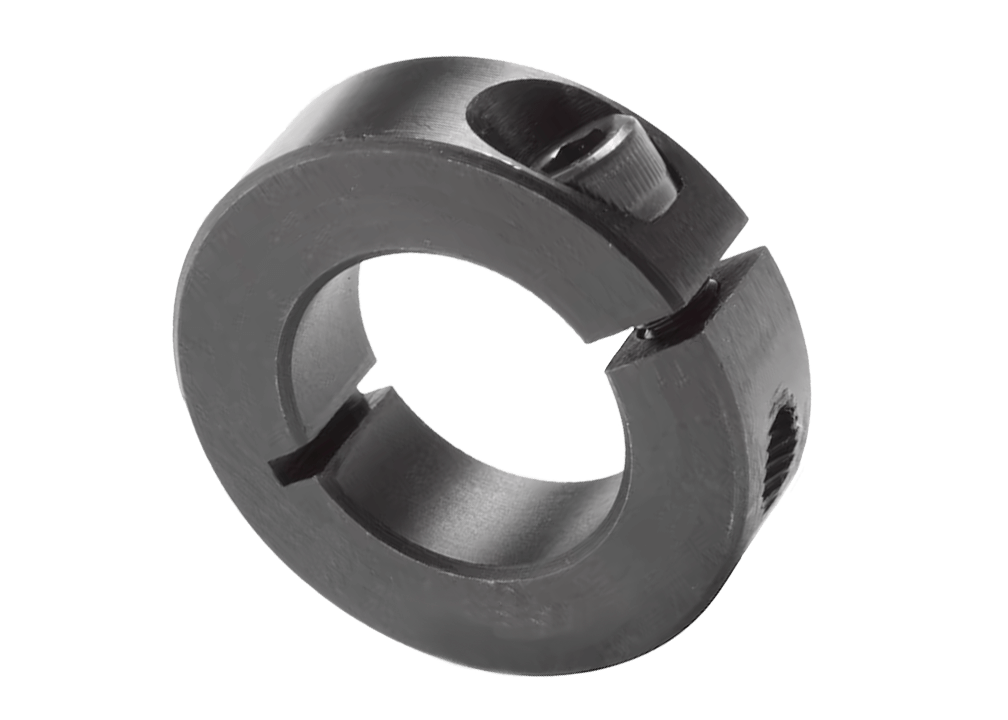
It is a chemical conversion coating typically applied to ferrous metals, such as steel and iron. The metal substrate’s surface gains a thin, strong layer of magnetite (Fe3O4) during the process, which results in a uniform black or blue-black finish. Not only is this finish visually appealing, but it also offers functional benefits—for example, mild corrosion resistance and increased lubricity with minimal dimensional change.
Chemistry and History of Black Oxide

  • Chemical Reaction: The metal’s surface reacts with the alkaline aqueous salt solution to form magnetite. Fe (metal) + O2 (oxidizer) = Fe3O4 (magnetite, black oxide)
  • Composition of the Bath: Hot black oxide baths use sodium hydroxide, sodium nitrate, and sodium nitrite at elevated temperatures.
  • History: Long-standing roles in the firearms industry and industrial manufacturing. It is valuable for its simplicity and effectiveness.

What types of black oxide processes are there?

  • Hot Black Oxide: Roughly 140° C, this type is the industry standard. It requires caustic or oxidizing chemicals.
  • Mid-Temperature Black Oxide: Roughly 90-120° C, this type is lower energy, safer for handling, and has a slightly different chemistry.
  • Cold Blackening: Room temperature, this type uses selenium-based solutions. It is common for decorative finishes, but it is much less durable than the other two types.

Physical and Mechanical Properties

  • Thickness: <2.5 microns. This finish preserves tight tolerances.
  • Corrosion Resistance: On its own, it is mild, but with oil or wax sealing, it is significantly improved.
  • Lubricity: The porous layer retains oil and reduces friction and galling.
  • Electrical Conductivity: The substrate remains conductive.
  • Adhesion: Black oxide does not flake or peel.
Finish - Black Oxide

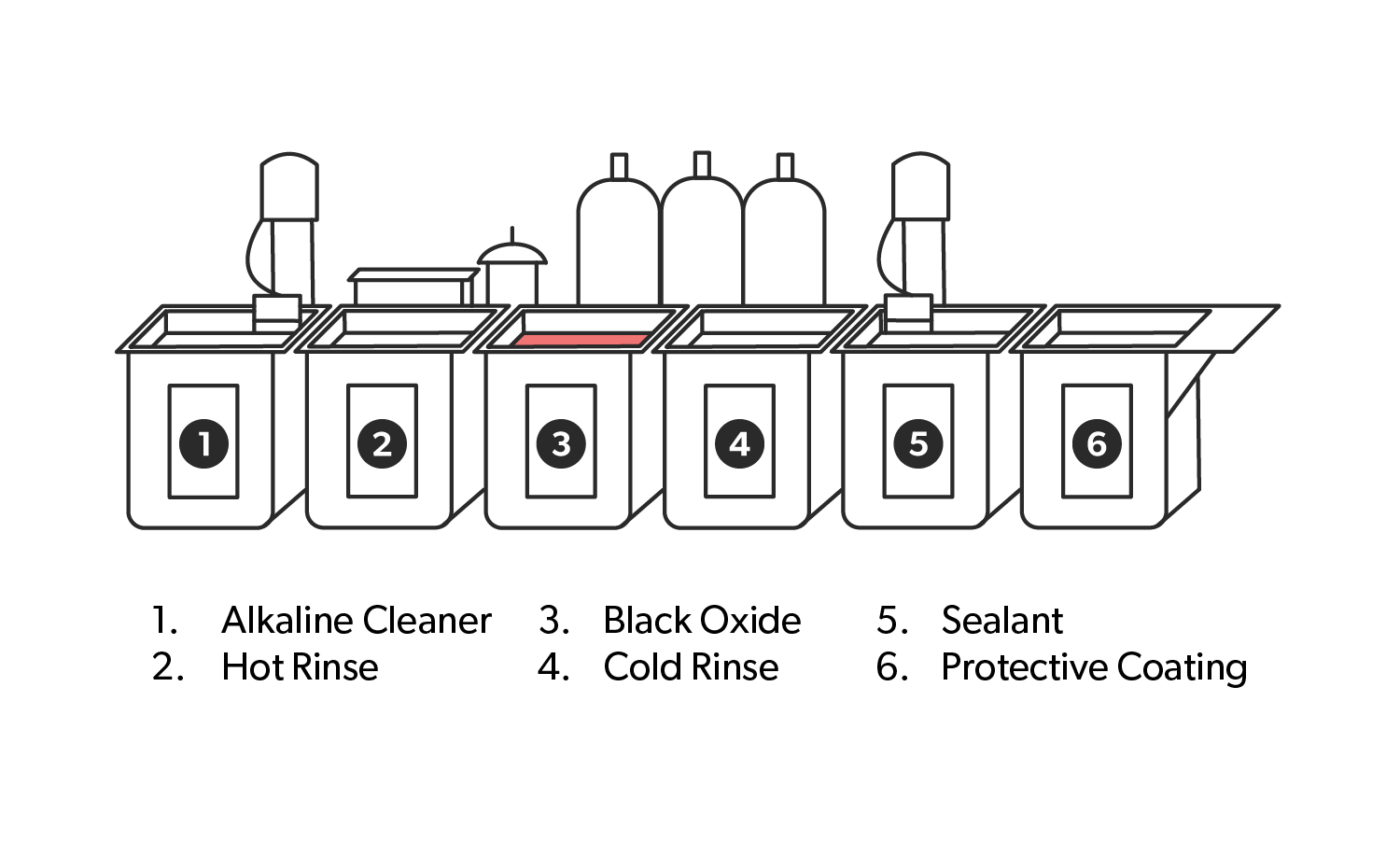
What is the step-by-step process for black oxide?

  1. Surface Preparation
    • Cleaning and Degreasing: Removes oil and other contaminants with an alkaline soak at 120-150° F for 2-5 minutes.
    • Rinsing: Using a cold, overflowing water rinse for 30-60 seconds.
    • Acid Activation: This step is optional. It removes rust and scale with a quick acid dip, for example, 50% HCl for 5-10 minutes. A rinse follows the acid bath.
  2. Chemical Conversion
    • Hot Black Oxide: Primarily for steel, stainless steel, or cast iron for an attractive, non-reflective finish.
    • Mid-Temperature Black Oxide: Typically for iron or steel, this bath avoids the hazardous caustic fumes and boiling temperatures of the hot bath.
    • Cold Black Oxide: Commonly for steel, cast iron, copper, brass, zinc, and nickel. Rather than converting the metal into magnetite, it leaves a thin copper-selenium layer on the substrate.
  3. Post-Black Oxide
    • Rinse: Removes residual chemicals to prevent the contamination of the sealant.
  4. Sealing
    • Oil or Wax: The porous oxide layer is sealed with one of these two sealants, which improves corrosion resistance and lubricity.
  5. Quality Control
    • Visual Inspection: The substrate should have a uniform, deep black color without red, brown, or green tints to it.
    • Adhesion: The finish should not rub off easily. It can be tested by running a tape test.
    • Corrosion Resistance: When properly sealed, the parts should not rust. It can be tested by using a salt spray test.
    • Dimensional Stability: There should be minimal thickness added. The oxide layer should be microscopic.
  6. Troubleshooting and Best Practices
    • Common Issues:
      • Red or brown spots can show up from temperature drops when transferring the parts between baths, and rinsing takes too long. The salts dry onto the part. Reduce the transfer times.
      • A green cast comes from low bath temperatures. Incomplete rinsing or improper bath temperature leaves residual salts trapped in the crevices. Ensure the use of proper temperatures and thorough drying.
      • A non-uniform finish can be due to poor cleaning of the substrate’s surface or overcrowding parts, which restricts chemical reactions. Make sure the parts are thoroughly cleaned and not too many are put into the tank.
      • Rusting can be from insufficient sealing, and unprotected parts will rust almost immediately. To avoid this, always use a sealant such as oil, wax, or lacquer.
    • Maintenance: Regular tank cleaning, temperature control, and proper solution ratios ensure consistent black oxide results.
Manufacturing Finishing - Black Oxide

What are some applications for black oxide?

  • Defense: For non-reflective, corrosion-resistant, and tight tolerances, common applications for black oxide include barrels, receivers, bolts, optics, tactical gear, and magazines.
  • Automotive: For lubricity, corrosion resistance, aesthetics, and tight tolerances, common applications for black oxide include fasteners, gears, shafts, engine parts, and trim.
  • Aerospace: For dimensional stability, anti-galling, high temperature resistance, and non-reflective properties, common applications for black oxide include bolts, screws, pins, bushings, and connectors.
  • Medical Devices: For non-reflective, biocompatible, corrosion-resistant, and tight-tolerance applications, common applications for black oxide include surgical tools, clamps, forceps, and handles.
  • Electronics and Tools: For corrosion resistance, improved grip, and uniform appearance, common applications for black oxide include connectors, brackets, wrenches, sockets, and drill bits.
  • Industrial: For dimensional stability, friction reduction, and mild wear resistance, common applications for black oxide include shafts, bearings, fixtures, and pump valves.

What are the benefits of using black oxide?

  • Corrosion Resistance: Mild to moderate, this can depend on whether sealed with oil or wax.
  • Reduction in Light Reflection: Matte for non-reflective finishes for optical, military, and surgical uses.
  • Minimal Dimensional Change: This surface finish only adds 1-3 microns, which preserves tight tolerances.
  • Aesthetic Appearance: Offers a uniform, sleek black finish, without glare.
  • Lubricity: The porous layer will absorb oil, which means a reduction in friction and galling.
  • Cost-Effectiveness: Lower costs than anodizing, electroplating, or powder coating.
  • No Hydrogen Embrittlement: While some plating processes cause embrittlement, black oxide does not.
  • Maintenance: Minimal upkeep and re-oiling restorer protection.

Comparison Table: Black Oxide vs Other Coatings

Coating Type Thickness Added Corrosion Resistance Cost Dimensional Impact Color Options Suitable for Tight Tolerances
Black Oxide
1-3 Microns
Mild-Moderate with Oil
Low
Minimal
Black Only
Excellent
Anodizing
5-25 Microns
High for Aluminum
Moderate-High
Moderate
Many
Good for Aluminum
Electroplating
10-25 Microns
High Depending on Metal
Moderate-High
Moderate
Many
Moderate
Powder Coating
50-150 Microns
High
Moderate-High
Significant
Many
Poor
Black Oxide Services
Ready to get your project started?
