Additive Manufacturing _Nozzle Based Technology
AM Nozzle-Based Technologies
Ready to get your project started?

Fused Filament Fabrication vs. Material Jetting

Delve into the nozzle-based additive manufacturing technologies, encompassing fused filament fabrication and material jetting. These cutting-edge technologies have a broad range of applications across various industries. By understanding and harnessing the capabilities of these advanced technologies, you will uncover a myriad of opportunities for innovation and development in manufacturing and beyond.

Fused Filament Fabrication
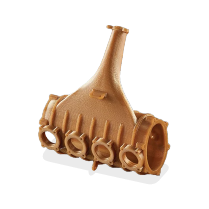
Fused Filament Fabrication (FFF) - Ultem 1010

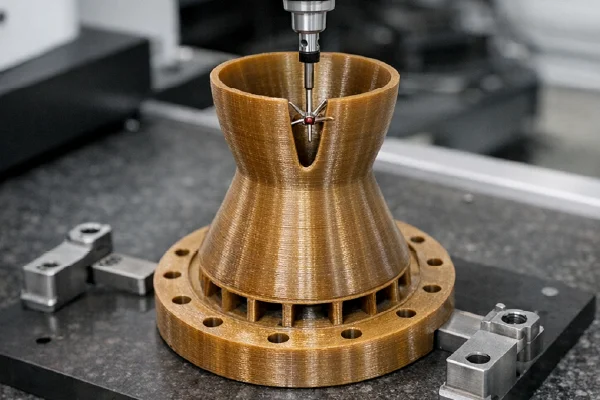
Fused filament fabrication is an innovative additive manufacturing process that uses a nozzle to build three-dimensional parts layer by layer using thermoplastic filament. This cutting-edge process has revolutionized manufacturing, offering greater precision and efficiency in producing both complex solid and partially hollow objects. Fused filament fabrication allows for the creation of intricate designs and the use of a wide variety of materials, opening up numerous possibilities for engineers, designers, and manufacturers across various industries, such as aerospace and automotive. One such notable material is Ultem9085, an extremely high-temperature, chemical-resistant, and flame-retardant material. This technique is essential for fields that require precision and quality.

Material Jetting
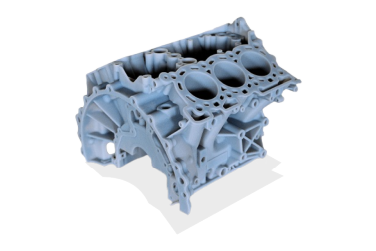
Prototek Capabilities_Material Jetting

Material jetting is a sophisticated additive manufacturing technique that involves the precise deposition of liquid material droplets layer by layer to build intricate 3D objects. This versatile technology allows for the fabrication of complex geometries using a wide range of materials: solid materials of multiple colors, rubbers of different shore hardnesses, and a mix of both in a single print. The process enables the production of parts with exceptional surface finishes and high dimensional accuracy. It is an invaluable tool for creating detailed prototypes, small-batch production runs, applications demanding multiple colors and materials, and intricate, custom designs.

Comparing these nozzle-based technologies.

Fused Filament Fabrication (FFF) and Material Jetting are popular 3D printing nozzle-based techniques. FFF uses a heated nozzle to deposit thermoplastic filaments, such as PLA and ABS, in layers; meanwhile, Material Jetting employs inkjet-like printheads to deposit droplets of material. This technology, also known as drop-on-demand (DOD) 3D printing, can print various materials like polymers, ceramics, and metals, producing intricate shapes and structures with great accuracy and precision.

Material Jetting is well-liked in the aerospace, automotive, and healthcare industries due to its ability to create complex geometries and high-quality, detailed objects. Additionally, it can produce multi-material and multi-color parts in a single print run. Understanding the differences between these two techniques is crucial to achieving the best results. Knowing the strengths and limitations of each method can help determine the optimal approach for specific project needs, whether for prototypes or finished products.

Both FFF and Material Jetting have their unique advantages and disadvantages. Parts created using FFF are typically solid and durable, while Material Jetting can produce parts with a smooth surface finish and high resolution. Consequently, both techniques are ideal for rapid prototyping, small-batch production, and creating complex geometries.

Nozzle-Based Technologies in a Glance

Fused Filament Fabrication
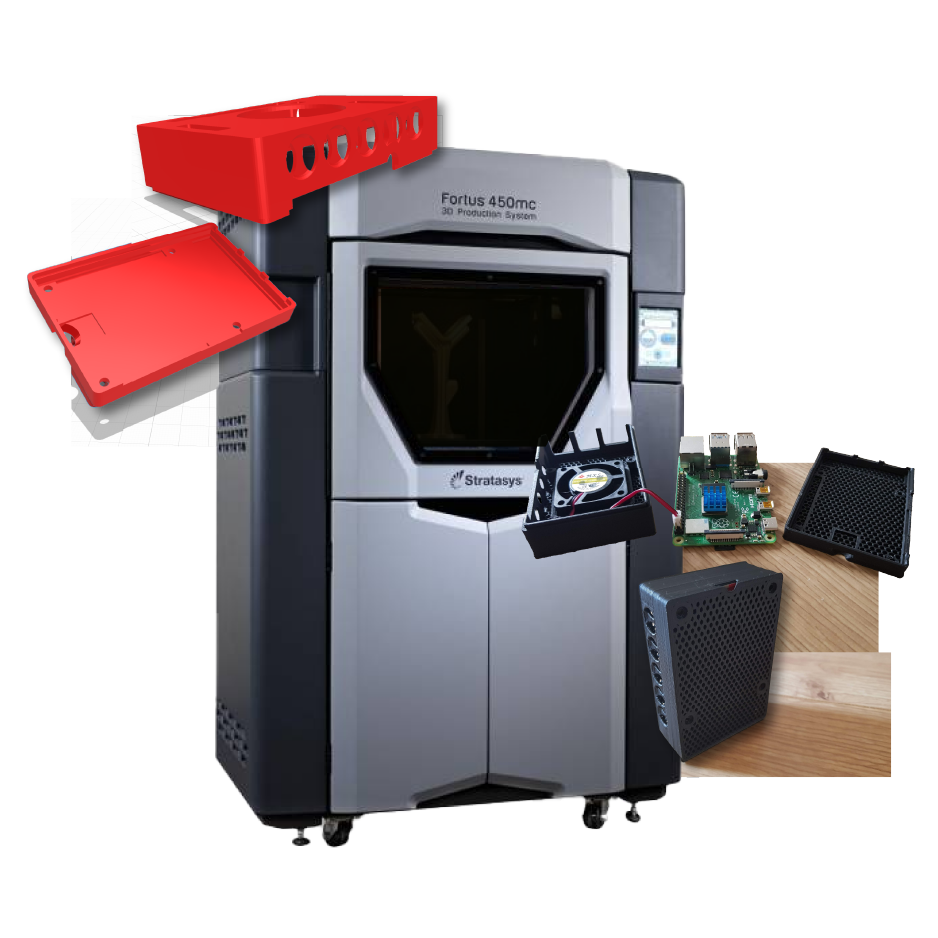
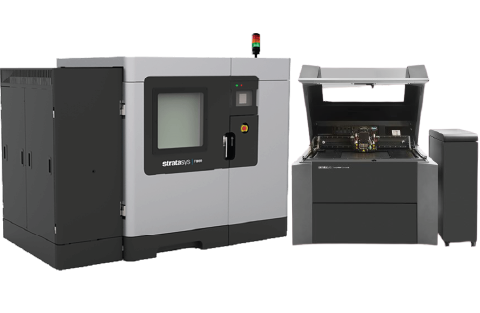
Additive Manufacturing Nozzle-Based Technology | Fused Filament Fabrication (FFF)

OEM: Stratasys

Max Build Area: 36 x 24 x 36 in

Lead Time: 1 – 5 Days

Materials: ABS-ESD7, ABS-M30, ASA, Nylon 12CF, PC-ISO, Polycarbonate (PC), Ultem 1010, and Ultem 9085. Other materials may be available upon request.

Tolerances: First inch ± 0.005 in and additional inches ± 0.002 in/in.

Layer Thickness: Standard 0.010 in also available 0.005, 0.007, and 0.013 in.

Material Jetting
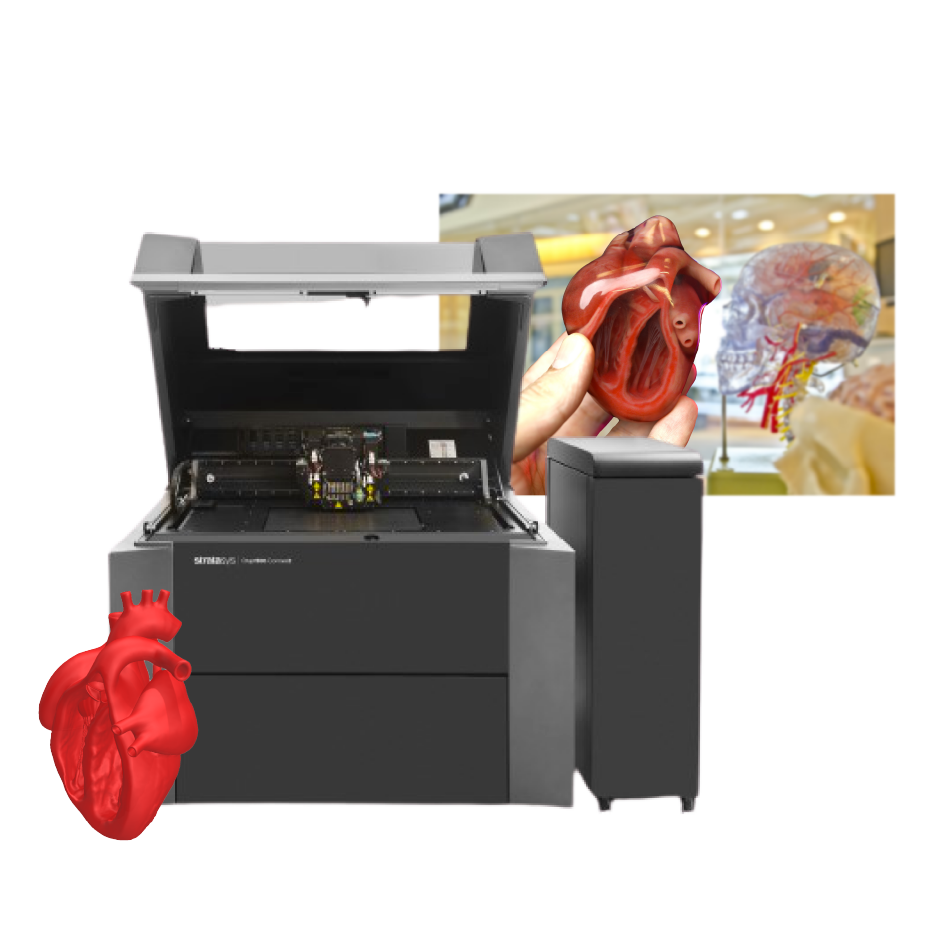
Additive Manufacturing Nozzle-Based Technology_Material Jetting

OEM: Stratasys

Max Build Area: 19.3 x 15.4 x 7.9 in

Lead Time: 1 – 2 Days

Materials: Agilus30, Digital ABS Plus, Tango Black, VeroClear, VeroBlackPlus, VeroWhitePlus, VeroCyan, VeroMagenta, VeroYellow, VeroGrey. Other materials may be available upon request.

Tolerances: First inch ± 0.004 in and additional inches ± 0.0015 in/in.

Layer Thickness: Standard 0.0006 in also available 0.005, 0.007, and 0.0012 in.

Fused Filament Fabrication
Material Jetting
Additive Manufacturing Nozzle-Based Technology | Fused Filament Fabrication (FFF)
Additive Manufacturing Nozzle-Based Technology_Material Jetting

OEM

Stratasys

Stratasys

Max Build Area

36 x 24 x 36 in

19.3 x 15.4 x 7.9 in

Lead Time

1 – 5 Days

1 – 2 Days

Tolerances

First inch ± 0.005 in
Add. inches ± 0.002 in/in

First inch ± 0.004 in
Add. inches ± 0.0015 in/in

Layer Thickness

Standard: 0.010 in

Also available: 0.005, 0.007, and 0.013 in

High-Quality: 0.0006 in
High-Speed: 0.0012 in 
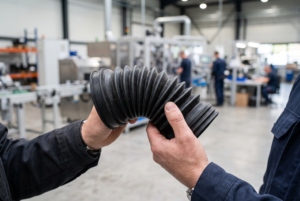
Design Recommendations

Fused Filament Fabrication

Feature Measurement

Connecting & Moving Parts

0.008 in

Escape Holes

0.04 in

Embossing & Engraving

Width: 0.024 in
Height/Depth: 0.08 in

Holes & Openings

0.04 in

Horizontal Spans

0.4 in

Minimum Features

0.08 in

Pin Diameter

0.04 in

Supports & Overhangs

45°

Walls (Supported)

0.03 in

Walls (Unsupported)

0.03 in
Feature Measurement

Connecting & Moving Parts

0.2 mm

Escape Holes

1 mm

Embossing & Engraving

Width: 0.6 mm
Height/Depth: 2 mm

Holes & Openings

1 mm

Horizontal Spans

10 mm

Minimum Features

2 mm

Pin Diameter

1 mm

Supports & Overhangs

45°

Walls (Supported)

0.8 mm

Walls (Unsupported)

0.8 mm

Material Jetting

Feature Measurement

Connecting & Moving Parts

0.008 in

Escape Holes

0.04 in

Embossing & Engraving

Width: 0.02 in
Height/Depth: 0.02 in

Holes & Openings

0.02 in

Horizontal Spans

Supports always required

Minimum Features

0.02 in

Pin Diameter

0.02 in

Supports & Overhangs

Supports always required

Walls (Supported)

0.04 in

Walls (Unsupported)

0.04 in
Feature Measurement

Connecting & Moving Parts

0.2 mm

Escape Holes

1 mm

Embossing & Engraving

Width: 0.5 mm
Height/Depth: 0.5 mm

Holes & Openings

0.5 mm

Horizontal Spans

Supports always required

Minimum Features

0.5 mm

Pin Diameter

0.5 mm

Supports & Overhangs

Supports always required

Walls (Supported)

1 mm

Walls (Unsupported)

1 mm

Finishing and Post-Processing

Fused Filament Fabrication

Level Process
Natural
Supports are removed. Parts will have visible layer lines.
Improved Exterior
Exterior (cosmetic) surfaces are sanded to reduce layer lines.
Smoothed & Sealed
Vapor smoothed and sealed for a watertight finish. May modify the geometry slightly.
Primed Exterior
Exterior (cosmetic) surfaces are smoothed to reduce layer lines and coated in grey primer.
Painted
Parts are smoothed to reduce layer lines, primed, and painted (provide drawing with paint specifications).
Custom

Custom finish. Let us know if your project requires special finishing. Please fill out our engineer-assisted quote form.

Material Jetting

Level Process
Unfinished
Straight off the machine no extra finishing or post-processing.
Natural
Support faces are sanded, and layer lines are visible.
Standard
Support faces are sanded, and the entire part is bead-blasted for a matte/opaque finish with some layer lines visible (black will appear grey).
Improved Exterior
Exterior (cosmetic) surfaces are sanded, and the entire part is bead-blasted for a smooth matte finish.
Improved All
All accessible surfaces are sanded, and the entire part is bead-blasted for a smooth matte finish.
Clear
Natural finish with clear coat. The layer lines are still visible.
Improved Clear
All accessible surfaces are sanded smooth with a clear coat for optimal clarity on transparent materials.
Primed Exterior
Exterior (cosmetic) surfaces are sanded, bead-blasted, and primed grey.
Primed All
All accessible surfaces are sanded, bead-blasted, and primed grey.
Painted
All accessible surfaces are sanded, bead-blasted, primed, and painted (provide a drawing with your paint specifications).
Custom

Custom finish. Let us know if your project requires special finishing. Please fill out our engineer-assisted quote form.

FAQs

What are the similarities between fused filament fabrication and material jetting?

Fused filament fabrication (FFF) and material jetting are advanced additive manufacturing processes that use nozzle-based technologies to create three-dimensional objects layer by layer. 

Both processes offer the capability to fabricate intricate and complex geometries with high precision and accuracy. These technologies have found applications in various industries, including aerospace, automotive, medical, and consumer goods, due to their ability to produce custom parts and prototypes with exceptional detail and quality.

What are the differences between fused filament fabrication and material jetting?

Fused filament fabrication uses a continuous filament, while material jetting deposits droplets of liquid photopolymer. Fused filament is generally more cost-effective, while material jetting offers higher precision and surface finish.

As far as finished parts go, fused filament fabrication produces parts with a layered appearance, while material jetting creates smooth, uniform surfaces. Filament parts are generally more cost-effective while jetting offers higher precision and detail.

The content on this blog post is for informational purposes only. Prototek does not make any declaration or guarantee, whether expressed or implied, regarding the information’s accuracy, completeness, or validity. Any performance parameters, geometric tolerances, specific design features, quality and types of materials, or processes should not be assumed to represent what will be delivered by third-party suppliers or us. It’s crucial to note that buyers seeking quotes for parts are responsible for defining the specific requirements for their project.

Prototek can produce cast urethane medical devices especially housings for medical devices
Design Tips: Cast Urethane Medical Devices

Cast urethane offers material versatility, customizable prototyping, and low-volume production for medical devices. By understanding the properties and best practices, a wide range of medical devices can be produced.

Thermoplastic vs. Thermoset Plastics

Thermoplastics and thermosets are the two main classes of plastics. Each of these has unique molecular structures, properties, manufacturing methods, and applications. Understanding the differences makes a huge difference in selecting the correct material for any engineering, manufacturing, or design project.

Manufacturing- Semiconductor Materials
Semiconductor Materials: Choice Matters in Design

The choice of material in semiconductor design is an incredibly important factor in determining a devices speed, power efficiency, heat management, reliability, and future scalability. Material innovation is foundational for semiconductor advancement as engineers and designers push the boundaries of performance and miniaturization.

Prototek achieves its CMMC Level 2
Why Prototek’s CMMC Level 2 Certification Matters

Prototek’s achievement of CMMC Level 2 certification is not only a technical milestone, it’s a strategic business advantage. It makes Prototek a secure manufacturer in the defense industries supply chain, builds customer trust, and positions the company for future growth in highly regulated industries.