Polycarbonate (PC) and Polypropylene (PP) are both thermoplastics. They are completely distinctive and unique in their own ways. While polycarbonate is superior in terms of strength, clarity, and heat resistance, polypropylene is a standout for chemical resistance, lower cost, and ease of processing. To make the right choice for your project, focus on the performance requirements.
In this blog post, we’ll discuss the differences in properties, characteristics, pros/cons, and real-world applications. If you still have questions at the end, please feel free to reach out to our team!
Fundamental Material Properties of Polycarbonate vs Polypropylene
Mechanical Properties
- Strength and Impact: Polycarbonate is much stronger and more impact-resistant than polypropylene. Making polycarbonate ideal for safety and critical load-bearing applications.
- Stiffness: Polycarbonate is stiffer due to its higher flexural modulus, and polypropylene is more flexible. Certain grades of polypropylene can be highly ductile.
- Hardness: Polycarbonate is the clear winner here. It is harder and more scratch-resistant.
Thermal Properties
- Heat Resistance: At higher temperatures, polycarbonate wins, with a melting point of up to 315° C and an HDT of up to 145° C. Polypropylene is limited to around 170° C.
- Glass Transition: Polycarbonate has a higher glass transition temperature of ~147° C, meaning it maintains rigidity at elevated temperatures. PP softens sooner.
Chemical and Optical Properties
- Chemical Resistance: PP resists acids, bases, solvents, and oils. PC is only moderately resistant, and organic solvents can attack it.
- Transparency: PC is optically clear with >90% light transmission. It is suitable for applications such as lenses and glazing. PP is generally opaque or translucent.
Electrical and Other Properties
- Electrical Insulation: Polypropylene and polycarbonate are both excellent insulators and have similar dielectric strengths.
- Density and Water Absorption: Polypropylene is lighter and absorbs nearly no water. Polycarbonate is heavier and will absorb slightly more moisture.
Manufacturing and Processing Characteristics
| Polycarbonate | Polypropylene | |
|---|---|---|
|
Processing Methods |
Injection Molding, Extrusion, Blow Molding, and Thermoforming. |
Injection Molding, Extrusion, Blow Molding, and Thermoforming. |
|
Processing Temp (°C) |
280-320 (Injection) |
180-250 (Injection) |
|
Shrinkage Rate (%) |
0.5-0.7 |
1.5-2.0 |
|
Ease of Processing |
Moderate (Needs Drying and Higher Temps) |
High (Easy and Fast Cycles) |
|
Surface Finishing |
Polishing, Painting, and Printing |
Corona or Flame Treatment for Adhesion |
|
Available Shapes |
Sheets, Rods, Films, and Pellets |
Sheets, Rods, Films, and Pellets |
|
Specialty Grades |
UV, Flame Retardant, Medical, and Food |
High Gloss, Flame Retardant, and Reinforced |
Applications: Polycarbonate vs Polypropylene
| Industry | Polycarbonate Applications | Polypropylene Applications |
|---|---|---|
|
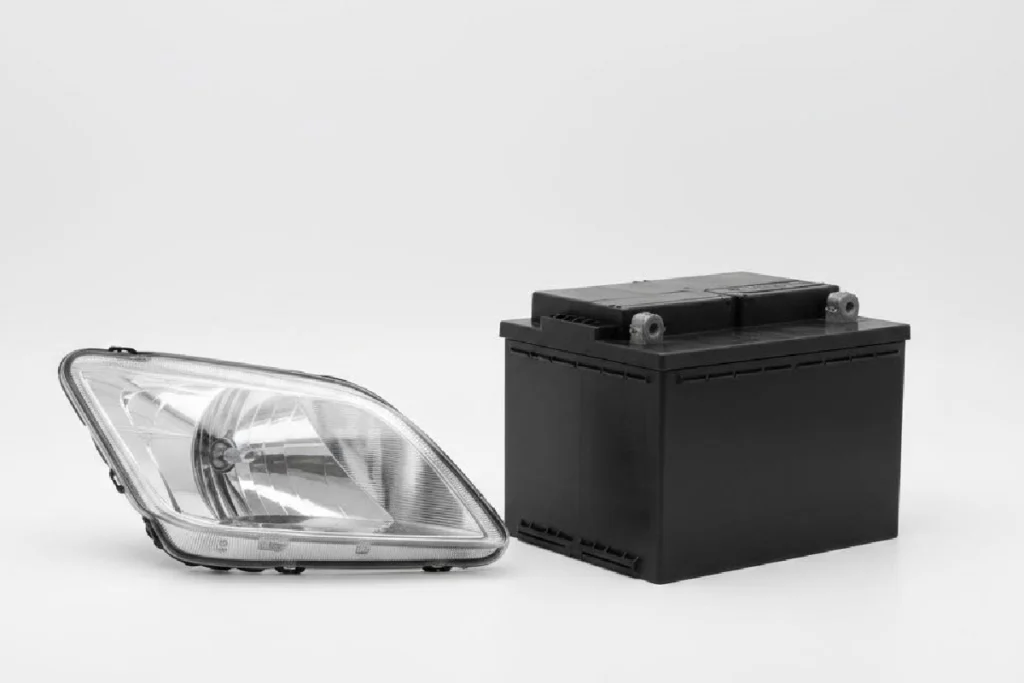
Headlamp Lenses, Dashboards, and Mirror Housings |
Bumpers, Interior Trim, and Battery Housings |
|
|
Eyeglass Lenses, Surgical Instruments, and Device Housings |
Syringes, Labware, and Pill Bottles |
|
|
Circuit Breaker Housings and Connectors |
Insulators, Battery Trays, and Appliance Housings |
|
|
Machine Shields and Glazing Panels |
Pipes, Fittings, and Industrial Containers |
|
|
Sunglasses, Safety Googles, and Toys |
Housewares and Toys |
Real-World Scenerios
- Food Containers: Polypropylene is preferred for disposables and microwave-safe dishes due to its BPA-free properties and lower cost. Polycarbonate is commonly used for reusable, clear, and tough containers.
- Medical Devices: Polypropylene is suitable for disposables, such as syringes and trays, while polycarbonate is suitable for reusable, transparent, or precision components.
- Automotive: Polypropylene is known for chemical resistance and lightweight trim. Polycarbonate for its impact resistance and for clear optical parts.
Pros and Cons of Polycarbonate and Polypropylene
Polycarbonate
Pros:
- Strength
- Impact Resistant
- Optical clarity (>90% Light Transmission)
- Heat Resistant
- Dimensional Stability
- Electrical Insulation
Cons:
- Higher Cost
- Sensitive to Chemicals
- Sensitive to UV
- High Processing Temperatures
- Contains BPA (Health/Regulatory Concern)
- Rarely Recycled
Polypropylene
Pros:
- Chemical Resistant
- Lightweight
- Flexible
- Low Cost
- Recyclable (#5)
- No BPA Concerns
Cons:
- Lower Strength
- Lower Impact Resistance
- Lower Temperature Resistance
- Requires Surface Finishing
Which one is most suitable for your project?
Choose polycarbonate if you need:
- High strength and impact resistance.
- Optical clarity for items such as lenses or glazing.
- Dimensional stability at high temperatures.
- Durable and reusable products.
Choose polypropylene if you need:
- Chemical resistance to acids, bases, solvents, or oils.
- Lightweight, flexible, and cost-effective components.
- Disposable or high-volume products for packaging or medical disposables.
- Microwave-safe, food-contact, or medical device components.
- Environmentally preferable and recyclable solutions.
Conclusion
Both polycarbonate and polypropylene are suitable for a range of applications, though their strengths differ. PC is common for demanding, high-performance, and optically clear applications. On the other hand, PP is common for cost-sensitive, chemically resistant, and high-volume applications.
FAQs
What is polycarbonate?
Polycarbonate is a high-performance thermoplastic polymer with high strength, impact resistance, and optical clarity. A variety of applications make use of it, including eyewear lenses, safety goggles, electronic components, and architectural glazing. Polycarbonate offers excellent durability, heat resistance, and the ability to be molded into complex shapes, making it a versatile material for a range of industries.
What is polypropylene?
Polypropylene is a versatile thermoplastic widely used in many applications. It is known for its excellent chemical resistance, durability, and lightweight properties. Polypropylene is suitable for packaging, automotive parts, textiles, and consumer goods.
What are the differences between polycarbonate and polypropylene?
The main differences between the two materials lie in their mechanical properties, thermal performance, and suitability for specific applications.
Does Prototek work with polycarbonate or polypropylene?
Yes, Prototek works with both polycarbonate and polypropylene materials. We offer 3D printing, CNC machining, fabrication, urethane casting, and injection molding services.