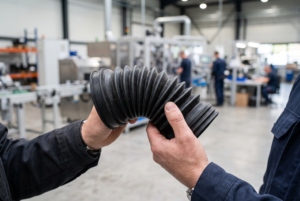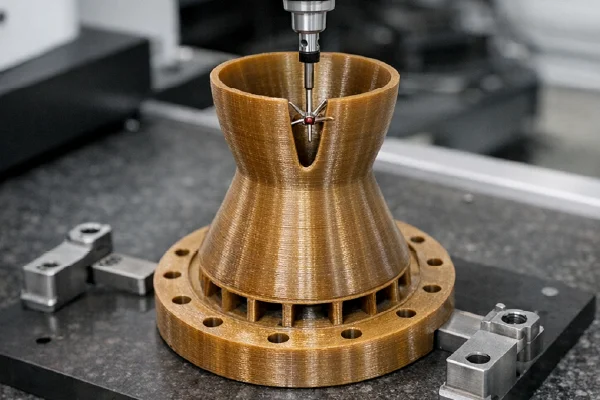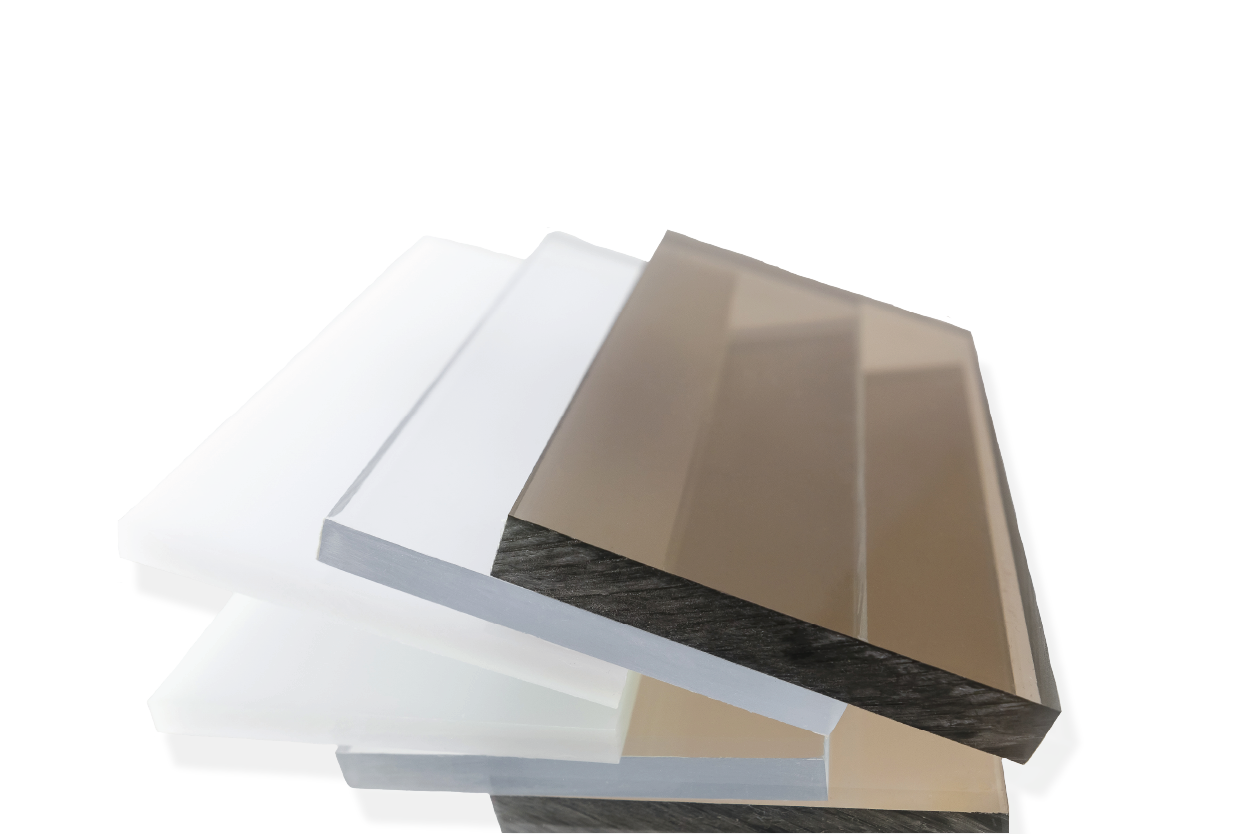
Today, polycarbonate (PC) is everywhere. It’s an incredibly versatile material. Due to its phenomenal mechanical properties, it is common in everything from eyeglasses to medical devices and automotive components, such as lens caps for new vehicles, as well as replacements for older vehicles. Polycarbonate is an amorphous thermoplastic, virtually unbreakable, colorless, translucent, and stronger than PMMA.
In this blog post, we will cover everything from what it is to its history and its mechanical properties.
What is polycarbonate?
Polycarbonate is a strong, versatile amorphous thermoplastic with twice the impact resistance of ABS or PVC. It’s standard in light covers and safety glasses, and can be used to make replacement parts for glass components, such as those found in blenders. This material is significantly lighter and less fragile than glass, making it very easy to work with.
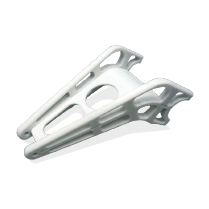
Typical forms of manufacturing polycarbonate include fabrication, machining, injection molding, thermoforming, and 3D printing. Prototek offers most of these manufacturing services, including the PC and PC-ISO filaments that we use in our fused filament fabrication department.
Due to its amorphous nature, it softens slowly over time when facing high temperatures. It has a tensile strength of 8,500 psi and a shrink rate of 0.006 – 0.009 in/in. Joining PC components is easy with the use of solvents, adhesives, or fasteners. It has a higher coefficient of thermal expansion than steel and aluminum, as well as excellent electrical properties and dimensional stability.
What is the history of Polycarbonate, and how is it made?
The history of polycarbonate dates back to the 1950s. In 1953, Herman Schnell at Bayer AG in Germany patented it originally under the name Melron. The unique molecular structure lends to its properties, impact resistance, optical clarity, and heat resistance.
Producing polycarbonate happens by combining bisphenol A (BPA) and phosgene under carefully controlled conditions. In this process, treating BPA with sodium hydroxide removes the hydrogen atoms from the hydroxyl groups of the BPA molecule. This step creates diphenoxide, which reacts with phosgene to form chloroformate. In turn, this reaction with phenoxide links them together, forming the polycarbonate chains.
The production of this material can happen at room temperature without cracking or breaking. Additives such as tetrabromobisphenol A, dihydroxybenzophenone, and bis(4-hydroxyphenyl)cyclohexane can enhance the material’s UV resistance, fire resistance, and prevent discoloration.
Mechanical Properties for PC
There are many mechanical properties of PC, which make it a fantastic choice for many projects, including the following:
- High Impact Resistance – Ensuring Safety and Durability.
- Tensile Strength – can withstand pulling forces.
- Flexural Strength – can bend and deform under pressure without breaking.
- Heat Resistance – can withstand relatively high temperatures and maintain toughness.
- Dimensional Stability – maintains shape and size under varying temperatures and moisture conditions.
- Creep Resistance – resists deformation under continual stress.
- Clarity – clear/translucent, it transmits 90% of light and can be comparable to glass.
- Hardness – a good hardness rating leads to resistance to scratching and abrasion.
- Density – it’s low, and therefore the material is lightweight.
The information in the following tables comes from AZO Materials.
| PC Chemical Resistance | |
|---|---|
|
Acids – Concentrated |
Fair |
|
Acids – Dilute |
Good |
|
Alcohols |
Good |
|
Alkalis |
Poor |
|
Aromatic Hydrocarbons |
Poor |
|
Greases & Oils |
Good |
|
Halogens |
Poor |
|
Ketones |
Poor |
| PC Electrical Properties | |
|---|---|
|
Dielectric Constant @ 1 MHz |
2.9 |
|
Dielectric Strength (kV.mm⎺¹) |
15 – 67 |
|
Dissipation Factor @ 1 MHz |
0.01 |
|
Surface Resistivity (ohm/sq) |
1015 |
|
Volume Resistivity (ohm.cm) |
1014 – 1016 |
| PC Mechanical Properties | |
|---|---|
|
Abrasive Resistance – ASTM D1044 (mg/1000 cycles) |
10 – 15 |
|
Coefficient of Friction |
15 – 67 |
|
Compressive Strength (MPa) |
>80 |
|
Elongation at Break (%) |
100 – 150 |
|
Hardness – Rockwell |
M70 |
|
Izod Impact Strength ( J.m-1) |
600 – 850 |
|
Poisson’s Ratio |
0.37 |
|
Tensile Modulus |
2.3 – 2.4 |
|
Tensile Strength |
55 – 75 |
| PC Physical Properties | |
|---|---|
|
Abbe Number |
34.0 |
|
Density (g.cm-3) |
1.2 |
|
Flammability |
V0 – V2 |
|
Limiting Oxygen Index (%) |
25 – 27 |
|
Refractive Index |
1.584 – 6 |
|
Resistance to Ultra-Violet |
Fair |
|
Water Absorption – Equilibrium (%) |
0.35 |
|
Water Absorption – Over 24 Hours (%) |
0.1 |
| PC Thermal Properties | |
|---|---|
|
Coefficient of Thermal Expansion (x10-6K-1) |
66 – 70 |
|
Heat-Deflection Temperature – 0.45 MPa (°C) |
140 |
|
Heat-Deflection Temperature – 1.8 MPa (°C) |
128 – 138 |
|
Lower Working Temperature (°C) |
-135 |
|
Specific Heat (kJ.kg-1.K-1) |
ca.1.2 |
|
Thermal Conductivity @ 23 °C (W.m-1.K-1) |
0.19 – 0.22 |
|
Upper Working Temperature (°C) |
115 – 130 |
Industries that use polycarbonate
Polycarbonate is an exceptional engineering plastic with a wide range of applications across various industries.
Polycarbonate in the Automotive Industry
Components such as headlight lenses, taillight covers, and interior light covers can utilize polycarbonate due to its impact resistance, clarity, and lightweight characteristics.
Electronics & Appliances
Insulators, electronic cases and enclosures, connectors, and LED light covers are all components in electronics and appliances that utilize polycarbonate for its electrical insulation properties and thermal stability.
Construction & Architecture
PC is a popular choice in construction due to its weatherability. It is commonly used in glazes or as the primary material in skylights, roofing panels, hurricane windows, and shutters, as well as for bulletproof windows at banks. Due to its impact-resistant qualities, it is more shatterproof than glass.
Polycarbonate in the Medical & Healthcare Industries
From safety glasses to camera lenses, blood oxygenators, and drug delivery systems, PC is a standard material in the medical and healthcare industry. Some specific grades, such as PC-ISO, one of the 3D printing filaments Prototek offers, are considered biodegradable and have been tested and certified to meet standards like ISO 10993 and USP Class VI.
Polycarbonate in Consumer Products
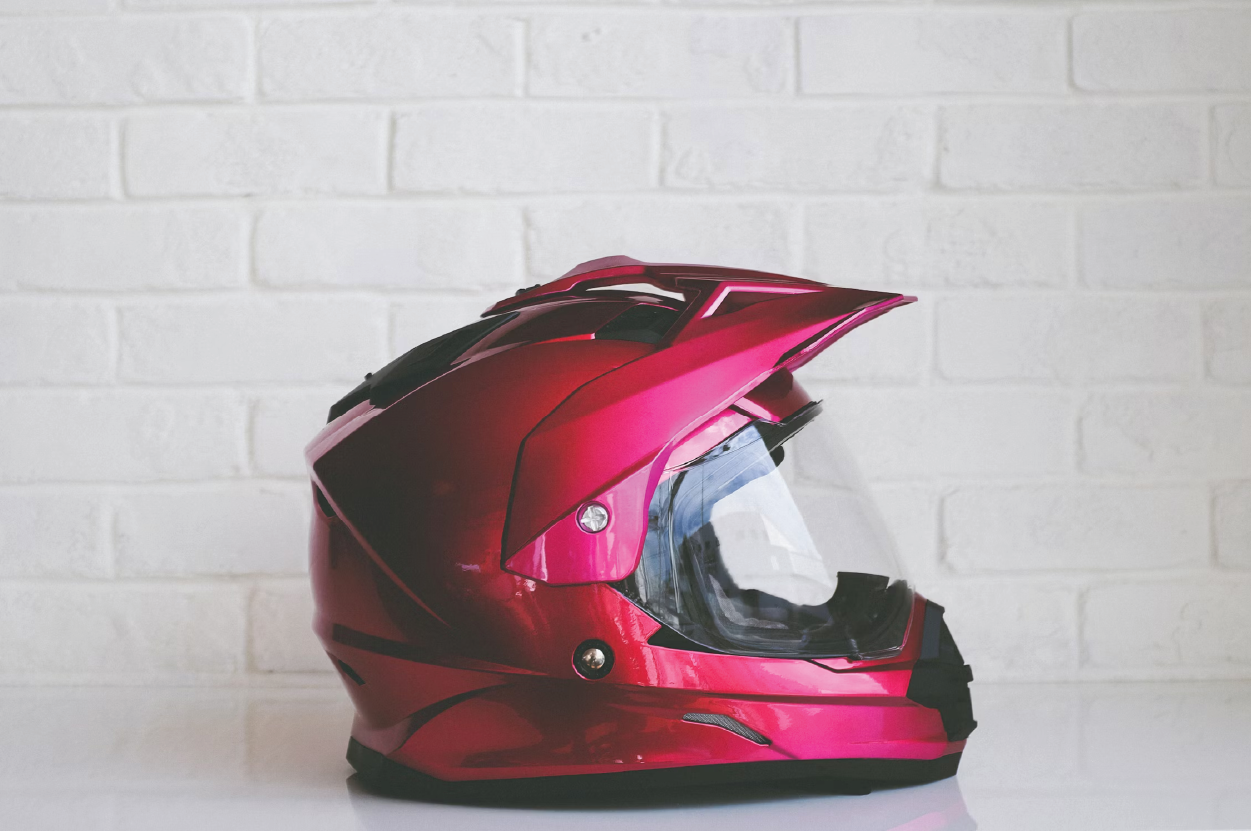
As mentioned earlier, polycarbonates are used in consumer electronics and appliances, as well as in sporting equipment, such as hockey and motorcycle helmet visors. It is also found in everyday items, such as the lenses of glasses, due to many of the characteristics mentioned above.
Polycarbonate’s unique properties have made it an indispensable material across various industries. Additionally, its ability to combine strength, transparency, and design flexibility has transformed the way we interact with the world around us.
FAQs
It is a durable, transparent thermoplastic material known for its high impact resistance and optical clarity.
The automotive, electronics, construction, and healthcare industries use it due to its durability, impact resistance, and optical clarity.
Various applications use it, including eyewear, electronics, automotive parts, and construction materials.
Finishing these components with various methods, including painting, plating, and coating, enhances their appearance and durability.
Polycarbonate is generally considered safe for use. It is not toxic and does not leach harmful substances when used as intended.