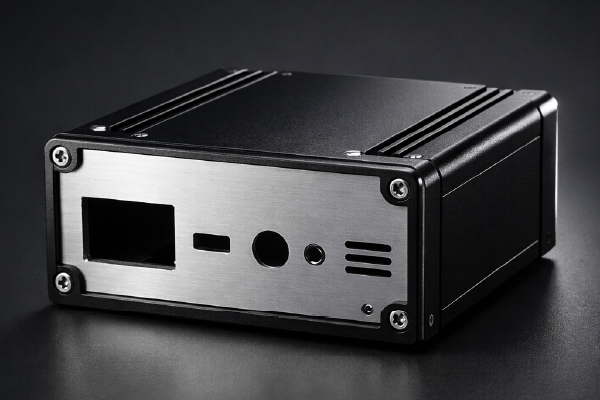
An electronics enclosure can be fabricated exactly to the drawing and still arrive as a problem.
A coating covers an area that needs to remain exposed. Printed identification competes for space with an opening or fastener. Installed hardware blocks access to another component. Individual panels meet their specifications but do not align as expected during assembly.
These may look like finishing or assembly problems. More often, they are planning problems.
Masking, coatings, printing, hardware installation, inspection, and assembly are often treated as the last steps in electronics enclosure fabrication. In reality, they can affect dimensions, feature placement, tolerances, access, materials, and production sequence long before the first panel is cut.
The practical lesson is simple: plan the finished enclosure before manufacturing the individual parts.
Fabrication Is Only the Beginning
Sheet metal fabrication is often the foundation of an electronics enclosure. It can produce enclosure bodies, chassis, panels, covers, brackets, server-rack components, and industrial control panels.
But most customers need more than cut and formed parts. The finished project may also require welded joints, machined features, additively manufactured components or fixtures, coatings, selective masking, printed identification, installed hardware, inspection, and final assembly.
Prototek can support these needs through a combination of sheet metal fabrication, CNC machining, additive manufacturing, welding, finishing, inspection, hardware installation, and assembly.
The value is not simply having a longer capability list. It is understanding how each operation affects the next.
One Enclosure May Require Several Processes
Calling something a sheet metal enclosure does not mean every component should be made from formed sheet metal.
The body, doors, covers, panels, and many brackets may be good candidates for cutting, bending, and forming. Other parts may have different functional or dimensional requirements.
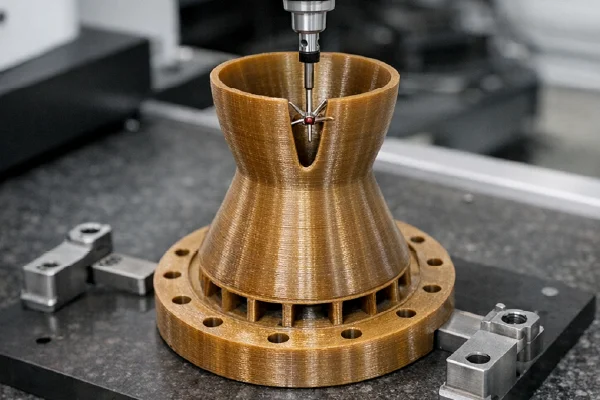
CNC machining may be better suited to thicker components, precision interfaces, mounting features, heat sinks, or geometries that are difficult to form. Additive manufacturing may support early design iterations, low-volume internal components, fixtures, or parts expected to change as the equipment develops. Welding may join fabricated or machined parts into enclosure structures that would be impractical to produce as a single component.
Not every enclosure needs every process. Because Prototek supports multiple manufacturing technologies, our team can evaluate the complete application and coordinate the appropriate combination rather than forcing every component into one method.
That evaluation should consider what the enclosure must hold or protect, which dimensions and interfaces are critical, how mature the design is, expected quantities, finish requirements, assembly needs, and the condition in which the enclosure should be delivered.
Finishing and Assembly Are Design Inputs
Finishing should not be treated as an instruction added after fabrication is complete.
The manufacturing team needs to know which surfaces require coating, which areas must remain exposed, whether hardware should be installed before or after finishing, and how parts will be handled during later operations. Printing and marking requirements also need to account for bends, openings, fasteners, seams, and available surface area.
These details may influence hole sizes, dimensional allowances, contact surfaces, hardware sequence, inspection requirements, packaging, and handling.
Hardware and assembly create similar considerations. Inserts, rivets, fasteners, brackets, hinges, and panels must be accessible for installation. Parts that meet their individual drawings still need to align correctly as a completed assembly. A bracket location that looks fine in CAD may block a tool. A tolerance that works for one part may create a fit issue across several mating components.
Prototek’s value-added services allow fabrication, finishing, masking, printing or marking, hardware installation, inspection, and assembly to be planned as connected steps. That broader view creates more opportunity to identify conflicts before parts move into production.
Integrated Processes Reduce Disconnected Decisions
An enclosure project may otherwise move from a fabricator to a machine shop, then to a welder, coating supplier, printer, hardware installer, assembler, and inspection provider.
Each supplier may complete its operation correctly. The challenge is managing the connections between them.
Every handoff introduces another schedule, shipment, purchase order, set of instructions, inspection point, and opportunity for information to be interpreted differently. A finishing delay may hold up assembly. A fabrication change may not reach the hardware installer. A dimensional issue may remain hidden until the project has already passed through several suppliers.
Prototek’s integrated approach helps connect core manufacturing technologies with finishing and assembly in a more coordinated workflow. For multi-process enclosure projects, this can simplify communication, improve accountability, and make it easier to manage changes, quality, and schedule.
The value is not merely fewer vendors. It is fewer disconnected decisions.
Define the Finished State Early
One of the most useful questions to answer at the beginning of an enclosure project is also one of the simplest:
What exactly should arrive at your facility?
The answer may be individual fabricated parts, a welded enclosure, a coated and printed chassis, a hardware-complete subassembly, or an assembly ready for equipment integration.
That delivery state should be reflected in the project requirements. Along with CAD files and drawings, provide anticipated quantities, materials, critical dimensions, finish specifications, masking instructions, printing or marking requirements, hardware lists, assembly expectations, and inspection needs.
Early engineering review can then help identify conflicts, clarify responsibilities, and establish a practical manufacturing sequence before production begins.
Plan the Assembly, Not Just the Parts
Successful electronics enclosure fabrication is not measured only by whether each panel matches its drawing.
The enclosure must also support its internal components, align correctly, accept the required hardware, meet finishing and identification requirements, and arrive ready for the customer’s next step.
By planning fabrication, machining, welding, finishing, masking, printing, hardware installation, inspection, and assembly as one connected project, Prototek helps customers move from separate parts toward a more complete, production-ready enclosure.
The last steps should not be an afterthought. They should help shape the manufacturing plan from the beginning.
Frequently Asked Questions
What can be included in an electronics enclosure manufacturing project?
A project may include sheet metal fabrication, CNC machining, additive manufacturing, welding, finishing, masking, printing or marking, hardware installation, inspection, and assembly. The appropriate combination depends on the design and required delivery state.
Why should finishing be planned before fabrication?
Finishing can affect dimensions, contact surfaces, masking, hardware installation, handling, and assembly sequence. Identifying those requirements early allows them to be incorporated into the manufacturing plan.
Should an electronics enclosure be made entirely from sheet metal?
Not necessarily. Sheet metal is often appropriate for enclosure bodies, panels, covers, and brackets. Machined or additively manufactured components may better support certain geometries, interfaces, tolerances, quantities, or stages of development.
What should I provide for an electronics enclosure project?
Provide available CAD files and drawings, quantities, materials, critical tolerances, finishing and masking specifications, printing or marking requirements, hardware information, assembly expectations, inspection needs, and the desired delivery state.
Planning an electronics enclosure or chassis assembly?
Talk with Prototek about coordinating the fabrication, machining, finishing, hardware, inspection, and assembly requirements for your complete project.