The best material for a part is not always the strongest, lightest, or most technically advanced option.
A material may check every performance box and still cause trouble once the project reaches manufacturing. Maybe it is difficult to find in the right size. Maybe the lead time is unpredictable. It could require more processing than expected, or come with purchasing minimums that make little sense for the volume.
None of that makes performance less important. The material still has to do the job.
It simply means that performance is only part of the decision.
Start with what the part actually needs
Every material discussion should begin with the application.
What will the part be exposed to? Heat? Chemicals? Repeated loading? Impact or wear? Does the weight matter? What about corrosion resistance or dimensional stability.
Those questions help narrow the options. They do not always lead to one exact grade, alloy, or formulation.
Sometimes the specification really is that specific, and good for reason. In other cases, the selected material may just be the one used on an earlier design or the first option considered when development began.
That is worth examining before the drawing is finalized.
An overly narrow specification can make sourcing more difficult and increase cost without adding meaningful performance. On the other hand, a specification that is too loose can create legitimate quality or reliability concerns.
The goal is not to make the requirement vague. It is to define what the material must accomplish without adding restrictions the application does not need.
Availability can become a manufacturing problem
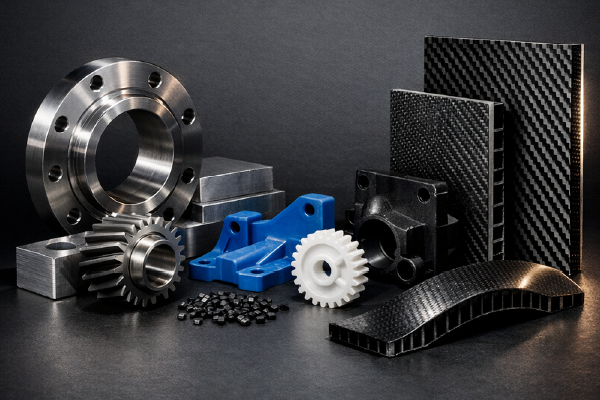
A common material is not necessarily easy to buy in every grade, thickness, diameter, temper, or quantity.
A supplier may have the right alloy, but not in the stock size the design calls for. A specialty polymer might be available only with a large minimum order. A nonstandard sheet thickness may create more scrap than expected.
These issues can seem minor during prototyping. They become harder to ignore when production volume increases.
Material choice can affect purchasing minimums, excess inventory, scrap, processing time, finishing, scheduling, and exposure to price changes. All of those factors contribute to total project cost.
That is why the least expensive material on paper does not always produce the least expensive part.
A slightly higher-priced option may be easier to source, faster to machine, or available in a stock form that wastes less material. Once the full manufacturing process is considered, it may be the better value.
Look at Qualified Alternatives before ou need them
It is much easier to evaluate alternative materials during development than during a shortage.
Qualified material flexibility means identifying more than one acceptable option when the application allows it. It does not mean substituting materials casually or lowering performance requirements.
Any alternative still has to satisfy the engineering, quality, and manufacturing needs of the part.
The difference is timing. Instead of waiting until production is delayed, the team considers those options while changes are still manageable.
A few useful questions include:
- Is the exact grade required, or would a defined property range work?
- Are comparable alloys or polymers available?
- Could another stock size or form support the design?
- Would a different material affect tolerances, finishes, joining, or inspection?
- Will the selected material still make sense at higher production volumes?
There will be projects where only one material is appropriate. That should remain clear.
But when several options can meet the requirement, qualifying them early gives engineering, procurement, and manufacturing teams more room to respond when pricing or availability changes.
Material Process Choices are closely connected
Two materials may look similar on a data sheet and behave very differently on the shop floor.
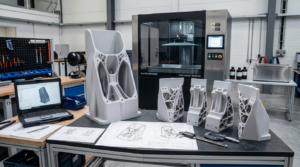
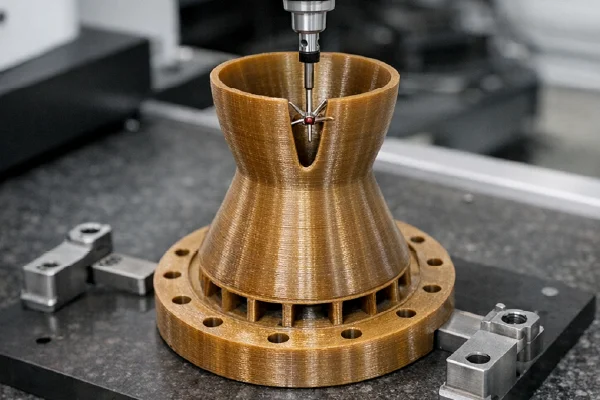
One alloy may take longer to machine. Another may be more likely to distort during forming or heat treatment. A plastic may provide the right strength but make a critical tolerance difficult to hold. An additive material may suit the geometry while limiting the available finishing or assembly options.
For that reason, material selection should not happen separately from process selection.
Part geometry, tolerances, quantity, surface finish, assembly requirements, and future production plans can all change which material makes the most sense.
This is also where early input from a manufacturing partner can help. A manufacturer may recognize a stock availability issue, processing concern, or practical alternative that is not obvious from the material specification alone.
Those conversations are much easier to have before production is waiting.
Better decisions now mean fewer surprises later
There is rarely one perfect material. Every option involves tradeoffs.
The right choice balances product performance with manufacturability, availability, lead time, sourcing risk, and total project cost. When more than one material can meet the application requirements, qualifying those options early can reduce unnecessary dependence on a single specification or source.
The result is not just a better material decision.
It is a manufacturing plan that is better prepared for changes in demand, pricing, and supply.
FAQs
What should be considered when selecting a manufacturing material?
Material selection should account for performance, strength, weight, durability, corrosion resistance, manufacturability, availability, cost, finishing requirements, lead time, production volume, and sourcing risk.
How can material selection affect lead time?
Lead time may increase when a material is difficult to source in the required grade, form, size, or quantity. Limited supplier options and additional processing requirements can also delay production.
What is qualified material flexibility?
Qualified material flexibility means identifying and approving more than one material option when multiple materials can meet the application’s engineering, manufacturing, and quality requirements.
When should a manufacturing partner be involved?
Ideally, before the material specification and design are finalized. Early collaboration makes it easier to evaluate availability, manufacturability, cost, and possible alternatives before changes become expensive or disruptive.
Material selection is easier when manufacturing is part of the conversation.
Talk with Prototek’s engineering team about your application requirements, production plans, and material constraints before your specifications are finalized.