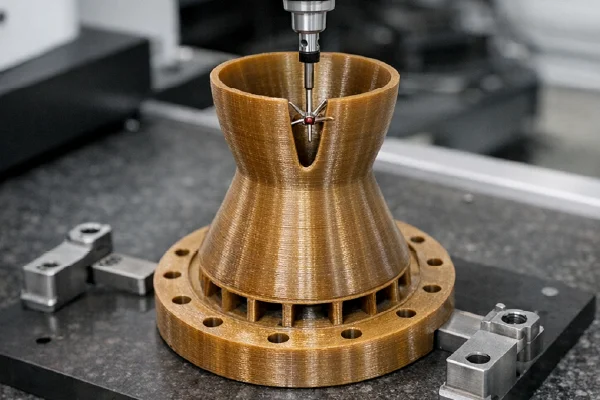
Deep groove machining refers to a special process that creates precise, narrow, and deep channels or grooves in metal or plastic components. Applications where these features may be necessary include housing seals, facilitating assembly, or providing fluid or wire paths. It is a common element in the aerospace and automotive industries.
We will provide a guide on how to machine and design deep grooves in this post.
Understanding Deep Groove Machining
Deep groove machining refers to the process of creating deep, narrow recesses or channels in a workpiece. It is typical for the groove's depth to be significantly greater than its width. Deep grooves are distinctly different from standard slotting or milling.
Applications of Deep Groove Machining
- Sealing grooves: O-rings and gaskets
- Retaining Features: snap rings and circlips
- Fluid Pathways: pumps and valves
- Keyways: torque transmission
- Internal Grooves: medical devices
Applications of Deep Groove Machining
- Sealing grooves: O-rings and gaskets
- Retaining Features: snap rings and circlips
- Fluid Pathways: pumps and valves
- Keyways: torque transmission
- Internal Grooves: medical devices
Planning and Design Considerations
Groove Geometry and Dimensions
The geometry, including width, depth, shape, and radii, as well as dimensional tolerances, is essential to the design and success of the project when using deep groove machining. These will also help the machinist and programmers make the best tooling, machine strategy, and cutting strategies.
- Depth-to-Width Ratio: The higher the ratio, the greater the risk of tool deflection and vibration. Try to keep the groove as shallow and wide as functionally possible to help with this challenge. For best practices, maintain the depth of the groove five times less than the width.
- Tolerances: Only specify as tight as necessary. Extremely tight tolerances for deep grooves increase cost and the risk of nonconformance.
- Corner Radii: Generous internal corners, a grooved bottom, and a smooth transition reduce stress concentrations.
- Draft Angle: Add a slight draft to groove walls to help with chip evacuation and tool entry.
- Groove Shape: Whether straight, circular, or complex contours, the profile of the shape will impact tool selection, machining strategy, and the tightness of tolerances.
Material Selection
When selecting a material, consider the material’s hardness, abrasiveness, and chip control properties. Additionally, evaluate the cutting conditions, including the tools and speed. Balance the cost and whether the properties of the material align with the applications.
- Soft Metals: Aluminum alloys and brass, can reduce tool wear and tear, as well as improve surface finish. However, chip evacuation can be more difficult.
- Hard Metals: Stainless steel and titanium require more robust tools and may need slower machining speeds.
- Dimensional Stability: Materials that resist deformation easily under machining forces and thermal expansion are ideal for this purpose.
- Thermal Properties: Materials with superb thermal expansion can dissipate heat during deep cuts.
- Application Requirements: Beyond what makes the material easier to machine, strength, corrosion resistance, and regulatory compliance for your industry need to be taken into account when choosing the right material for your project.
Tool Access
Accessibility significantly determines the success of the machining process, particularly in terms of surface finish and precision.
- Tool Reach: Avoid features that block tool entry and make sure the width of the groove allows for tool access.
- Chip Evacuation: Open-ended grooves and relief features help facilitate chip removal. Blind deep grooves are very challenging.
- Surface Finish: Specify the surface finish when functionally necessary. Achieving fine finishes is costly.
- Specialty Tools: Determine if standard tools will suffice or if custom tools are required.
Tool Selection
The tool selection for deep groove machining encompasses the type of tool, material, and geometry.
- Tool Type: Lathe operations utilize parting or grooving inserts that are selected based on their width and depth. For milling machines, slotting or keyseat cutters make effective deep cuts. The design of custom tools and extended-reach tools is specific to deep or narrow grooves.
- Tool Material: Carbide tools are ideal for this use due to their rigidity, wear resistance, and ability to cut sharp edges. For softer materials, high-speed steel (HSS) is typical, although it is less resistant to wear and tear.
- Tool Geometry: Consider tools equipped with chipbreakers or integrated coolant channels.
The Machining Process
Deep groove machining is a subtractive manufacturing process, which involves a specialized tool cutting into or passing along a workpiece to remove material and form a groove with a greater depth-to-width ratio than standard grooving. The following are considerations during the actual process.
- Cutting Speed and Feed: Significantly reduce the spindle speed for deep groove machining to mitigate heat and reduce chatter. The speed should decrease as the depth of the cut increases. Be conservative on the feed rates. Particularly at the entry and exit points, this will prevent tool engagement problems.
- Depth of Cut: Multiple passes involve several shallow passes to facilitate chip removal and minimize tool load. The pecking technique involves periodically retracting the tool, which also aids in chip clearance and enhances cooling.
- Coolant: A high-pressure coolant or air is a necessity in deep groove machining. It assists in dissipating heat and removing material shavings.
- Machine Setup: Securing the workpiece can eliminate movement and vibration during the machining process, while precise tool alignment ensures consistency and accuracy in the process.
- Machining: The initial pass establishes the correct groove profile. The step-down passes gradually increase the depth in controlled increments to avoid overloading the tool. Keep an eye on the monitor. It will alert the machinist to any signs of tool deflection, excessive heat, or vibrations that may compromise the integrity of the workpiece. Clearing the shavings after each pass is necessary in blind or enclosed grooves, where buildup can significantly impact the part’s performance. At this stage, the coolant plays a crucial role, reducing excess heat and facilitating the evacuation of chips.
- Inspection and Finishing: To achieve the desired finish, secondary operations may be necessary. These operations, such as lapping or honing, deburring, polishing, or coating, may be required. Use calipers, micrometers, or specialized groove gauges, such as telescoping gauges or bore gauges, to verify the width and depth of the grooves.
- Quality Control: Documentation of the measurements confirms that all tolerances align with the project’s specifications abstracted in the engineering drawings.
Troubleshooting Recommendations
Inevitably, from time to time, something will go wrong with complex projects. The following are a few tips to help bypass common issues and pricey mistakes:
- Tool Breakage: By decreasing the depth of cut per pass, confirming tool alignment, and providing adequate coolant flow during the machining process, avoiding tool breakage is possible.
- Chatter/Vibration: Shortening the tool overhang, lowering the spindle speed, or increasing the rigidity of the setup can minimize vibrations.
- Poor Surface Finish: Adjust the cutting parameters, increase lubrication, and always use sharp tools to improve the surface finish.
- Inaccurate Groove Dimensions: Regular maintenance, such as recalibrating machine settings and inspecting tool wear, helps preserve precision.
Deep Groove Machining In Review
| Consideration | Best Practice | Pitfall to Avoid |
|---|---|---|
|
Groove Geometry |
Use the minimum required depth/width and add radii. |
Sharp corners and excessive depth. |
|
Material Selection |
Balance machinability and function. |
Hard to machine materials. |
|
Tool Access |
Ensure sufficient width and open access. |
Blocked or narrow entry. |
|
Chip Evacuation |
Design for open ends or reliefs. |
Deep blind grooves. |
|
Surface Finish |
Specify only where functionally necessary. |
Overly fine finish everywhere. |
|
Inspection |
Design for accessible measurement. |
Inaccessible groove features. |
|
Stress Management |
Use fillets and avoid abrupt transitions. |
Stress risers. |
|
DFM Collaboration |
Early engagement with manufacturer. |
Late-stage design changes. |
A complex process for creating high-precision components across several industries, from automotive to aerospace, deep groove machining can be successful when everyone involved understands the challenges and best practices. From design to planning and strategically selecting tools, optimizing machining parameters, and utilizing inspections, high-quality results and successful projects are more likely to occur. If you have questions about an upcoming project and would like us to review it, please don’t hesitate to reach out.
FAQs
Define: Deep Groove Machining
Deep groove machining creates precise, deep channels in materials for various applications.
What are some applications for deep groove machining?
Deep groove machining is ideal for:
- Electric Motors: Deep grooves are designed to accommodate bearings and seals, which enhances stability and efficiency.
- Pumps and Compressors: These grooves create channels for seals and are used in parts that operate under high pressure and demanding conditions.
- Gearboxes and Transmissions: Deep groove machining enables precise fitting of gears and other internal components.
- Construction and Agricultural Machinery: Deep grooves are machined into various parts to improve performance and increase longevity.
Is deep groove machining an average machining function?
No, deep groove machining is a specialized, not average, function.