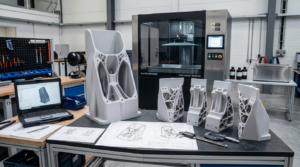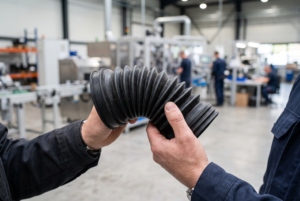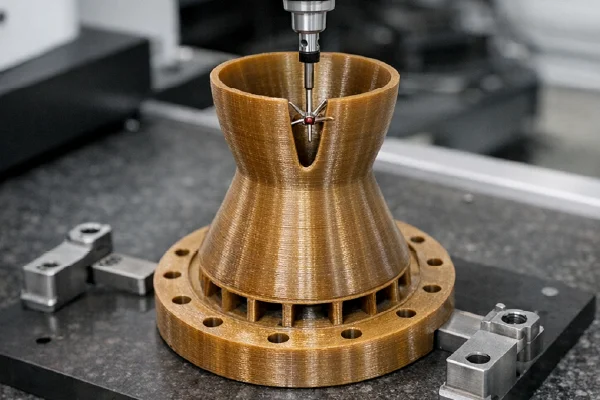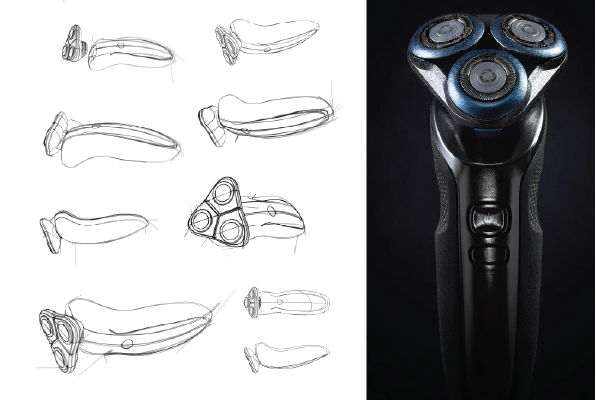
When days are flying by and the clock is ticking, rapid prototyping can streamline your product development process. At Prototek, we embrace the challenge of keeping up with emerging technologies and materials. We support engineers and product designers in turning their ideas into reality, enabling quick testing, validation, and prototype iteration to help them bring their products to market faster. There is a diverse array of manufacturing technologies available for prototyping, and selecting the proper process can be daunting.
In this post, we will explore the decision-making process, compare key technologies, and outline the factors to consider so you can select the method best suited to your needs.
What is rapid prototyping?
Rapid prototyping is an innovative process. It involves quickly creating a physical part or assembly from a digital design, such as a computer-aided design (CAD), with manufacturing methods. The primary aim of rapid prototyping is to expedite product development cycles, enhance the validation of design concepts, reduce production costs, and stimulate Innovation by facilitating iterative testing and refinement before advancing to full-scale production.
What are the benefits of rapid prototyping?
Accelerated Time-to-Market
Speed means everything when competing to bring a new product or version of a product to market. Rapid prototyping permits designers and engineers to iterate and improve their designs more quickly. With an accelerated prototyping timeline comes cost-cutting through early identification of design flaws and more efficient use of resources.
Cost Efficiency
Prototek provides design-for-manufacturing (DFM) feedback and collaborates with our customers to resolve design flaws early in the development process. DFM, along with iterations, speed, materials, and manufacturing technologies, can lead to cost savings.
For example, fused filament fabrication, otherwise known as fused deposition manufacturing, is excellent for inexpensive form, fit, and function prototypes. At the same time, stereolithography is ideal for concept models and prototypes with fine details and aesthetically pleasing surfaces.
Collaboration and Communication
We have two points to make regarding collaboration and communication for rapid prototyping. The first point is that Prototek works as an extension of your team. We are manufacturing your project in-house unless you specify working with our highly vetted manufacturing network. We can answer DFM questions about the materials and technologies we offer, and we are available throughout the project if you have questions.
The other point is that the prototype itself can be a form of communication for you. This tangible representation of your idea can convey its significance to stakeholders and consumers for fundraising or market research purposes. Our team can create incredibly intricate parts, assemblies, and visual models to help you communicate the purpose of your project.
Fostering Innovation
Rapid prototyping supports experimentation. We can develop your new concepts and designs without the burden of upfront investments, such as costly injection molding tooling. Prototek makes it easy to get low-volume components or assemblies, even one-offs, made. The ability to take calculated risks can lead to more creative solutions, advancements in product design, and even the development of customized components.
Overview of Rapid Prototyping Technologies
Understanding the array of available rapid prototyping technologies will lead to better results. The following manufacturing processes are a few of the methods we offer:
Fused Filament Fabrication (FFF)
This 3D printing technology extrudes thermoplastic materials via a heated nozzle, building parts layer by layer. FFF is affordable and offers high-strength materials, making it an ideal process for early-stage concept models and functional prototypes. However, it is not favorable if you need intricate details or a high-quality surface finish.
Stereolithography (SLA)
A laser cures liquid resin into solid forms for SLA. Components produced with this additive manufacturing technology offer high-resolution, detailed prototypes. It’s an excellent option for cosmetic prototypes and complex geometries. Although the parts need less finishing and post-processing, they can be brittle and are not UV-stable.
Selective Laser Sintering (SLS)
This technology also uses a laser. The laser selectively fuses powdered materials, such as nylon, together layer by layer. Not only is this a viable option for rapid prototyping, but it is also for end-use parts. Our team can finish SLS components with dyes and run them through our automated post-processing machines, making components smooth and watertight. Without post-processing, components are porous, and their surfaces are much rougher than those of parts made with stereolithography.
Multi-Jet Fusion (MJF)
MJF is similar to SLS in the fact that it uses powdered materials, typically nylon. MJF works by spreading a layer of thermoplastic powder, then using an inkjet array to apply a fusing agent and a detailing agent precisely. It offers high precision and strength in all directions, similar to injection molding, and is a good choice for rapid prototypes and end-use parts. The negatives are that fewer materials are available for multi-jet fusion, and post-processing is required to seal and smooth the surface.
Digital Light Processing (DLP)
DLP is similar to SLA. It uses a light projector to cure resin in a single layer, in a single flash. This method is fast and can produce high-quality parts with smooth surface finishes. However, DLP offers a much smaller build envelope than other technologies and can be UV-sensitive.
Material Jetting
Material jetting works like an inkjet printer, depositing and curing layers of photopolymer resin with UV light. It can print multiple materials and colors, offering smooth, detailed surface finishes. Although removing the support material takes time, it can degrade under UV and heat.
CNC Machining
In subtractive manufacturing, CNC machining uses computer programs to automate the movement of cutting tools to cut a material into a desired shape. Machining offers high precision and accuracy, as well as versatility in materials. Compared to additive manufacturing, though, lead times can be longer, and it is more expensive.
Sheet Metal Fabrication
It involves cutting, bending, forming, and assembling flat sheets of metal into specific shapes. Sheet metal fabrication delivers cost-effective early-stage validation and enables the creation of durable, functional prototypes that resemble the final product. However, there may be higher initial costs due to specialized tooling, limited material options compared to other methods, and potentially slower production times.
Rapid Prototyping Processes Recap
| Technology | Process Type | Typical Materials | Key Strengths | Main Limitations |
|---|---|---|---|---|
|
FFF |
Additive |
Thermoplastics |
Affordable and Accessible |
Lower Detail and Rougher Finish |
|
SLA |
Additive |
Photopolymer Resins |
High Detail and Smooth Finishes |
Brittle and Limited Strength |
|
SLS |
Additive |
Nylon and TPU |
Strong and No Supports Needed |
Rough Surface and Limited Colors |
|
MJF |
Additive |
Nylon |
Fast, Strong, and Functional |
Limited Material Options |
|
DLP |
Additive |
Photopolymer Resins |
High Detail and Material Diversity |
Small Build Envelope and Brittle |
|
Material Jetting |
Additive |
Photopolymers |
Multi-Material/Color and Detailed |
Low Strength and Not Functional |
|
CNC Machining |
Subtractive |
Metals and Plastics |
Strong, Precise, and Versatile |
Complex Setup and Difficult for Undercuts |
|
Sheet Metal |
Subtractive |
Metals |
Precise and Strong |
Flat Components and Linear Bends |
Creating a Workflow for Rapid Prototyping
Here’s a simple workflow to help you get started with rapid prototyping:
- Define Your Goals: Decide what you want to achieve with the prototype. Are you looking to evaluate its appearance, test its function, or present it to stakeholders?
- Create the Design: Use software like AutoCAD, SolidWorks, or TinkerCAD to make your product design.
- Select the Technology: Choose between 3D printing or machining based on your needs.
- Build the Prototype: Use your chosen method to create the prototype.
- Test and Improve: Check how the prototype works and make changes to improve the design.
- Finalize the Design: Once the prototype meets your needs, prepare it for production.
How to decide which manufacturing process is right for your project.
Choosing the optimal rapid prototyping process necessitates a structured, multi-criteria decision-making approach. Here are some questions to ask yourself and some information to guide your selection:
Define Your Objectives and Requirements
- Purpose of the Prototype:
- Why do you need this prototype?
- Are you looking for a concept model or functional testing?
- Required Properties:
- What properties are necessary for your prototype?
- Are you looking for mechanical strength or surface finish quality?
- Or are you looking for dimensional accuracy for form, fit, and function?
- Volume and Timeline:
- How many prototypes do you need?
- How fast do you need them?
Evaluate Key Selection Criteria
- Material Compatibility: Each manufacturing process we offer uses different materials. For example, FFF uses thermoplastics, SLA uses photopolymer resins, and SLS uses nylon. Choose a material that most represents the final product. To see a more in-depth list of 3D printing materials, visit our Material Pro. For CNC or sheet metal, these links show the most common materials we offer. If you need something specific, please reach out, and we’ll do our best to accommodate your request!
- Part Complexity and Detail: Does your design include fine details or intricate features? If so, depending on the material (SLS, SLA, material jetting, sheet metal, or machining), these can be optimal choices. FFF is less ideal for highly detailed designs.
- Mechanical and Functional Requirements: Assess the performance requirements. Options like FFF, SLS, and MJF deliver strong, durable parts for functional testing. At the same time, more suitable visual models include SLA, DLP, and material jetting. CNC machining and sheet metal offer production-grade technologies for validation.
- Speed and Turnaround Time: SLA, DLP, and material jetting are fast, especially for simple parts. FFF, SLS, and MJF work well for batch production but require longer post-processing times.
- Cost Considerations: SLA and FFF are low-cost for low volumes. SLS and material jetting can have higher material costs. Machining and sheet metal have higher setup costs, and some materials are premium and have premium pricing.
- Post-Processing: Some manufacturing methods need more post-processing, cleaning, and curing. These can have cost and time implications.
- Scalability: When transitioning from prototyping to low-volume production, some manufacturing techniques are better than others. Prototek offers price breaks on higher-volume production runs.
Comparative Summary Table
| Technology | Best For | Turnaround Time | Tolerances |
|---|---|---|---|
|
FFF |
Early and Functional Prototypes |
1 – 5 Days |
0.005 layers tolerance = ± 0.005 in first inch and ± 0.002 in/in add inches |
|
SLA |
Cosmetic, Complex, and Fine Detail Prototypes |
1 – 3 Days |
± 0.005 in for the first inch and ± 0.0015 in/in add inches |
|
SLS |
Functional, Complex, and Batch Prototypes |
3 – 5 Days |
± 0.005 in for the first inch and ± 0.002 in/in add inches |
|
MJF |
Batch, Functional, and Strong Prototypes |
2 – 4 Days |
± 0.010 in for the first inch and ± 0.003 in/in add inches |
|
DLP |
Cosmetic and Detailed Prototypes |
1 – 4 Days |
UMA 90: ± 0.005 in for the first inch and ± 0.002 in/in add inches
Two-part engineering materials depend on the geometries. |
|
Material Jetting |
Visual and Multi Material/Color Prototypes |
1 – 2 Days |
± 0.004 in for the first inch and ± 0.0015 in/in add inches |
|
CNC Machining |
Functional and Precise Prototypes |
5+ Days |
Milling: ISO 2768 standards or ± 0.005 inches (± 0.127 mm) for metal parts and ± 0.010 inches ( ± 0.254 mm) for plastic and composite parts |
|
Sheet Metal |
Functional and Strong Prototypes |
1+ Days |
Laser Cutting: tight sheet metal tolerances, including sub ±0.003 in (±0.076 mm) tolerances |
Rapid Prototyping, In Review
Selecting the most appropriate rapid prototyping process can have profound implications for your product development timeline, associated costs, and the quality of the final output. By understanding the strengths and weaknesses of each prototyping technology, assessing your project requirements, and applying a decision-making framework, you can confidently select the process that best meets your goals. Whether you are creating a visual model to communicate design intent, a functional prototype for testing, or preparing for low-volume production, choosing the right rapid prototyping technology will significantly expedite your innovation process and increase the likelihood of your project’s success.
FAQs
Define: Rapid Prototyping
Rapid Prototype Definition: Quickly creating physical models to test and iterate designs.
Why is a rapid prototype important?
It accelerates product development, significantly reduces production costs, and effectively validates design concepts through thorough testing and evaluation.
What are the advantages of rapid prototyping?
Rapid prototyping enables quick, cost-effective product testing, design iteration, and functional part production for various industries.
What are rapid prototyping technologies?
Our rapid prototyping process offers a comprehensive suite of manufacturing technologies that enable the quick creation of physical models, parts, and products through additive manufacturing, CNC machining, and other advanced manufacturing processes.
Which materials are standard for rapid prototyping?
Rapid prototyping can utilize various materials, including plastics, metals, composites, and even ceramics, allowing for diverse functional and aesthetic prototypes.
Dose Prototek offer rapid prototyping services?
Yes, Prototek offers a wide range of rapid prototyping services that quickly and efficiently bring your innovative ideas to life. Our dedicated team works diligently to ensure that your concepts are transformed into tangible prototypes in the shortest possible time frame, allowing you to move forward with your projects confidently and quickly.