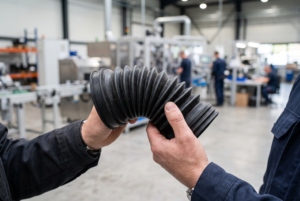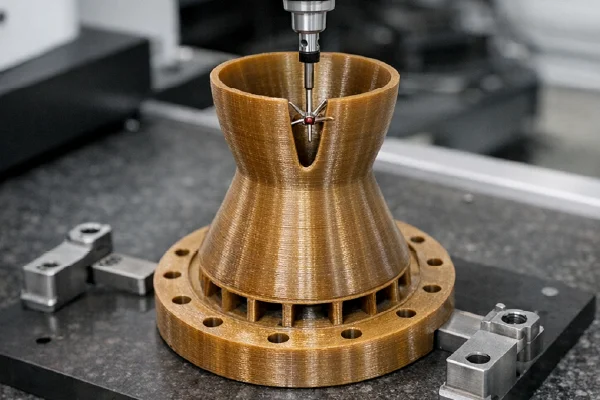
Do you know what material your watchband is made of? More than likely, if it’s a rubber-like plastic (and not leather or metal), it’s a soft polymer. From ergonomic wearables to automotive components and products with the “soft touch” feel, soft polymers are everywhere. Unlike rigid plastics or metals, these materials can bend, stretch, and recover without fracturing. Their molecular structure allows for substantial deformation without permanent damage, and several applications, ranging from medical devices to sporting equipment, use them.
In this blog post, we will explore what a soft polymer is and the main types of flexible polymers. At the end, you’ll know more about the range of these materials and which ones would be beneficial for your particular needs.
What are soft polymers?
Soft polymers are a class of materials characterized by low modulus, high elasticity, and significant flexibility. Their structure is typically amorphous or semi-crystalline, with long, entangled molecular chains and a low crosslink density. The structure allows them to undergo large strains and recover their original shape, distinguishing them from rigid polymers whose structures are more crystalline and therefore brittle.
Key Properties of Soft Polymers:
| Property | Soft Polymers (Typical) | Rigid Polymers (Typical) |
|---|---|---|
|
Young’s Modulus |
0.01-0.2 GPa |
0.025-0.03 GPa |
|
Elongation at Break |
30-800% |
4-5% |
|
Tensile Strength |
0.5-10 MPa |
1.0-1.2 MPa |
|
Glass Transition (Tg) |
Below Room Temperature |
82-92° C |
Highlight: Soft polymers are ideal for products that interact with users or require repeated deformation.
The Main Types of Flexible Polymers
Thermoplastic Elastomers (TPEs)
Thermoplastic elastomers blend the ease of processing of thermoplastics with the rubbery flexibility of elastomers. They can be melted, reshaped, and recycled like plastics. TPEs also blend the molecular structure of “hard plastics” with “soft rubbery” segments, offering properties such as stretchability, shock absorption, and weather resistance.
- Structure: Alternating hard and soft segments of block copolymers.
- Processing: Injection molding, extrusion, and blow molding.
- Applications: Automotive seals, consumer grips, footwear, medical tubing, pet toys, phone cases, and sippy cup lids.
- Trade Names: Elastollan® by BASF, IROGRAN® by Huntsman, and AFFINITY™ by Dow.
Silicones
Silicones are known for their Si-O backbone, which offers flexibility, thermal stability, chemical resistance, and biocompatibility. They can range from very soft (Shore 00-10) to firm (Shore 80A), depending on molecular structure and cross-linking. Silicone is known for its hypoallergenic and toxin-free properties – making it safe for skin contact and internal use.
- Structure: Polysiloxane backbone (-SI-O-SI-).
- Processing: Liquid injection molding, compression molding, and extrusion.
- Applications: Electronics, encapsulation, kitchenware, medical devices, and seals.
- Trade Names: Silopren® by Momentive and SILASTIC™ by Dow.
Polyurethanes (TPUs)
Polyurethanes have exceptional elasticity, flexibility, and cushioning. Creating them involves reacting isocyanates with polyols. The soft segment (polyol) determines the elasticity. They can range from soft, rubber-like elastomers to durable, flexible foams, using polyester or polyether soft segments to meet specific properties or performance requirements.
- Structure: Urethane-linked block copolymers.
- Processing: Injection molding, extrusion, and reaction injection molding.
- Applications: Aerospace components, flexible hoses, footwear soles, and sporting goods.
- Trade Names: Elastollan® by BASF and Pellethane® by Dow.
Low-Density Polyethylene (LDPE)
Low-density polyethylene is known for its branched molecular structure, which makes it pliable. It is food-safe, chemical-resistant, and makes a good moisture barrier. This material is recyclable with the recycling code #4.
- Structure: Loose, branched chains.
- Processing: Extrusion, injection molding, and blow molding.
- Applications: Automotive components, cable insulation, squeeze bottles, and water bottles.
- Trade Names: Attane® by Dow and Escorene™ by Exxonmobil
Natural Rubber
Natural rubber is a natural polymer (polyisoprene) that is soft and stretchy. Its elasticity is due to coiled molecular chains that straighten when stretched and recoil upon release. It has many uses in its natural form, but can also be modified or vulcanized for greater durability and improved performance in industrial applications.
- Structure: Cis-1,4-polyisoprene.
- Processing: Compounding, molding, vulcanization.
- Applications: Gloves, seals, tires, and vibration dampers.
Flexible Materials: Properties and Performance
| TPE (Generic) | TPU | Silicone Rubber | LDPE | |
|---|---|---|---|---|
|
Tensile Strength (MPa) |
5-30 |
25-50 |
7-11 |
8-25 |
|
Elongation @ Break (%) |
200-800 |
300-600 |
200-700 |
100-650 |
|
Max Service Temp (°C) |
80–120 |
80–120 |
200–250 |
80-90 |
|
Chemical Resistance |
Good |
Good |
Excellent |
Good |
|
UV Resistance |
Moderate |
Good |
Excellent |
Poor |
|
Processing |
Easy |
Easy |
Mold, Extrude |
Easy |
|
Relative Cost |
Low-Moderate |
Moderate |
Moderate-High |
Low |
Key Finding:
- TPEs and TPUs offer a balance of flexibility, strength, and processability for consumer and industrial applications.
- Silicones excel in high-temperature and chemically aggressive environments.
- Natural Rubber is known for its resilience and biobased content, especially in tires and gloves.
Real-World Applications for Soft Polymers
Automotive
- Drivetrain Components: Polyimides, such as Vespel®, are common materials for their low friction and high wear resistance.
- Interior Trim: Lightweight, durable panels are commonly made from reinforced polypropylene and ABS.
Consumer Electronics
- Flexible Circuits: Smartphones and wearables use polyimide-based laminates for their thermal stability and flexibility.
- Device Housings: For impact resistance and aesthetic finishes, polycarbonate/ABS are great options.
Medical Devices
- Printed Sensors: Stretchable biosensors use conductive polymers such as PEDOT: PSS.
- Wearable Health Monitors: Skin-like flexibility and biocompatibility applications use PDMS and TPU.
Sporting Equipment
- Footwear: Uses EVA and TPU for cushioning and shock absorption.
- Protective Gear: Impact resistance makes ABS, polycarbonate, and polypropylene ideal choices.
Wearable Technology
- Self-Healing Polymers: WASHP for enhanced durability in wearable devices.
- Smart Textiles: Polyamide, polyester, and TPU fibers with conductive inks for flexible, washable electronics.
Soft Polymers vs. Rigid Polymers
Soft polymers are flexible, chain-mobility materials such as rubber and TPEs used for grips, seals, and wearables. Whereas rigid polymers are stiff, ordered, and less mobile, such as acrylic, rigid PVC, and HIPS, they are used for structural components, casings, and bottles. The main difference stems from the molecular structure that impacts properties in different ways.
| Feature | Soft Polymers | Rigid Polymers |
|---|---|---|
|
Structure |
Amorphous/Semi-Crystalline |
Highly Crystalline |
|
Modulus |
Low |
High |
|
Elongation |
High |
Low |
|
Processing |
Versatile, Low-Temperature |
Higher-Temperature, Less Flexible |
|
Applications |
Wearables, Medical, and Cushioning |
Structural, Insulation |
FAQs
Define: Soft Polymers
Soft polymers are flexible, durable materials used in various applications, offering excellent performance and versatility.