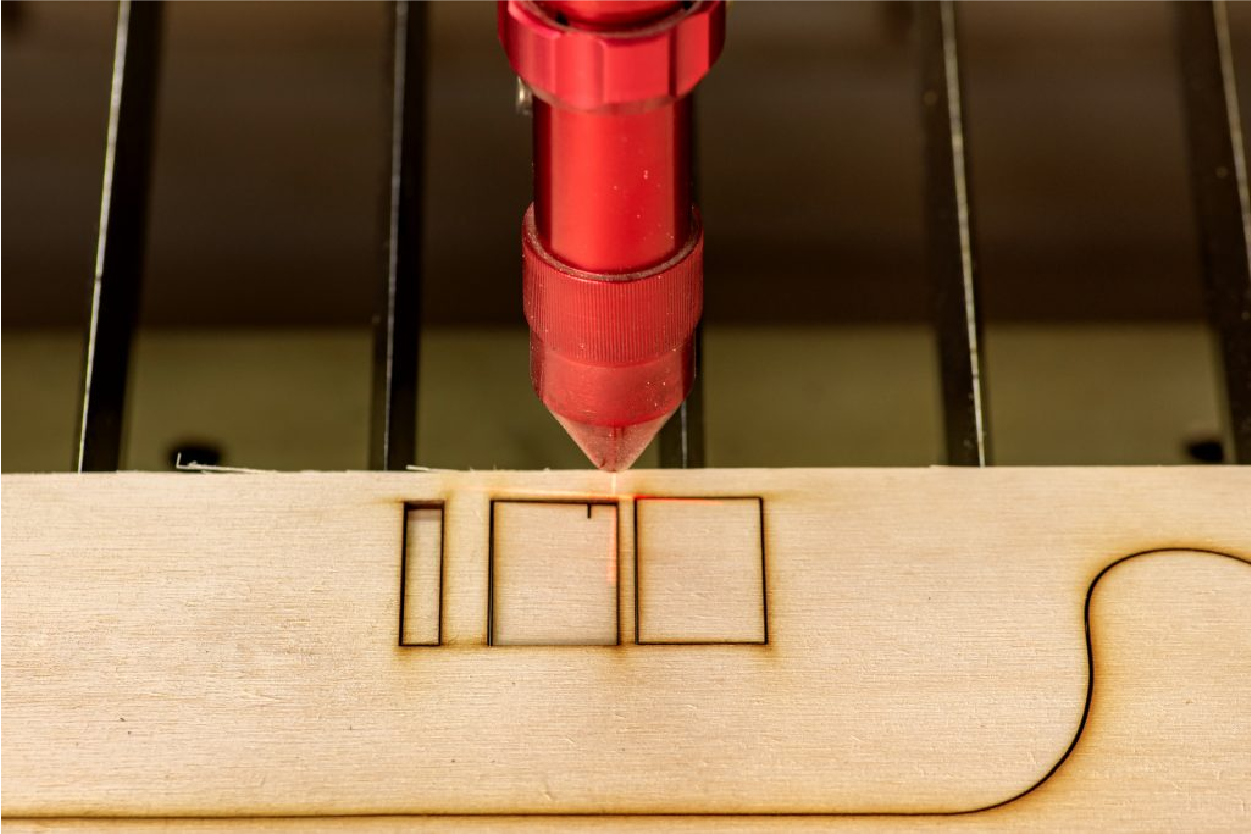
Laser cutting is a precise and efficient method for manufacturing products. It utilizes a focused beam of high-energy laser light to cut through materials such as metals, plastics, and composites. This technology enables the creation of intricate designs quickly and accurately, making it a popular choice for various industries. At Prototek Digital Manufacturing, we utilize laser cutting to deliver exceptional results for our clients. We help them turn their ideas into reality with high precision and efficiency.
How does laser cutting work?
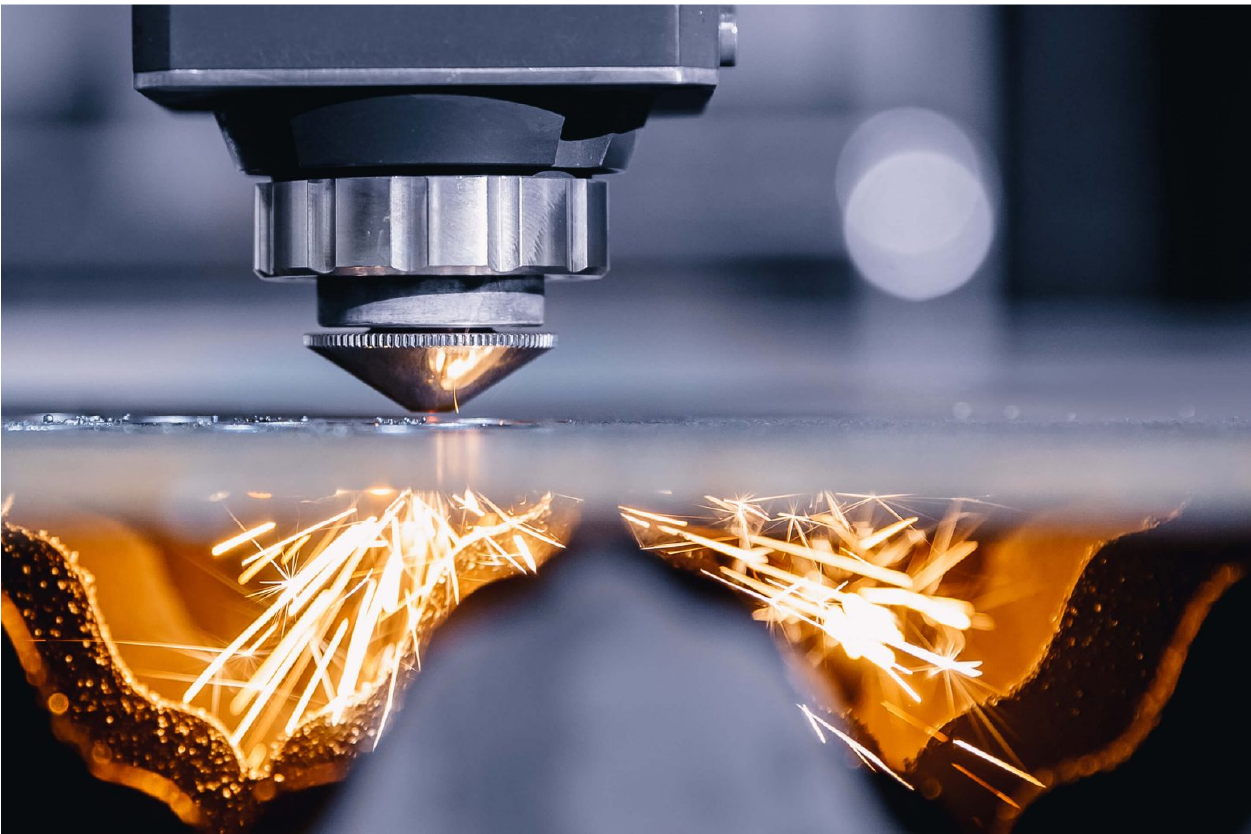
Laser cutting is a precise and efficient method for manufacturing products. It uses an intense beam of light to cut through different materials. The process begins when a focused laser beam, typically from a carbon dioxide or fiber laser, is directed at the material. Making the material either melt or vaporize along the cutting path. Because of this process, manufacturers can create detailed and complex designs quickly and accurately. Laser cutting is now a popular choice in industries such as aerospace, automotive, and consumer electronics, as it produces high-quality parts with exceptional precision and accuracy.
Types of Laser Cutters
CO2 Laser Cutter
CO2 laser cutters use a focused beam of high-energy infrared light to cut materials accurately. They create a laser beam by exciting a mix of carbon dioxide, nitrogen, and other gases inside a sealed chamber. This excited gas produces intense laser light, which mirrors and lenses focus on the material. The laser energy melts and vaporizes the material, allowing for clean cuts. CO2 laser cutters are also versatile and can cut materials like acrylic, wood, fabric, and thin metals quickly and precisely.
Crystal Laser Cutters
Crystal laser cutters utilize a focused laser beam to cut or engrave a wide range of materials. The process begins by exciting electrons in a crystal, such as ruby or neodymium-doped yttrium aluminum garnet (Nd: YAG). When the electrons return to their normal state, they release amplified light particles, creating an intense, precise laser beam. The machine then focuses and directs this laser beam with mirrors and lenses to cut or etch the chosen pattern into the material.
Fiber Laser Cutter
Fiber laser cutters utilize a focused beam of light to cut a wide range of materials with precision. This process begins with a fiber-optic cable that contains rare-earth elements, such as ytterbium or neodymium. This cable creates the laser beam. The focused beam cuts detailed patterns quickly and precisely. Fiber laser technology offers high-quality beams, conserves energy, and is highly reliable. These features make it a popular choice for industrial cutting tasks.
Advantages of Laser Cutting
Laser cutting technology offers numerous benefits, making it a popular choice across various industries. Here are the main advantages:
High Precision and Accuracy
Laser cutting makes exact cuts with tight tolerances. Enabling detailed designs that are challenging to achieve with traditional cutting methods.
Works with Many Materials
Laser cutting can handle a wide range of materials, including metals like steel, aluminum, and brass, as well as plastics, wood, fabric, and glass. This versatility fits many different applications.
Fast and Efficient
Laser cutting is generally faster than mechanical cutting, particularly for intricate shapes and repetitive designs. Boosting productivity and shortening lead times.
Clean Edges
The focused laser beam creates clean cuts with few rough edges, which often removes the need for further finishing work.
Less Material Waste
The narrow cut made by lasers minimizes material waste, making the process more cost-effective and environmentally friendly.
Non-Contact Method
Because laser cutting is a non-contact method, it creates little mechanical stress on the material. Helping keep the material’s structure intact.
Automated and Consistent
Laser cutters often utilize CNC (Computer Numerical Control) technology, enabling automated and repeatable production. It is excellent for mass manufacturing or prototyping.
Easy to Change Designs
Changing designs is simple because the software controls the cutting path. Allowing for quick adjustments without needing new physical tools.
Disadvantages of Laser Cutting
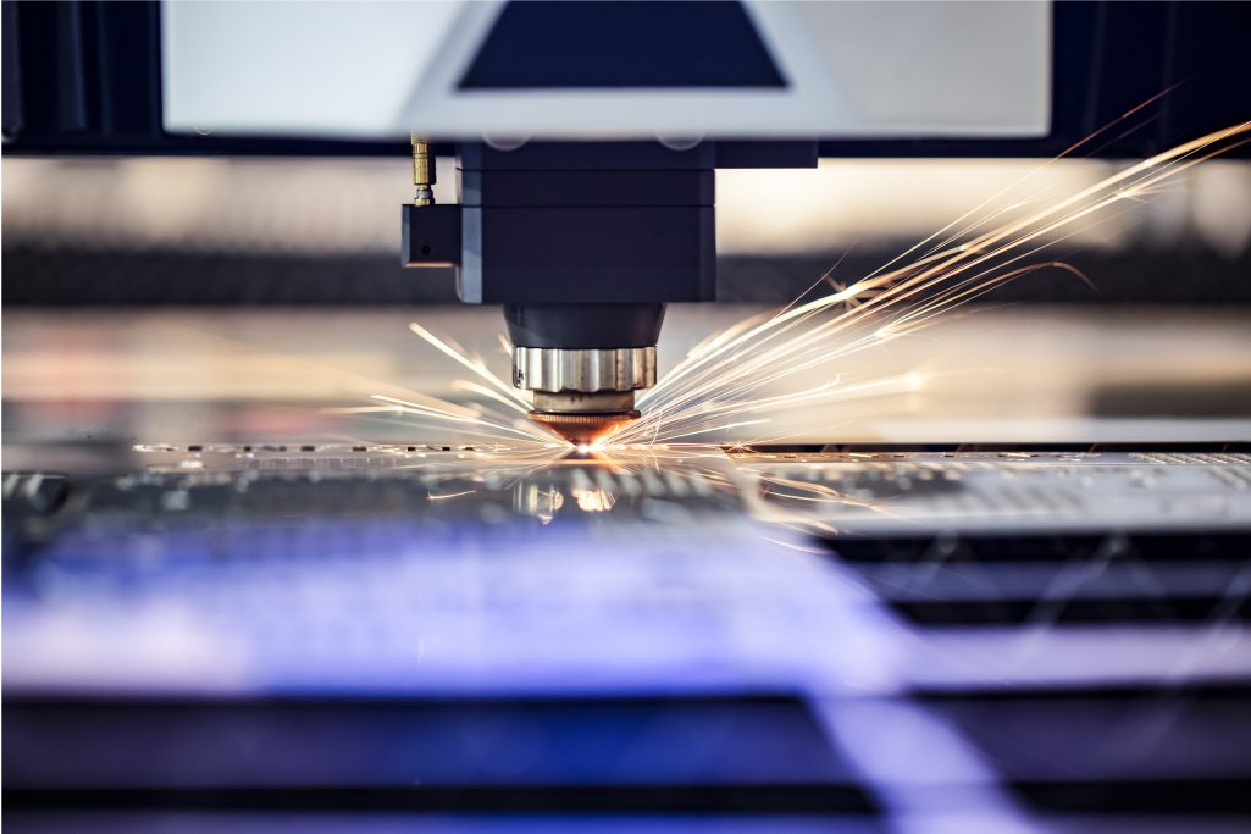
Laser cutting offers numerous advantages, including precision and flexibility. However, it also has several disadvantages that can affect its use for specific projects:
Material Thickness Limitations
Laser cutting is most effective on thinner materials. As materials get thicker, the laser has a harder time cutting cleanly and accurately. Thick materials may require slower cutting speeds or alternative methods, which can reduce efficiency.
High Initial Investment
The cost of laser cutting equipment is high. Buying and maintaining laser cutting machines, along with the necessary software and safety systems, can be expensive. This high cost makes it less accessible for small businesses and hobbyists.
Energy Consumption
Laser cutting machines consume a significant amount of energy during operation. This high energy use can increase operational costs, especially for big or continuous production runs.
Harmful Gases and Fumes
The cutting process can release harmful fumes and gases, particularly when cutting plastics or materials with coatings. To ensure safety, proper ventilation and filtration systems are needed, which adds complexity and cost to the setup.
Limited to 2D or Slightly 3D Cuts
Laser cutting is mainly suited for flat or slightly curved surfaces. It does not work well for cutting complex 3D shapes or very thick materials, where other methods, such as waterjet or mechanical cutting, might be more suitable.
Material Restrictions
Some materials, such as certain reflective metals (like copper or aluminum), are challenging to cut with lasers. Their reflective properties can reduce cutting efficiency or damage the laser source.
Is laser cutting right for my parts?
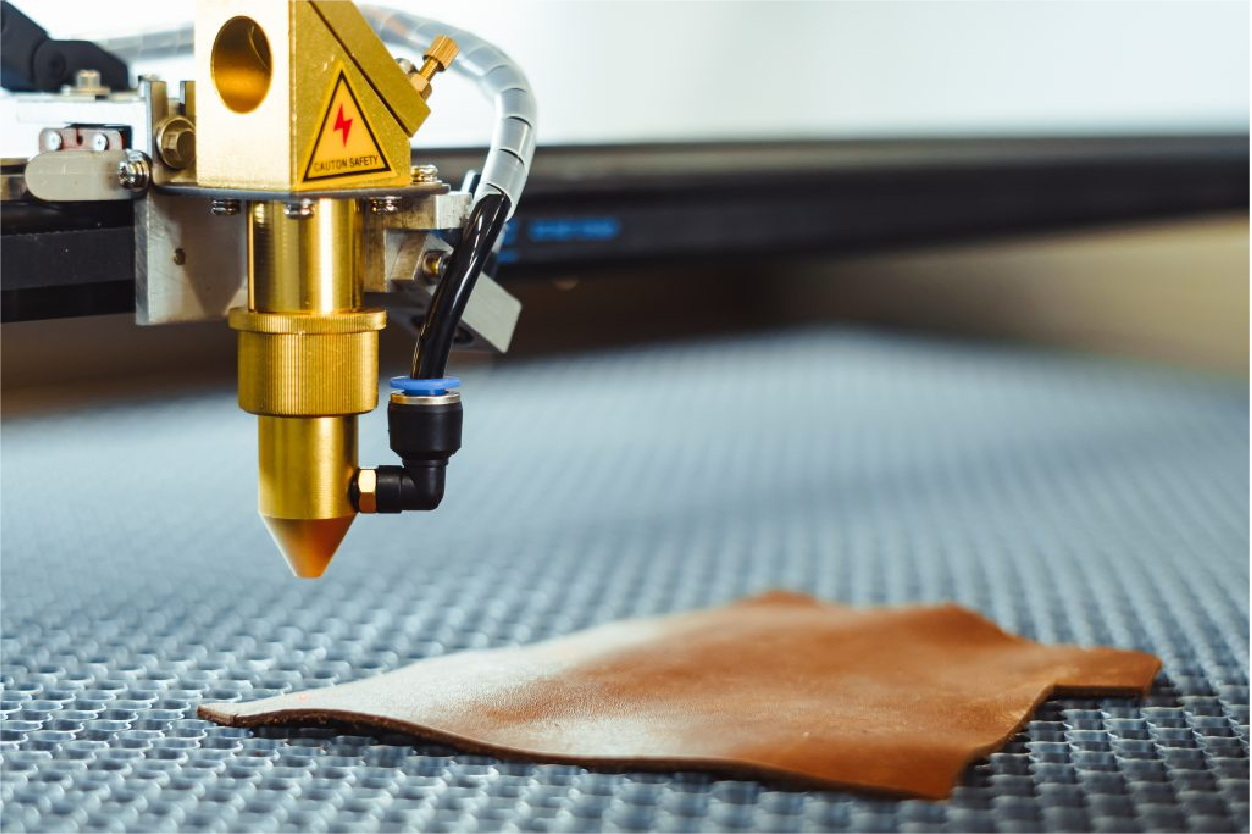
Laser cutting is an exact and efficient method for fabricating sheet metal parts. At Prototek, our state-of-the-art cutting capabilities enable us to produce complex and intricate designs with exceptional accuracy and speed. Whether you require prototypes or production runs, our team can work closely with you to determine the optimal manufacturing process for your specific parts and needs. Contact us today to discuss your project and explore how our sheet metal laser-cutting services can benefit your business.
FAQs
Laser cutting is an accurate and efficient manufacturing process that utilizes a focused laser beam to cut through various materials, allowing for intricate designs and customization.
It is a precise and efficient manufacturing process that employs a high-energy laser beam to cut through various materials. The laser beam focuses on the workpiece, melting or vaporizing the material along the desired cut path and resulting in clean, accurate cuts with minimal waste.
It can precisely cut a wide range of materials, including metals, plastics, wood, and acrylic. Additionally, it can cut more, making it a versatile manufacturing process.
It is a versatile manufacturing process utilized across diverse industries, including aerospace, automotive, electronics, medical, and more. It enables precise, efficient, and cost-effective part production.