Aluminum (Al) is everywhere. From the wings of airplanes to the body of your car and cellphone, you’ll find aluminum. As the most abundant metal in the Earth’s crust, it offers a unique blend of lightness, strength, and corrosion resistance, making it a primary material for many applications.
In this blog post, we will go over the history, properties, production, applications, and more.
What is aluminum's history, and how is it made?
The use of aluminum spans human history, though its isolation didn’t occur until the 19th century. Sir Humphry Davy suggested the name “aluminum” in 1807, but Danish physicist Hans Christian Østed produced an impure form of it in 1825. In 1827, Friedrich Wöhler isolated pure aluminum for the first time. Hall-Héroult had a real breakthrough in 1886 with an electrolytic process, making large-scale production much more feasible and affordable.
The Natural Occurrence and Production of Aluminum
- Mining Bauxite:
- For as abundant as it is, aluminum is never naturally found in its pure form.
- Bauxite ore is rich in aluminum oxides.
- Refining by the Bayer Process
- Bauxite is crushed and mixed with caustic soda, which dissolves the alumina.
- Next is the removal of impurities, and alumina (Al2O3) is precipitated and calcined.
- 2-3 tonnes of bauxite yield 1 tonne of alumina.
- Smelting, the Hall-Héroult Process
- Preparation of the Bath: The molten cryolite (Na3AlF6 acts as a solvent to lower the melting point of the pure alumina. Once the alumina dissolves, calcium fluoride (CaF2
- Electrolysis Cell Setup: A steel pot lined with carbon serves as the cathode, and carbon blocks, acting as the anode, are suspended from the top into the cryolite and alumina bath.
- Electrolytic Reduction: At this stage, a strong electric current passes through the bath. It splits the alumina into aluminum ions (Al3+) which move to the cathode and settle at the bottom due to their density. At the same time, the alumina releases oxygen atoms (O2-) and reacts with the carbon anodes, creating carbon dioxide (CO2).
- Tapping and Casting: Finally, the molten Al is siphoned or tapped from the bottom of the pot and transferred to holding furnaces. From here, they are cast into ingots or other forms.
What are the fundamental properties of aluminum?
| Property | Value |
|---|---|
|
Atomic Number |
13 |
|
Atomic Weight |
26.982 |
|
Density (20° C) |
2.70 g/cm3 |
|
Melting Point |
660.32° C |
|
Thermal Conductivity |
237 W/(m·K) |
|
Electrical Conductivity |
~60% of copper (by volume) |
|
Crystal Structure |
Face-Centered Cubic (fcc) |
|
Corrosion Resistant |
Excellent (Al2O3 layer) |
|
Malleability/Ductility |
Very High |
|
Nonmagnetic |
Yes |
|
Recyclability |
Infinite (no property loss) |
Key Features:
- Lightweight: Al is about 1/3 the density of steel.
- Excellent Conductivity: It is a good conductor of both heat and electricity.
- Highly Malleable and Ductile: It can easily be formed into sheets, wires, or complex shapes.
What are aluminum alloy families and their uses?
The use of pure aluminum is rare. It is alloyed with elements like copper, magnesium, silicon, and zinc to enhance its properties. The main alloy families are:
| Series | Major Alloying Element(s) | Key Properties and Uses |
|---|---|---|
|
1xxx |
≥99% Aluminum |
Electrical Conductors and Packaging |
|
2xxx |
Copper |
High Strength and Aerospace Components |
|
3xxx |
Manganese |
Heat Exchangers and Beverage Cans |
|
5xxx |
Magnesium |
Marine Parts, Can Lids, and Good Weldability |
|
6xxx |
Magnesium and Silicon |
Construction, Electronics, and iPhone Frames. |
|
7xxx |
Zinc (plus Mg, Cu, and Cr) |
Very High Strength, Aerospace Components, and Apple Watches |
Can aluminum be recycled?
- Infinite Recyclability: Al can be endlessly recycled without losing its properties.
- Energy Savings: Recycling aluminum saves up to 95% of the energy required for primary production.
- Environmental Impact: Recycling Al can reduce greenhouse emissions and conserve natural resources.
Advantages of Aluminum
| Properties | Aluminum | Steel | Titanium | Copper |
|---|---|---|---|---|
|
Density (g/cm3) |
2.7 |
7.8 |
4.5 |
8.9 |
|
Strength-to-Weight |
High |
Moderate |
Very High |
Moderate |
|
Corrosion Resistance |
Excellent |
Variable |
Excellent |
Good |
|
Machinability |
Excellent |
Moderate |
Difficult |
Moderate |
|
Electrical Conductivity |
High |
Low |
Low |
Very High |
|
Thermal Conductivity |
High |
Moderate |
Low |
Very High |
|
Recyclability |
Excellent |
Good |
Good |
Excellent |
|
Relative Cost |
Low |
Low |
High |
High |
Aluminum has a high strength-to-weight ratio, especially the 2xxx to 7xxx alloys. It is non-toxic, so it is safe for food, medical, and consumer products. Aluminum is also excellent for electrical and thermal applications due to its conductivity. It is easy to form and machine.
What applications are common for aluminum?
- Aerospace: Fuselages, wings, engine parts, and space equipment.
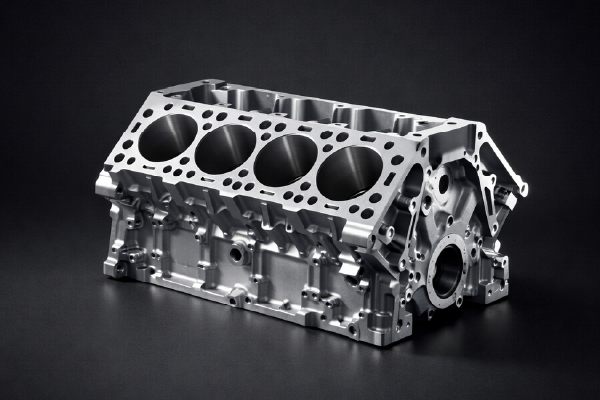
- Automotive: Body panels, engine blocks, EV battery enclosures, and crash/safety systems.
- Construction: Window frames, roofing, and structural components.
- Packaging: Beverage cans, food cans, foil, and flexible packaging.
- Electronics: Heat sinks, smartphone and laptop frames, and electrical lines.
- Marine: Boat hulls, superstructures, and marine hardware.
- Defense: Armor plates, military vehicles, drones, and satellites.
- Consumer Goods:Appliances, cookware, bicycles, and sporting goods.
Aluminum Manufacturing Services at Prototek
FAQs
Define: Aluminum
Aluminum is a lightweight, durable, and corrosion-resistant metal. Many industries use it, such as aerospace, automotive, and construction. Al is known for its strength-to-weight ratio, thermal and electrical conductivity, and versatility in manufacturing processes.
Does aluminum rust?
Aluminum does not rust like iron or steel. Rather, it forms a protective oxide layer that helps prevent corrosion.
Is aluminum magnetic?
No, Al is not magnetic.
Can you weld aluminum?
Yes, Prototek offers aluminum welding services as part of our comprehensive manufacturing capabilities.
Can you powder coat aluminum?
Yes, aluminum can be powder-coated. Powder coating provides a strong, protective finish for aluminum parts, enhancing their appearance and corrosion resistance.
How do you polish aluminum?
To polish aluminum, begin by cleaning the surface with a mild detergent and water. Rinse and dry thoroughly. Then use fine-grit sandpaper or a polishing compound to buff the aluminum in a gentle circular motion. Wipe away any residue and repeat as needed until the desired shine is achieved.
At what temperature does aluminum melt?
Al melts at approximately 660.3° C (1220.5° F).