Additive manufacturing has opened new possibilities for defense engineering teams, from complex geometries and lightweight components to rapid iteration and production without conventional tooling.
But choosing the right additive process is only part of the manufacturing decision.
For a defense program, the more important question may be whether the supplier behind that process can support everything the finished component requires.
A printed part may still need machining, finishing, hardware, inspection, documentation, or assembly before it is ready for its intended use. The program itself may carry quality, traceability, information-security, and supplier-qualification requirements. And when designs, schedules, or requirements change, customers need a manufacturing team capable of responding to the problem, not simply running the next build.
That broader view is how Prototek approaches additive manufacturing for defense: not as a standalone printing service, but as one part of a complete manufacturing strategy. Our additive capabilities are supported by engineering expertise, multiple additive technologies and materials, and access to complementary manufacturing and finishing processes when the application requires them.
That is where the distinction between additive capability and additive manufacturing partnership starts to matter.
The Requirement Is the Finished Part, Not the Print
Additive manufacturing can solve problems that are difficult or inefficient to address with conventional processes. That does not mean additive needs to solve every requirement by itself.
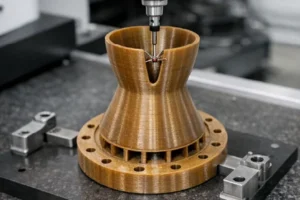
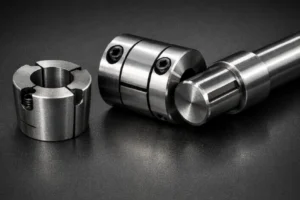
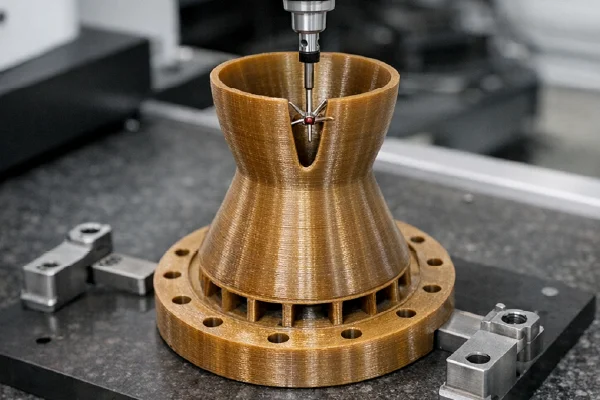
A printed component may contain critical holes, mating surfaces, threads, inserts, coatings, or other features that are better addressed after the build. Some parts may require CNC machining for precision interfaces. Others may need surface finishing, hardware installation, assembly, dimensional inspection, or additional secondary operations.
Those aren’t extras around the additive process. They are part of delivering the finished component the program actually needs.
At Prototek, that is an important part of how we evaluate additive applications. Our additive manufacturing capabilities can work alongside CNC machining, sheet metal fabrication, finishing, inspection, and assembly, allowing the manufacturing path to be considered around the complete requirement rather than the print alone.
The objective isn’t to force more processes into the project. It is to determine the most practical approach for the part.
Sometimes additive can carry most of the manufacturing requirement. Sometimes it creates the geometry efficiently while another process addresses a critical feature downstream. And sometimes the right engineering recommendation is not additive at all.
Having more than one manufacturing option available makes that last answer easier to give.
Defense Programs Bring Requirements Beyond Geometry
For defense manufacturing, supplier evaluation may extend well beyond whether a company owns the right additive equipment.
Quality systems, inspection, documentation, traceability, information security, and controlled workflows can all become important parts of the manufacturing relationship. The exact requirements depend on the program, but they are easier to address when disciplined quality and security practices are already part of how the supplier operates.
Prototek is AS9100D and ISO 9001:2015 Certified, ITAR Registered, and CMMC Level 2 certified. Those credentials are not substitutes for evaluating the technical fit of an additive process. They are evidence of the broader systems supporting our work with demanding aerospace and defense customers.
For engineering, quality, and procurement teams, that can reduce another category of uncertainty. The supplier conversation can move beyond “Can you print this?” toward questions about how the complete requirement will be manufactured, inspected, documented, and supported.
That broader readiness matters when the component is only one element of a much larger defense program.
Access to Manufacturing Expertise Matters When Things Change
Few development programs move forward without changes.
Testing creates new information. Interfaces move. Packaging changes. A tolerance becomes more important than expected. Quantities increase. A material becomes difficult to source. A schedule tightens.
When that happens, the value of a manufacturing partner becomes much more visible.
An additive supplier should be able to do more than receive a revised file. The manufacturing team should be able to understand what changed, why it matters, and whether the existing approach still makes sense.
That is also where Prototek’s engineering-driven approach to additive becomes important. Our team can help customers evaluate additive technology, materials, Design for Additive Manufacturing considerations, finishing requirements, and the relationship between additive and other manufacturing processes based on the needs of the application. The goal is not simply to find a way to print the design. It is to help determine a manufacturing approach that supports the project as requirements evolve.
A change may lead to a different build strategy or finishing approach. It may require a machined feature. It may point toward another additive technology or material. In some cases, it may make a conventional manufacturing process more appropriate.
Either way, the customer benefits from a supplier capable of participating in that decision rather than simply executing the next file.
A Capable Additive Partner Shouldn't Stand Still
Additive manufacturing continues to develop. Equipment improves. Material options expand. Automation changes how parts are processed. Post-processing evolves. Inspection methods improve. And manufacturing teams learn from every application they move through development and production.
For customers, the important point isn’t whether a supplier can point to the newest machine.
It is whether that supplier continues investing in the manufacturing system supporting the customer’s work.
Continuous improvement is an important part of Prototek’s approach. That includes continued development of additive technologies, processes, software, supporting equipment, and employee expertise with the goal of improving manufacturing outcomes for customers.
A new technology might create a better option for a future application. Improved post-processing may simplify a secondary operation. Greater automation may improve consistency or efficiency. Additional experience with a material or process may change the recommendation for a part that would have been manufactured differently several years ago.
Not every improvement matters to every defense program. The value comes from having a manufacturing partner that continues looking for where those improvements do matter.
For customers managing programs over months or years, that means the manufacturing relationship has an opportunity to improve along with the technology.
Look Beyond the Additive Capability
Additive technology is an important part of the supplier decision, but it shouldn’t be the entire decision.
For a defense program, it is worth looking at the manufacturing system surrounding that technology.
Can the supplier help determine whether additive is actually appropriate for the application? Can it support the secondary operations necessary to deliver the finished component? Are quality, inspection, documentation, and information-security requirements supported by established systems? When a requirement changes, is there manufacturing expertise available to help evaluate what should change with it?
Those are the questions that move the conversation beyond printing.
Prototek brings together industrial polymer and metal additive manufacturing, engineering collaboration, complementary manufacturing processes, finishing and inspection capabilities, and quality and security credentials suited to demanding defense work. Our additive portfolio includes multiple technologies, more than 100 material options, and more than 40 finishing options, giving our teams room to evaluate the application rather than begin with a predetermined process.
That breadth is valuable, but the larger point is what it enables: a more complete manufacturing conversation.
Because ultimately, the goal isn’t simply to find a supplier that can print the part.
It’s to find a manufacturing partner prepared to help support the program behind it.
Frequently Asked Questions
What should defense companies look for in an additive manufacturing supplier?
Start with technical fit, but evaluate the broader manufacturing relationship as well. Relevant considerations may include engineering expertise, available additive technologies and materials, secondary operations, inspection and quality systems, information security, documentation requirements, responsiveness, and the supplier’s ability to support changing program needs.
Does a defense additive manufacturing supplier need CMMC or ITAR registration?
Requirements depend on the specific program, contract, information, and work being performed. When applicable, CMMC certification and ITAR registration can provide important evidence of supplier readiness and secure manufacturing practices. Prototek is ITAR Registered and CMMC Level 2 certified.
Should an additive manufacturing supplier also offer conventional manufacturing processes?
Not every application requires multiple processes. However, access to machining, finishing, assembly, inspection, and other manufacturing capabilities can be valuable when the finished component requires more than the additive build itself. It also allows additive to be evaluated as part of the manufacturing strategy rather than assumed to be the correct process for every requirement.
Looking Beyond the Print?
If you’re evaluating additive manufacturing for a defense application, Prototek can help you look at the complete requirement, including process and material selection, DfAM, secondary operations, quality, inspection, and supplier readiness. Contact us with any questions or concerns, we’d love to help get your project underway!