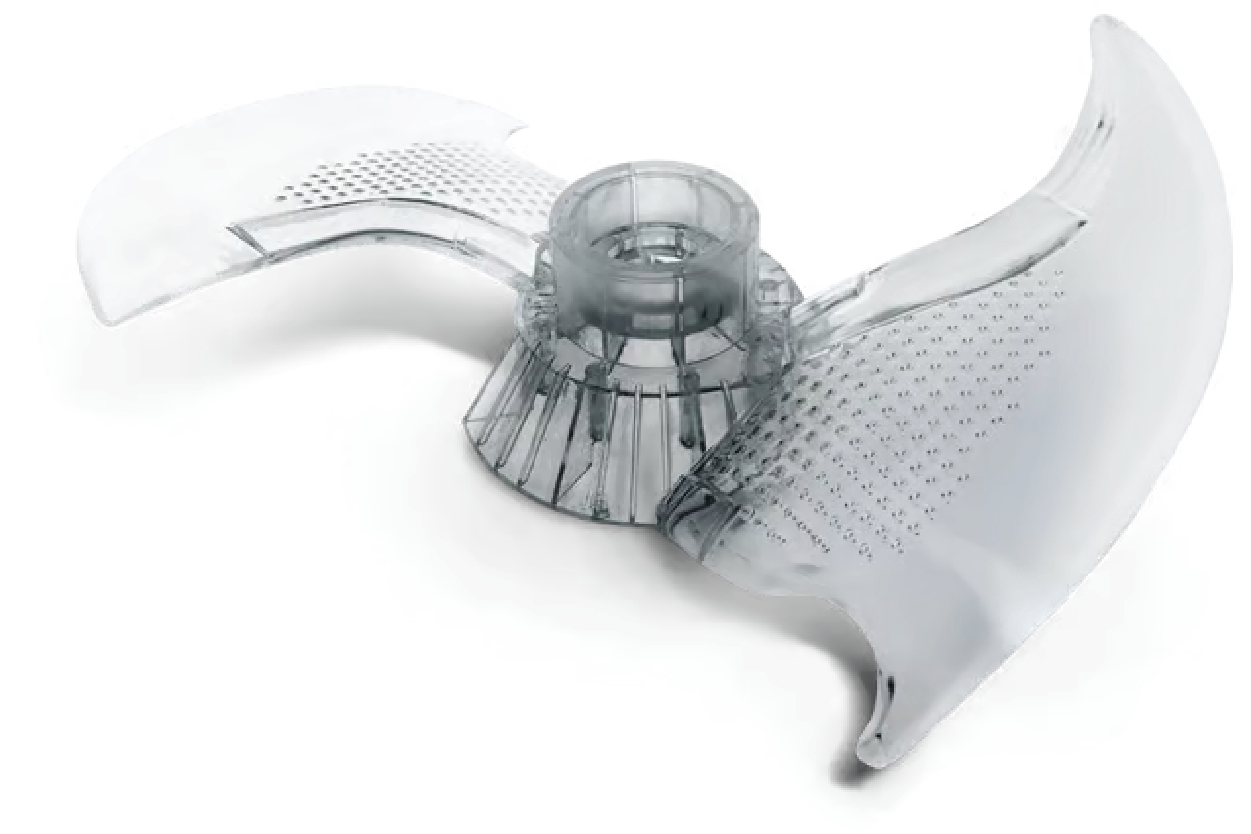
What if you could print 3D parts that mimic glass, allowing for the visualization of internal workings or fluid flow testing? Well, you can! Or rather, Prototek can for you. If your latest innovations require a clear/translucent material, you’ve come to the right place. Prototek offers several materials that meet this need, also possessing several other beneficial properties. However, achieving true optical clarity may be a technical challenge that depends on both material formulation and meticulous post-processing. Please let us know if you have any questions, and our team will work with you to find the best solutions.
In this blog post, we’ll discuss a few of the clear/translucent materials we offer in-house, their other properties, and potential uses.
Fundamentals of Optical Clarity in 3D printing
What Makes a Material Clear or Translucent?
- Optically Clear: High light transmission (up to 91%), minimal haze, and colorless appearance. Achieved through material purity, smooth surfaces, and minimal internal defects.
- Translucent: Allows light to pass but scatters it, resulting in a frosted look—often due to micro-bubbles or surface roughness.
Key Properties:
- Light Transmission (%): Higher is better for clarity.
- Haze: Lower values mean less light scattering.
- Color Stability: Resistance to yellowing.
- Surface Finish: Smoothness is critical for optical applications.
In-House Translucent Materials
Our in-house 3D printing technologies, such as stereolithography (SLA), digital light processing (DLP), and material jetting, can create clear and see-through materials. In our advanced facility, we make high-quality parts that are transparent and precise for every project. Whether you need prototypes, final products, or custom pieces, we have the expertise to bring your ideas to life.
Accura® 60
Accura® 60, a stereolithography resin made by 3D Systems. Its clarity is high, and it simulates the appearance of molded polycarbonate. This material can be made more optically clear by using thinner walls and undergoing post-processing, or it can be more translucent by using thicker walls and less post-processing. Accura® 60 has high tensile strength and modulus, as well as fine surface resolution and detail. Applications, such as medical devices, labware, lighting components, and electronic housings, benefit from the properties of these materials.
Accura® ClearVue
Accura® ClearVue is another stereolithography resin made by 3D Systems. The clarity is extremely high and is among the most colorless 3D printing materials on the market. It simulates molded polycarbonate and ABS. Accura ClearVue presents properties such as good snap-fits, excellent strength, and moisture resistance, making it suitable for applications including fluid flow visualization, lenses, medical models, and translucent assemblies.
Somos® BioClear
Somos® BioClear is a stereolithography resin made by DSM. It’s known to be optically clear and colorless. Somos BioClear is ABS-like, with high tensile strength (50.4 MPa) and an elongation at break of 15.5%. It is biocompatible with ISO 10993 and USP Class VI (non-implantable, < 24 hours of contact). Somos BioClear exhibits properties suitable for medical and dental models, surgical guides, and anatomical models. Certain post-processing may render this material not biocompatible. Please get in touch with our team if this is a requirement for your project.
Somos® WaterClear Ultra 10122
Somos® WaterClear Ultra 10122 is another stereolithography resin made by DSM. The clarity of this material is exceptional, with 90% light transmission comparable to that of acrylic. It is rigid with a tensile strength of 56 MPa. Somos® WaterClear Ultra 10122 displays characteristics ideal for automotive lenses, fluid flow analysis, light pipes, and master patterns.
Somos® WaterShed XC 11122
Somos® WaterShed XC 11122 is another stereolithography resin made by DSM. Depending on the post-processing, the clarity is optically clear with white translucency. It is ABS/PBT-like with a tensile strength of 50.4 MPa and elongation at break of 15.5%. Somos® WaterShed XC 11122 presents characteristics of high water and chemical resistance, making it ideal for applications such as prototyping, fluid flow analysis, medical models, and wind tunnel testing.
Loctite3D IND405 Clear
Loctite3D Clear is a digital light processing and stereolithography resin by Henkel. Prototek is currently running this material in our digital light processing machines. The clarity is frosted (as-printed), but it can be polished to achieve an optically clear finish. It is a tough, semi-rigid material with a tensile strength of 45 MPa and elongation at break of 120%. Loctite3D Clear is also biocompatible with ISO 10993-5/-23. It exhibits properties ideal for industrial jigs and tools, prototypes, and medical guides.
Vero Clear
Vero Clear is a material jetting resin by Stratasys. It exhibits high clarity, simulating the properties of PMMA (polymethyl methacrylate, also known as acrylic). This material is rigid with a tensile strength of 50-65 MPa and a Shore D of 83-86. Vero Clear displays properties suitable for concept models, design verification, eyewear, light covers, and artistic models.
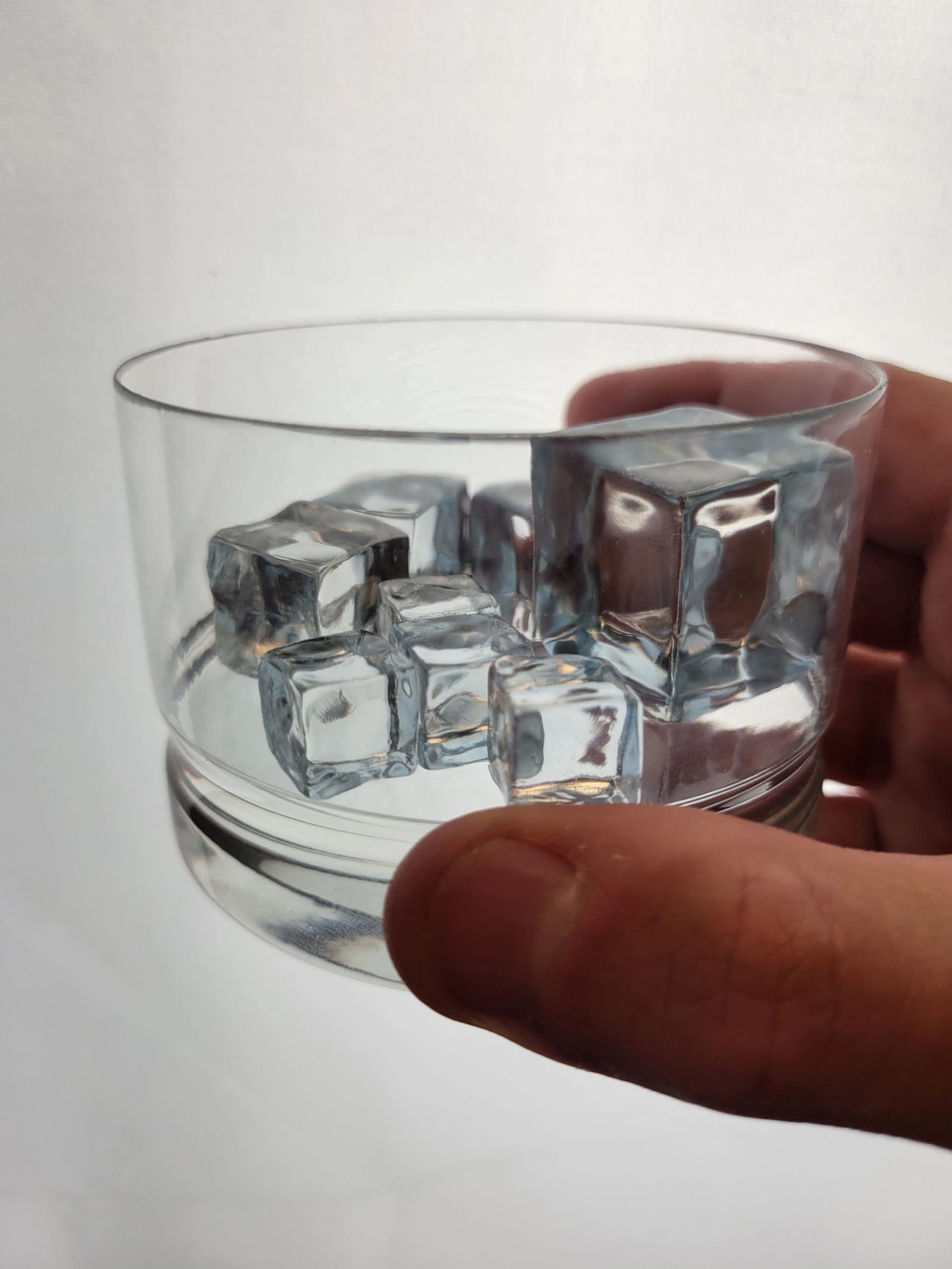
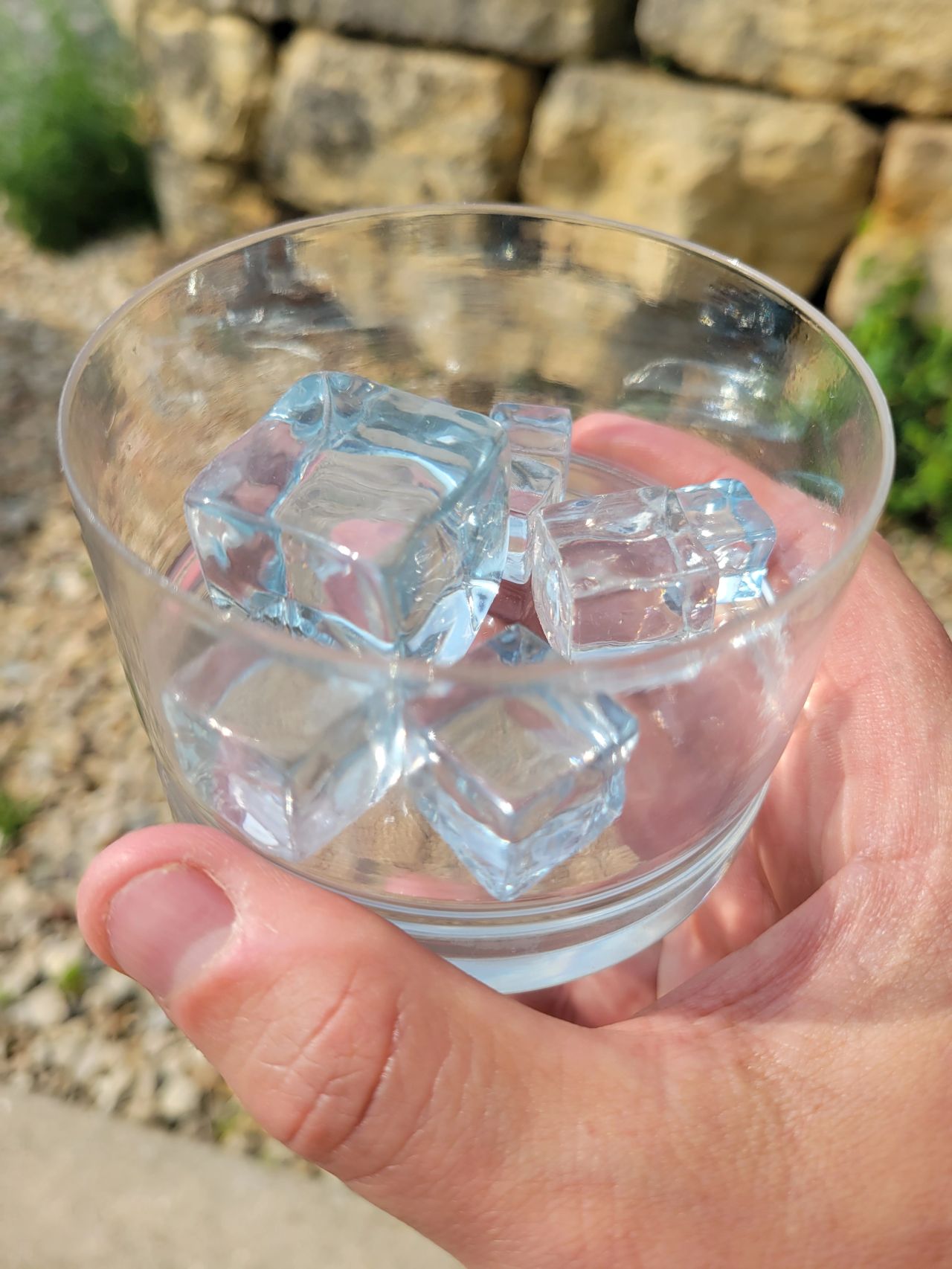
Applications Translucent Materials
Here are some ways these materials can be helpful:
Prototyping and Product Design
- Showcasing Internal Features: Models or prototypes where the internal structures, mechanisms, or fluid channels need to be visible for inspection or demonstration.
- Prototype Parts: Clear parts enable visualization and facilitate testing of form, fit, and function before production.
2. Optics and Lighting
- Optical Components: Lenses, light guides, and other optical elements.
- LED Housings and Light Diffusers: The ability to transmit or diffuse light makes these resins suitable for custom LED housings and lighting prototypes.
3. Medical and Dental
- Surgical Guides: Surgical guides for precise placement and visibility during medical procedures.
- Dental Aligners and Models: Dental aligners, retainers, and anatomical models for patient education and treatment planning.
4. Fluids and Microfluids
- Fluidic Devices: Microfluidic chips and devices, enabling observation of fluid flow and reactions within channels.
5. Mold Making
- Mold Prototypes: Molds and master patterns for urethane or silicone casting.
6. Industrial and Engineering
- Enclosures: See-through housings enable visual inspection of internal electronics or mechanisms without requiring disassembly.
- Fluid Tubes: Prototyping or producing transparent tubing for fluid transport and monitoring.
Post-Processing Clear 3D Prints
3D printing allows us to create detailed designs with great precision. However, post-processing and finishing techniques are necessary to make clear or see-through parts. Here is a list of methods to help you achieve the clarity and transparency you want in your 3D-printed parts.
Coating components, such as priming, painting, or clear coating, may compromise the biocompatibility of materials. If your project requires biocompatibility, please consult with our team to ensure compliance with relevant regulations.
- Sanding: Removes microscopic layer lines from the 3D printing and surface imperfections that scatter light, causing the part to look cloudy or translucent instead of clear. Sanding creates a smoother surface that allows light to pass through evenly, and it is a necessary step for achieving true optical clarity.
- Polishing: This process also removes microscopic layer lines and surface imperfections, creating a smooth, continuous surface that allows light to pass through without obstruction, making the part appear like clear glass.
- Clear Coat: Applying a clear coat after sanding or polishing enhances the appearance of your parts. It provides a protective layer against environmental damage and everyday wear and tear. Plus, it adds a sleek finish that enhances the overall design.
- Resin Dip or Coating:
- Resin Dipping: This process involves dipping a 3D-printed part in clear resin. The resin creates a strong and shiny layer that protects the part, enhancing its clarity and fine details. The resin also seals the surface, making it more durable by preventing scratches, chips, and environmental damage.
- Resin Coating: This method involves brushing or spraying a light layer of clear resin onto the surface of a 3D-printed part. Like resin dipping, it provides protection and gives a transparent finish. Once cured, the resin forms a firm, glossy surface that protects against wear and adds depth to the appearance.
- Bottle Clear: This is a proprietary method for bottles and other geometries with internal cavities or large tubes, improving the clarity of hard-to-reach areas. Our technicians sand and clear coat the outside of the component, while the inside is coated with a thick layer of clear material to smooth out layer lines and corners, giving it a blow-mold quality.
3d Printing Clear Resins, In Review.
| Material | Clarity | Tensile Strength (MPa) | Elongation at Break (%) | Biocompatible | Key Applications |
|---|---|---|---|---|---|
|
Accura® 60 |
High |
58 – 68 |
5 – 13 |
No |
Prototypes and transparent parts. |
|
Accura® ClearVue |
Extremely High |
46 – 53 |
3 – 15 |
Yes |
Lenses, medical, and assemblies. |
|
Somos® BioClear |
Optically Clear |
50.4 |
15.5 |
Yes |
Medical and dental guides. |
|
Somos® WaterClear Ultra |
Exceptional |
56 |
7.5 |
No |
Fluid flow, lenses, and light pipes. |
|
Somos® WaterShed XC |
Clear/Translucent |
50.4 |
15.5 |
No |
Prototyping, wind tunnel testing, and medical devices. |
|
Loctite3d IND405 Clear |
Optically Clear (Polished) |
45 |
120 |
Yes |
Industrial components and medical guides. |
|
Vero Clear |
High |
50-65 |
10-25 |
No |
Visual prototypes and artistic models. |
FAQs
Are there clear or translucent 3D printing materials?
Yes, we offer a variety of clear and translucent 3D printing materials.
How do you post-process clear or translucent 3D printed materials?
Carefully polish and finish clear 3D printed parts to enhance transparency.
What are applications for clear or translucent 3D printed components?
Clear or translucent 3D printed parts enable visual prototypes, lighting fixtures, and medical devices.