Gears play a crucial role in machines. They help transfer power, change direction, and adjust speed in many devices, from wristwatches to wind turbines. Whether you are an aspiring engineer, a hobbyist, or simply interested in how machines work, understanding different gear types is essential.
This blog post covers the main types of gears, their uses, materials, manufacturing processes, and recent advancements in gear technology.
Introduction to Gears
Gears are mechanical parts with teeth that help move machines. They work together to change motion and torque between parts. Gears can alter the direction of movement, adjust speed, and increase force. The type of gear you choose depends on what you need, including direction, load capacity, noise level, and space available.
Fundamental Gear Types and Their Mechanical Principles
Here are some common gear types, each with specific uses and functions.
Spur Gears
- Description: Spur gears are the most basic and widely used gear type. They have straight teeth parallel to the rotation axis and link parallel shafts.
- Mechanical Principles: Their teeth mesh directly, leading to efficient power transfer. When two spur gears connect, they turn in opposite directions. They are simple to make and maintain.
- Applications: You can find spur gears in industrial machines, car transmissions, and household appliances where noise is not a significant concern.
Helical Gears
- Description: Helical gears have teeth cut at an angle to the rotation axis, forming a spiral. This shape allows for quieter and smoother operation than spur gears.
- Mechanical Principles: The angled teeth mesh gradually, which reduces noise and vibration. Helical gears can handle heavier loads because more teeth are in contact. They can link parallel and non-parallel shafts.
- Applications: Helical gears are standard in car transmissions and heavy equipment, where quiet and efficient power transfer is essential.
Bevel Gears
- Description: Bevel gears are cone-shaped gears that link shafts at angles, usually 90 degrees.
- Mechanical Principles: They change the rotation direction, making them suitable for applications needing directional change. Different types, like straight, spiral, and hypoid bevel gears, offer various benefits in smoothness and load capacity.
- Applications: Bevel gears are typical in car differentials, power tools, and right-angle drives.
Worm Gears
- Description: Worm gears consist of a worm (a screw-like part) and a worm wheel (a gear). They connect non-parallel, non-intersecting shafts.
- Mechanical Principles: Worm gears provide high gear reduction, making them ideal for high-torque, low-speed uses. Their design often prevents the worm wheel from turning the worm, giving it a self-locking feature.
- Applications: You often find worm gears in conveyor systems, elevators, and heavy machinery.
Specialized Gear Types and Their Unique Applications
In addition to basic gears, some specialized gear types meet specific needs.
Rack and Pinion
- Description: A rack and pinion system includes a linear gear (the rack) and a round gear (the pinion). This setup turns rotational motion into linear motion.
- Applications: Rack and pinion gears are standard in car steering systems, CNC machines, and elevators, providing precise control and effective motion conversion.
Planetary (Epicyclic) Gears
- Description: Planetary gears have a central sun gear and planet gears that rotate around it, enclosed by an outer ring gear. This setup allows for compact design and high gear reduction ratios.
- Applications: You find planetary gears in car transmissions, robotics, and aerospace systems, where compact and efficient power distribution is vital.
Hypoid Gears
- Description: Hypoid gears are a type of spiral bevel gear with non-intersecting axes. They allow for smooth power transfer and high torque capacity.
- Applications: Hypoid gears are mainly used in car differentials, enabling smooth and efficient power transfer from the engine to the wheels.
Miter Gears
- Description: Miter gears are bevel gears that work at a 1:1 ratio. They change the direction of power without changing the speed.
- Applications: You will find miter gears in tools like hand drills, garage door openers, and automatic transmissions. They are perfect for simple direction changes.
Spiral Gears
- Description: Spiral gears are helical gears that meet at a high angle. They transfer power between shafts that are not parallel and do this well at lower speeds.
- Applications: These gears are standard in sewing machines and precise instruments, especially in low-power, low-speed situations.
Internal Gears
- Description: Internal gears have their teeth inside the gear cylinder. This design allows for compact and efficient power transmission.
- Applications: Internal gears are vital in systems like planetary drives and are typical in tractors, construction equipment, and electric vehicles.
Industry-Specific Applications of Gears
Gears are essential parts used in many industries. Different types of gears are selected based on their specific needs:
Automotive
In cars, helical and bevel gears help transfer power from the engine to the wheels, making driving smooth. Hypoid gears are efficient for high torque and are often used in differentials, allowing vehicles to turn easily and stay stable.
Industrial Machinery
In factories, spur and helical gears are standard in conveyor systems and heavy machines. Their strong build allows them to perform reliably under heavy loads and high speeds, which is essential for smooth operations.
Consumer Products
In everyday items like washing machines, blenders, and toys, plastic spur gears are typical. These gears are lightweight and affordable, operate quietly, and are durable, which helps appliances work well.
Robotics
In robotics, planetary gears are essential for precise movement in robotic arms. Their design allows for high torque in a compact size, enabling robots to perform detailed tasks accurately, whether in factories or surgeries.
Aerospace
In the aerospace industry, spiral bevel gears are standard for high-speed operation and precise movement. These gears can handle extreme conditions and heavy loads, making them crucial for aircraft engines and control systems, where safety is essential.
Gear Materials, Manufacturing Processes, and Design Considerations
Gear Materials
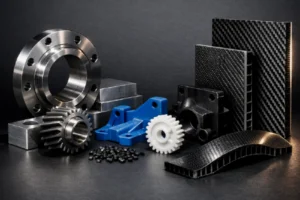
Choosing the right material for gears is essential for their performance and durability. Here are some common materials used:
- Cast Iron: This material is strong and affordable, making it suitable for gears that run at low to medium speeds. It also helps reduce noise and vibrations.
- Steel: Steel is known for its high strength and resistance to wear, making it ideal for gears that experience high loads or speeds, such as those used in cars and airplanes. Carbon steel and alloy steels can be enhanced, making them even better for harsh conditions.
- Bronze: Bronze resists corrosion and wear, making it an excellent choice for gears used in marine environments or high temperatures. It also has self-lubricating properties that reduce friction and wear, extending the life of the gears.
- Plastics: Lightweight and cost-effective, plastics like acetal and nylon work well for low-load and low-speed applications. They resist chemical corrosion and work in various environments, but they are not as strong as metals.
- 3D Printing Materials: Materials such as nylon, carbon fiber composites, and different metals enable the creation of custom gear through 3D printing. This technique allows for unique designs and features tailored to specific requirements.
When selecting materials for gears, consider factors like strength, resistance to impact and fatigue, and friction levels. Follow the guidelines set by the American Gear Manufacturers Association (AGMA).
Manufacturing Processes
Different manufacturing methods can affect the performance of gears. Here are some key processes:
- Casting: This method is suitable for making large gears, especially spur gears. Techniques include shell casting for detailed shapes, die casting for mass production, sand casting for flexibility, and permanent mold casting for precision.
- Forging: This process shapes metal using heat and pressure, making it stronger. It is perfect for gears that face heavy loads and forces.
- Extrusion and Cold Drawing: These methods help make various gear parts. Extrusion shapes heated metal, and cold drawing shapes material at room temperature, leading to precise dimensions and better strength.
- Machining: Machining methods like hobbing, broaching, milling, and grinding produce precise gear teeth with tight tolerances. These processes create intricate designs and smooth surfaces, which are necessary for good gear performance.
- 3D printing: This technology allows for the quick production of complex gear shapes without needing much tooling. It is beneficial for custom gears and smaller production runs.
Design Considerations
Here are some critical design factors for making reliable and efficient gears:
- Tooth Profile and Load Distribution: A well-designed tooth shape helps distribute loads evenly, reducing stress and extending the gear’s life. Designs that minimize stress concentrations lead to smoother operation and less wear.
- Material Choice and Printing Settings: When 3D printing gears, pick the right material and adjust settings like layer height and print speed. These choices affect mechanical strength, size accuracy, and appearance.
- Tolerance and Fit: Setting proper tolerances and clearances is crucial for gear assembly and function. It’s important to consider material shrinkage during cooling, as this can affect the final size and reliability of the gears.
By keeping these factors in mind, engineers can design and make gears that meet the specific needs of their applications.
Conclusion
Gears are essential for many machines, from simple clocks to advanced industrial robots. Understanding the different types of gears, their mechanical principles, materials, and manufacturing processes, as well as the latest technological advancements, helps you appreciate how these components work. Whether you are designing a new machine, fixing an existing system, or exploring mechanics, gears play a vital role in driving innovation and efficiency in many industries.
FAQs
How many types of gears are there?
There are several types of gears, including spur, helical, bevel, worm, and rack-and-pinion.
What is the most common gear?
The most common gear is the versatile and reliable spur gear.
What is the difference between gears, pinions, and sprockets?
Gears, pinions, and sprockets are all mechanical components used to transmit power and motion. Gears are circular with teeth, pinions are smaller gears that mesh with larger gears, and sprockets are toothed wheels that drive chains or belts.