Bronze is a durable metal alloy made up of copper and tin. For specific characteristics, additional elements such as aluminum, phosphorus, silicon, manganese, lead, or nickel are added. The combination of these metals creates a harder, more durable material than pure copper, which is a soft metal. It has a reddish-brown hue and a protective greenish patina over time. The marine industry heavily relies on bronze for its resistance to saltwater degradation. Many artists also prefer it because of its aesthetics and ability to withstand environmental conditions outdoors.
In this blog post, we will discuss what bronze is, its history, properties, applications, and more.
What is Bronze?
Bronze is a strong, hard alloy consisting mainly of copper and tin. It generally contains 88-90% copper and 4-12% tin, which gives the alloy its color and properties.
Bronze has good strength, corrosion resistance, low friction, and good wear resistance. It can hold up in harsh environments.
It is suitable for a number of applications, such as marine and naval, industrial, and electronic/electrical purposes.
What is the history of bronze?
During 3500-3300 BC in Mesopotamia, the Mesopotamians first produced bronze. It was a big hurdle for metallurgy. Metalworkers of the time discovered that adding tin to copper created a much more workable and harder material. The Bronze Age was born from this. It was a period characterized by the use of bronze tools, weapons, and art. It replaced stone and pure copper implements.
A look at the regional Bronze Age.
- Mesopotamia: 3300-1200 BC, applications include urban centers, royal tombs, weapons, and tools.
- Egypt: 3300-1200 BC, applications include dynastic tools, weapons, and decorative items.
- China: <3000-~600 BC, applications include Shang and Zhou ritual vessels, bells, and masks.
- Europe: ~2300-~700 BC, applications include Minoan and Mycenaean tools and weapons.
- British Isles: ~1900-~700 BC, applications include bronze tools and weapons.
- Indus Valley: ~3000-~1200 BC, applications include urban tools and ornaments.
- Do you have a bronze prototype or parts that need to be made?
Properties of bronze: what makes it so special?
Chemical Composition and Alloy Variations
| Alloy Type | Main Alloying Elements | Key Properties and Applications |
|---|---|---|
|
Tin Bronze |
Copper and Tin |
Good strength and corrosion resistance. |
|
Phosphor Bronze |
Copper, Tin, and Phosphorus |
Wear resistance, low friction, and good fatigue strength. |
|
Aluminum Bronze |
Copper and 5-14% Aluminum |
Very high strength, excellent corrosion and wear resistance. |
|
Silicon Bronze |
Copper and Silicon |
Excellent corrosion resistance, good strength, and weldability. |
|
Manganese Bronze |
Copper, Zinc, and Manganese. |
High strength and good wear resistance. |
|
Leaded Bronze |
Copper, Tin, and Lead. |
Low friction and good for high-speed machining. |
Physical and Mechanical Properties Based on Phosphor Bronze
| Property | Typical Value/Range |
|---|---|
|
Tensile Strength (MPa) |
324-965 |
|
Yield Strength (MPa) |
131-552 |
|
Hardness (Brinell) |
50-90 |
|
Elongation (%) |
60-70 |
|
Fatigue Resistance |
Good-High |
|
Density (g/cm3) |
8.9 |
|
Melting Point (C°) |
954 |
|
Thermal Conductivity (W/m•k) |
84 |
|
Electrical Conductivity (% IACS) |
11-20 |
|
Corrosion Resistant |
Excellent – patina and oxide films. |
Comparison to other metals
| Property | Bronze | Brass | Steel |
|---|---|---|---|
|
Strength |
High |
Medium |
High |
|
Wear Resistance |
Excellent |
Low |
Good |
|
Corrosion Resistance |
High |
Medium |
Variable |
|
Machinability |
Medium |
Excellent |
Good |
What are common applications for bronze?
Artistic and Architectural
- Statues and Monuments: It is corrosion-resistant and creates a beautiful patina, making it suitable for outdoor art and monuments.
- Architectural Elements: Because bronze is functional and appealing, it is common in doors, decorative panels, and light fixtures that feature bronze.
Marine and Naval Engineering
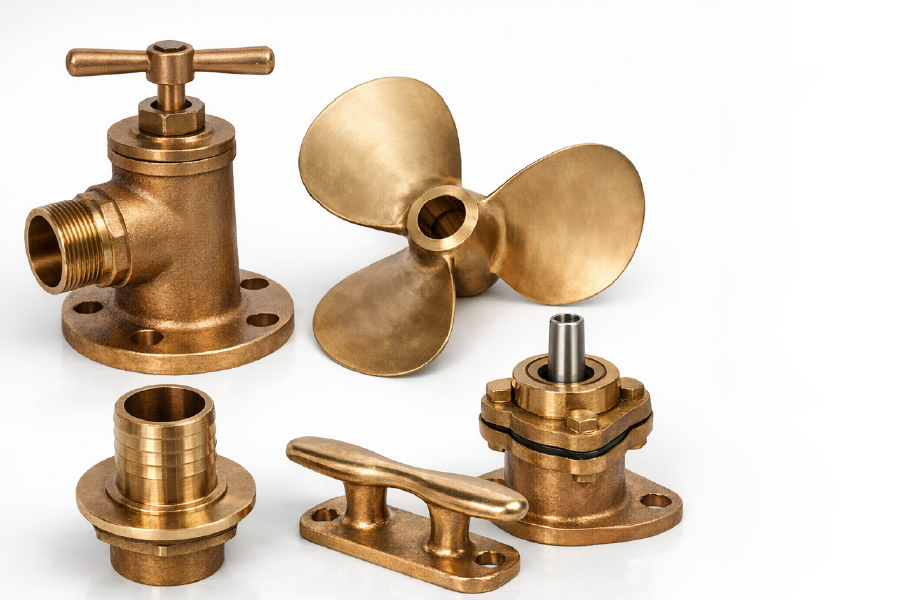
Bearings, Fittings, and Propellers: Their resistance to seawater corrosion is great for applications in ships and marine hardware.
Industrial and Engineering
- Bearings, Bushings, Gears, and Springs: Low friction and wear resistance make it a suitable choice for moving machinery components.
- Pumps and Valves: Durable and corrosion-resistant, it makes a great option for a long service life in harsh environments.
Electrical and Electronic
Bearings, Fittings, and Propellers: Their resistance to seawater corrosion is great for applications in ships and marine hardware.
Industrial and Engineering
- Bearings, Bushings, Gears, and Springs: Low friction and wear resistance make it a suitable choice for moving machinery components.
- Pumps and Valves: Durable and corrosion-resistant, bronze makes a great option for a long service life in harsh environments.
Electrical and Electronic
Connectors, Springs, and Contacts: Bronze has good conductivity as well as mechanical strength, making it excellent for electrical components.
Automotive and Aerospace
Actuators, Bearings, Bushings, and Engine Parts: Known for its strength and durability, it can be a workhorse for these applications.
Medical Devices
Surgical Instruments: Due to certain alloys’ biocompatibility and corrosion resistance, bronze is a good option for these applications.
When is bronze a great choice for a project?
What are some advantages of bronze?
- Corrosion Resistance: A stable, protective oxide layer helps this alloy excel in marine, chemical, and outdoor environments.
- Wear Resistance and Low Friction: Appropriate for bearings, bushings, and gears. It is a better choice for these properties than brass and many steels.
- Machinability and Castability: These alloys are easy to precision machine and castable for complex shapes and tight tolerances.
- Durability and Performance: Strength and integrity under stress, high temperatures, and repeated use.
- Versatile Manufacturing Processes: Bronze is a suitable material for casting, machining, forging, welding, and heat treatment.
Manufacturing Process Suitability
- Casting: Excellent for complex and detailed shapes.
- Machining: Cutting bronze is clean and predictable for precision parts.
- Forging: Some bronzes can undergo hot-working for high-strength applications.
- Welding: Especially silicon bronze, many alloys are weldable.
- Heat Treatment: Aluminum bronzes can undergo heat treatments for enhanced strength.
What are some disadvantages of bronze?
- Cost: Bronze is more expensive than steel or iron. Its longevity and maintenance savings can offset some of the extra cost.
- Weight: Because it is denser than materials like aluminum, weight should be considered.
- Availability: Specialty alloys may have longer lead times due to sourcing, while standard bronze alloys are widely available.
Properties of bronze: what makes it so special?
Chemical Composition and Alloy Variations
| Alloy Type | Main Alloying Elements | Key Properties and Applications |
|---|---|---|
|
Tin Bronze |
Copper and Tin |
Good strength and corrosion resistance. |
|
Phosphor Bronze |
Copper, Tin, and Phosphorus |
Wear resistance, low friction, and good fatigue strength. |
|
Aluminum Bronze |
Copper and 5-14% Aluminum |
Very high strength, excellent corrosion and wear resistance. |
|
Silicon Bronze |
Copper and Silicon |
Excellent corrosion resistance, good strength, and weldability. |
|
Manganese Bronze |
Copper, Zinc, and Manganese. |
High strength and good wear resistance. |
|
Leaded Bronze |
Copper, Tin, and Lead. |
Low friction and good for high-speed machining. |
Physical and Mechanical Properties Based on Phosphor Bronze
| Property | Typical Value/Range |
|---|---|
|
Tensile Strength (MPa) |
324-965 |
|
Yield Strength (MPa) |
131-552 |
|
Hardness (Brinell) |
50-90 |
|
Elongation (%) |
60-70 |
|
Fatigue Resistance |
Good-High |
|
Density (g/cm3) |
8.9 |
|
Melting Point (C°) |
954 |
|
Thermal Conductivity (W/m•k) |
84 |
|
Electrical Conductivity (% IACS) |
11-20 |
|
Corrosion Resistant |
Excellent – patina and oxide films. |
Comparison to other metals
| Property | Bronze | Brass | Steel |
|---|---|---|---|
|
Strength |
High |
Medium |
High |
|
Wear Resistance |
Excellent |
Low |
Good |
|
Corrosion Resistance |
High |
Medium |
Variable |
|
Machinability |
Medium |
Excellent |
Good |
What are common applications for bronze?
Artistic and Architectural
- Statues and Monuments: It is corrosion-resistant and creates a beautiful patina, making it suitable for outdoor art and monuments.
- Architectural Elements: Because bronze is functional and appealing, it is common in doors, decorative panels, and light fixtures that feature bronze.
Marine and Naval Engineering
Bearings, Fittings, and Propellers: Their resistance to seawater corrosion is great for applications in ships and marine hardware.
Industrial and Engineering
- Bearings, Bushings, Gears, and Springs: Low friction and wear resistance make it a suitable choice for moving machinery components.
- Pumps and Valves: Durable and corrosion-resistant, it makes a great option for a long service life in harsh environments.
Electrical and Electronic
Bearings, Fittings, and Propellers: Their resistance to seawater corrosion is great for applications in ships and marine hardware.
Industrial and Engineering
- Bearings, Bushings, Gears, and Springs: Low friction and wear resistance make it a suitable choice for moving machinery components.
- Pumps and Valves: Durable and corrosion-resistant, bronze makes a great option for a long service life in harsh environments.
Electrical and Electronic
Connectors, Springs, and Contacts: Bronze has good conductivity as well as mechanical strength, making it excellent for electrical components.
Automotive and Aerospace
Actuators, Bearings, Bushings, and Engine Parts: Known for its strength and durability, it can be a workhorse for these applications.
Medical Devices
Surgical Instruments: Due to certain alloys’ biocompatibility and corrosion resistance, bronze is a good option for these applications.
When is bronze a great choice for a project?
What are some advantages of bronze?
- Corrosion Resistance: A stable, protective oxide layer helps this alloy excel in marine, chemical, and outdoor environments.
- Wear Resistance and Low Friction: Appropriate for bearings, bushings, and gears. It is a better choice for these properties than brass and many steels.
- Machinability and Castability: These alloys are easy to precision machine and castable for complex shapes and tight tolerances.
- Durability and Performance: Strength and integrity under stress, high temperatures, and repeated use.
- Versatile Manufacturing Processes: Bronze is a suitable material for casting, machining, forging, welding, and heat treatment.
Manufacturing Process Suitability
- Casting: Excellent for complex and detailed shapes.
- Machining: Cutting bronze is clean and predictable for precision parts.
- Forging: Some bronzes can undergo hot-working for high-strength applications.
- Welding: Especially silicon bronze, many alloys are weldable.
- Heat Treatment: Aluminum bronzes can undergo heat treatments for enhanced strength.
What are some disadvantages of bronze?
- Cost: Bronze is more expensive than steel or iron. Its longevity and maintenance savings can offset some of the extra cost.
- Weight: Because it is denser than materials like aluminum, weight should be considered.
- Availability: Specialty alloys may have longer lead times due to sourcing, while standard bronze alloys are widely available.
Prototek's Expertise in Bronze
At Prototek, we understand the importance of materials like bronze in manufacturing and prototyping. That’s why we specialize in the following services:
Whether you’re creating a one-off prototype or scaling to full production, Prototek has the expertise and capabilities to bring your vision to life. Our state-of-the-art equipment and skilled team ensure precision and quality at every stage.
- Do you have a bronze prototype or parts that need to be made?
FAQs
Define: Bronze
It is an alloy made of roughly 90% copper and 10% tin. It is known for its durability, corrosion resistance, and attractive appearance. For centuries, sculptures, coins, and industrial components have been some of the common applications.
What makes bronze an alloy?
It is an alloy because it is not a pure element; it consists mainly of copper and tin, as well as additional elements for specific characteristics.
How does bronze differ from nickel alloys?
Bronze is a copper and tin alloy. Nickel is nickel and other elements such as chromium, iron, or molybdenum. Bronze is corrosion-resistant, has good wear resistance, and is machinable. Nickel alloys have superior strength, high-temperature resistance, and corrosion resistance.
How does bronze compare to stainless steel when it comes to corrosion resistance?
In general, bronze has better corrosion resistance than stainless steel, especially when it comes to marine environments.