
Titanium is a remarkable engineering material. It is prized for its strength-to-weight ratio with unique corrosion resistance and biocompatibility. Its exceptional properties have made it indispensable in various manufacturing sectors, including aerospace and medical implants, sparking intrigue and fascination among professionals worldwide.
Titanium has become synonymous with high-performance engineering, but what exactly makes it so special? This blog post will examine titanium’s history, uses, and why many industries prefer it as a material.
What is titanium?
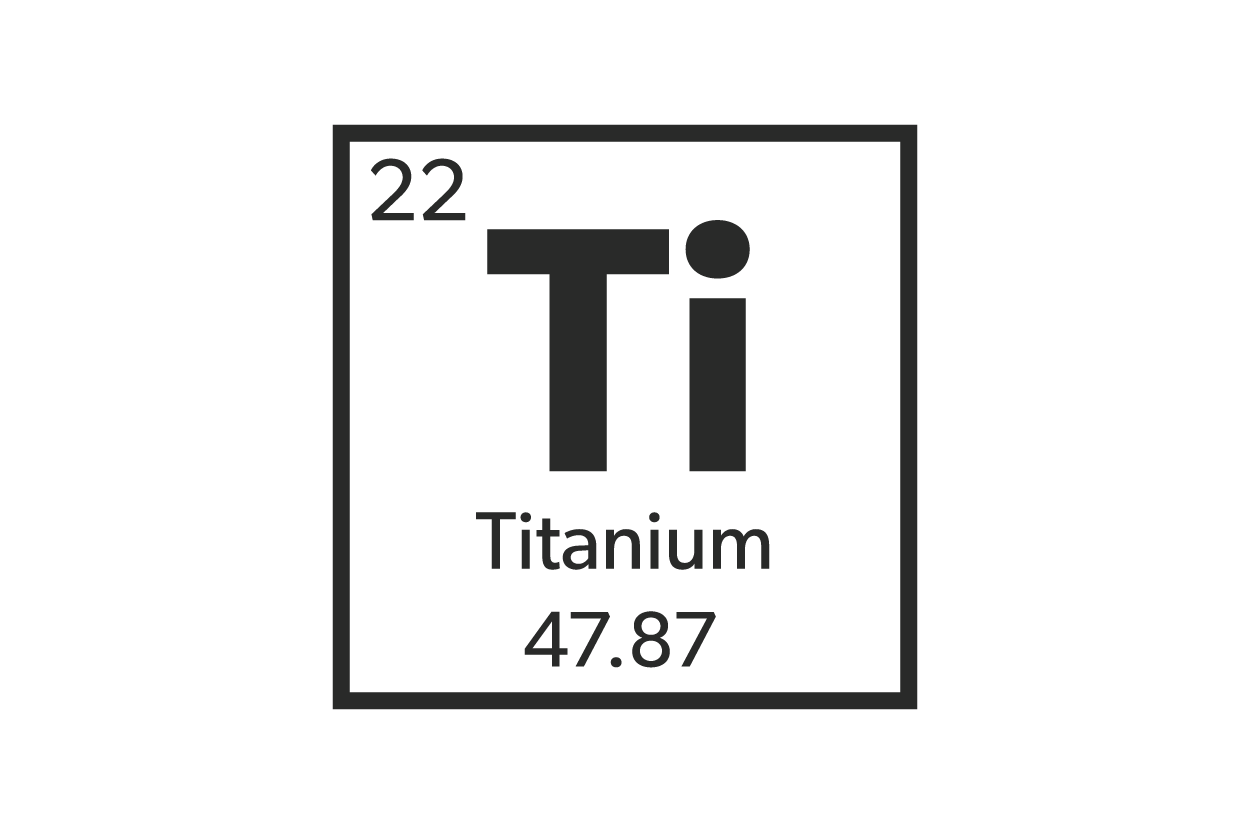
Titanium has the atomic number 22 and the chemical symbol Ti. It is a transition metal on the Periodic Table of Elements and the Earth’s ninth-most-abundant element. Transition metals can change their oxidation states because of their partially filled d orbitals, which allows them to form ions with different charges. They are known for forming colored compounds, having high melting points, and often serving as catalysts. Depending on the reaction, they can quickly gain or lose electrons.
Titanium is a shiny metal that appears silvery and can range in color from gray to white. It is never in its pure form in nature due to its reaction with oxygen. It comes from minerals found in igneous rocks, sedimentary deposits, beach sands, and metamorphic rocks. While it is not the most expensive metal for manufacturing, it does cost more than aluminum and steel. Its strength, low thermal conductivity, and chemical reactivity make it challenging to fabricate and machine.
Properties of Titanium
Its unique properties ensure it performs well, making titanium a valuable material in manufacturing and engineering. The following table is according to AZO Materials.
| Property | Minumum Value (S.I.) | Maximum Value (S.I.) | Minimum Value (Imp.) | Maximum Value (Imp.) |
|---|---|---|---|---|
|
Atomic Volume (Average) |
0.01 m3/kmol |
0.011 m3/kmol |
610.237 in3/kmol |
671.261 in3/kmol |
|
Density |
4.505 Mg/m3 |
4.515 Mg/m3 |
281.238 lb/ft3 |
281.862 lb/ft3 |
|
Energy Content |
750 MJ/kg |
1250 MJ/kg |
81254 kcal/lb |
135423 kcal/lb |
|
Bulk Modulus |
111 GPa |
135 GPa |
16.0992 106 psi |
19.5801 106 psi |
|
Compressive Strength |
130 MPa |
170 MPa |
18.8549 ksi |
24.6564 ksi |
|
Ductility |
0.25 |
0.4 |
0.25 |
0.4 |
|
Elastic Limit |
172 MPa |
240 MPa |
24.9465 ksi |
34.8091 ksi |
|
Endurance Limit |
176 MPa |
223 MPa |
25.5266 ksi |
32.3434 ksi |
|
Fracture Toughness |
55 MPa.m1/2 |
60 MPa.m1/2 |
50.0526 ksi.in1/2 |
54.6028 ksi.in1/2 |
|
Hardness |
1150 MPa |
1250 MPa |
166.793 ksi |
181.297 ksi |
|
Loss Coefficient |
0.002 |
0.003 |
0.002 |
0.003 |
|
Modulus of Rupture |
130 MPa |
170 MPa |
18.8549 ksi |
24.6564 ksi |
|
Poisson’s Ratio |
0.35 |
0.37 |
0.35 |
0.37 |
|
Shear Modulus |
36 GPa |
39 GPa |
5.22136 106 psi |
5.65647 106 psi |
|
Tensile Strength |
240 MPa |
360 MPa |
34.8091 ksi |
52.2136 ksi |
|
Young’s Modulus |
100 GPa |
150 MPa |
14.5038 106 psi |
15.229 106 psi |
|
Latent Heat of Fusion |
360 kJ/kg |
370 kJ/kg |
154.771 BTU/lb |
159.071 BTU/lb |
|
Maximum Service Temperature |
570 K |
600 K |
566.33 °F |
620.33 °F |
|
Melting Point |
1940 K |
1944 K |
3032.33 °F |
3039.53 °F |
|
Minimum Service Temperature |
0 K |
|
-459.67 °F |
|
|
Specific Heat |
539 J/kg.K |
541 J/kg.K |
0.41711 BTU/lb.F |
0.418657 BTU/lb.F |
|
Thermal Conductivity |
16.3 W/m.K |
18 W/m.K |
30.5141 BTU.ft/h.ft2.F |
33.6966 BTU.ft/h.ft2.F |
|
Thermal Expansion |
8.5 10-6/K |
9.3 10-6/K |
15.3 10-6/°F |
16.74 10-6/°F |
|
Resistivity |
55 10-8 ohm.m |
57.5 10-8 ohm.m |
55 10-8 ohm.m |
57.5 10-8 ohm.m |
Key Characteristics
- Lightweight & Strong: Titanium’s low density and high tensile strength yield an excellent strength-to-weight ratio. It out performs most metals.
- High Melting Point: At 1725 °C, Titanium can withstand extreme temperatures. Making titanium suitable for high-heat applications such as aerospace.
- Corrosion and Oxidation Resistant: Titanium maintains a self-healing oxide layer that protects it from harsh chemcials and saltwater.
- Biocompatibility: Titanium is inert and non-toxic making it ideal for medical devices such as implants.
- Fatigue Resistant: It performs well under repeated stress.
- Intermediate Elasticity: It has a great balance of flexibility and rigidity.
- Are you ready to make your manufacturing project a reality, or do you have questions?
What is the history of titanium, and how was it made?
The history of titanium dates back to the early 19th century. In 1791, English chemist William Gregor serendipitously discovered this element while studying the mineral ilmenite. Fast-forward to 1910, American chemist Matthew Hunter achieved a milestone in titaniums history by producing it in its pure form for the first time.
Today, we produce titanium using the Kroll process, a method developed by William Kroll in the 1930s.
The Kroll Process:
- Chlorination: Titanium dioxide, from ores such as ilmenite or rutile, are converted to titanium tetrachloride (TiCL4) using a combination of chlorine gas and carbon at high temperatures.
- Purification: TiCL4 is purified by fractional distillation.
- Reduction: Purified TiCL4 gets reduced with molten magnesium in an inert atmosphere. During this step a titanium sponge and magnesium chloride is produced.
- Separation: The titanium sponge is further purified by vacuum distillation.
- Recycling: The magnesium and chlorine are recovered and reused.
Note: The Kroll Process is energy-intensive, costly, and typically a batch operation. It does produce a high-purity titanium that is suitable for demanding applications. This explains part of the costliness of using this material.
There are additional methods such as electrochemcial and metallothermic processes that are also used. For example, FFC Cambridge, Armstrong, and HAMR. All of these processes are under research to reduce the costs and enable continuous production. None have come close to replacing the Kroll process at scale yet.
What types of titanium grades and alloys are popular?
Titanium is a strong, lightweight material used across many industries, including aerospace, defense, medical, and consumer products. It is popular because it is safe for the body, does not rust, and is very strong for its weight.
Commercially Pure (CP) Titanium
CP titanium is the purest form, containing only trace amounts of alloying elements. There are four grades (Grades 1-4) based on the levels of impurities and oxygen. People value CP titanium for its excellent corrosion resistance. Medical industry applications include medical implants, chemical processing equipment, and marine applications.
Titanium Alloys
Titanium alloys improve their properties by adding small quantities of other elements such as aluminum, vanadium, molybdenum, or chromium. Furthermore, some of the most widely used alloys include:
Ti-6Al-4V
This titanium alloy is widely used due to its balanced combination of strength, corrosion resistance, and formability, making it prevalent in aerospace, medical, and industrial applications.
Ti-6Al-2Sn-4Zr-2Mo
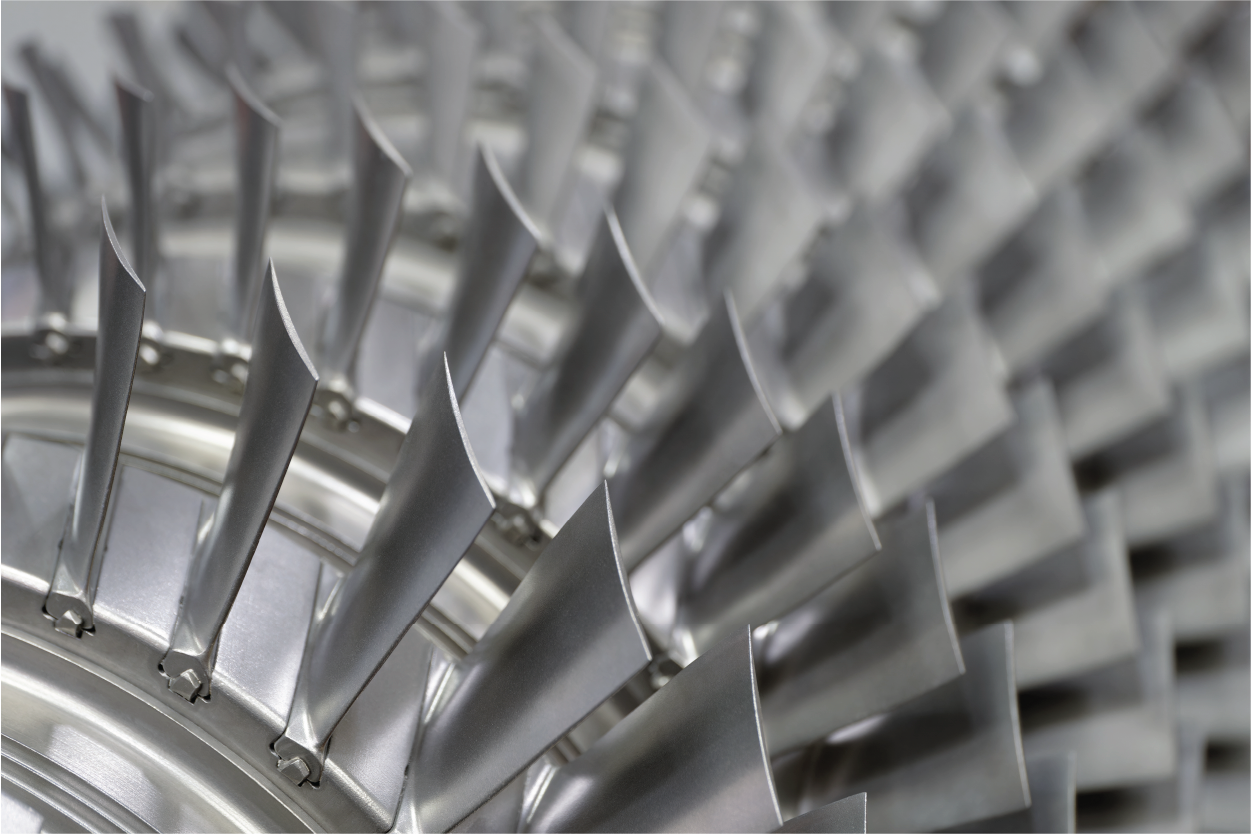
This alloy is known for its high strength and creep resistance, making it suitable for jet engine components and other high-temperature applications.
Ti-3Al-2.5V
This alloy is known for its excellent ductility and is often used to produce seamless tubing, hydraulic and fuel lines, and other applications where formability is crucial.
Ti-5Al-2.5Sn
It is known for its high strength, excellent creep resistance, and superb weldability, making it a popular choice for aircraft engine components, rocket motors, and other aerospace applications.
| Grade | Type | Composition | Strength | Applications |
|---|---|---|---|---|
|
Grade 1 |
Alpha |
>99.5% Ti |
~240 MPa |
Chemical, Marine, and Medical |
|
Grade 2 |
Alpha |
~99.2% Ti |
~345 MPa |
Medical, Industrial, and Aerospace |
|
Grade 5 |
Alpha-Beta |
6% Al, 4% V |
~895 MPa |
Aerospace, Automotive, and Medical |
|
Grade 9 |
Alpha-Beta |
3% Al, 2.5% V |
~620 MPa |
Aircraft Tubing and Sports Equipment |
|
Grade 23 |
Alpha-Beta |
6% Al, 4% V (ELI) |
~860 MPa |
Medical Implants and Surgical Tools |
Which industries use titanium, and what are some of its applications?
Titanium is an essential metal used across many industries worldwide. It is strong, lightweight, and rust-resistant. Because of these qualities, this metal has many uses and has changed several fields. This section will examine the industries that use this versatile metal and its different applications.
Aerospace Industry
The aerospace industry uses titanium because it is strong and lightweight. Engineers use it for parts in planes and spacecraft, such as airframes, engines, pylons, and landing gear. Titanium can withstand extreme temperatures and resist corrosion, making it essential for aerospace applications.
Automotive and Transportation
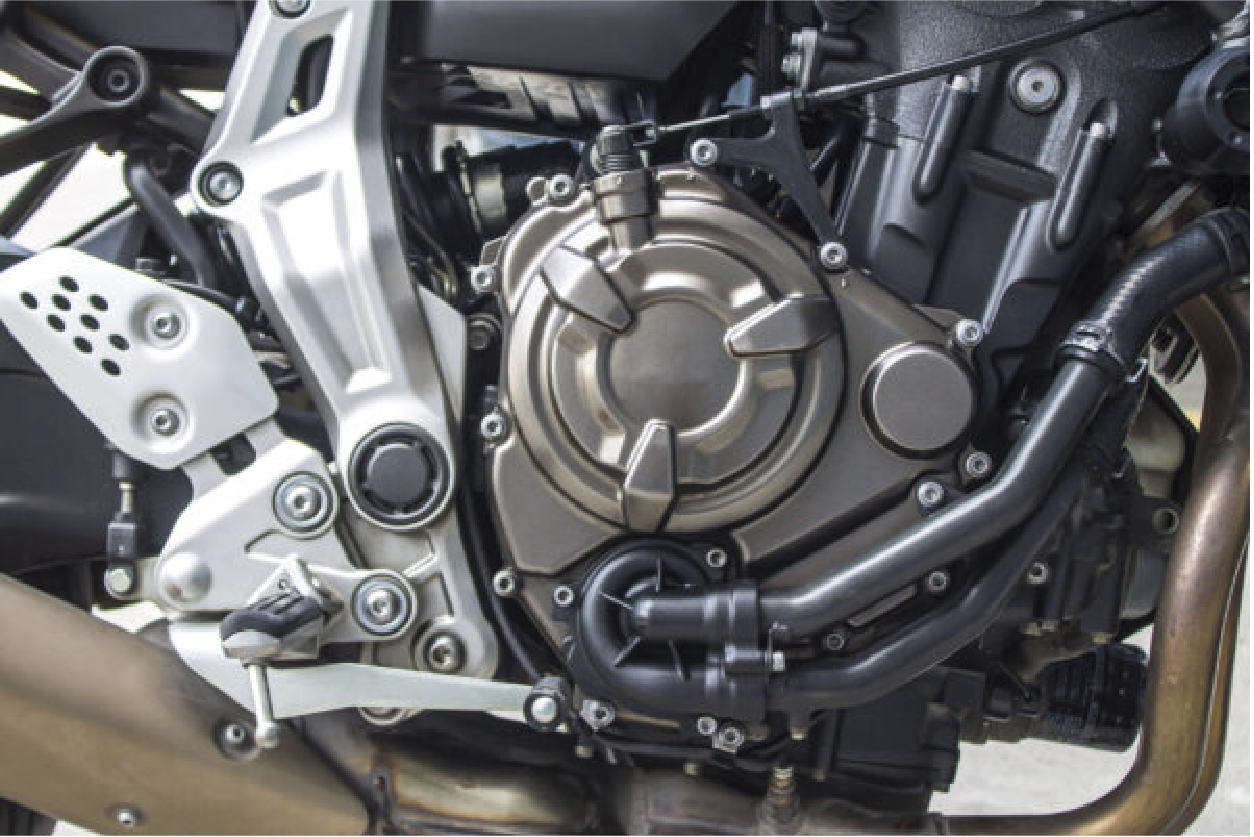
The automotive and transportation sectors use it for their properties. Applications such as suspension systems, exhaust components, and high-performance sports car components use this metal. Its strength and light weight help improve fuel efficiency and vehicle performance.
Consumer Goods and Lifestyle
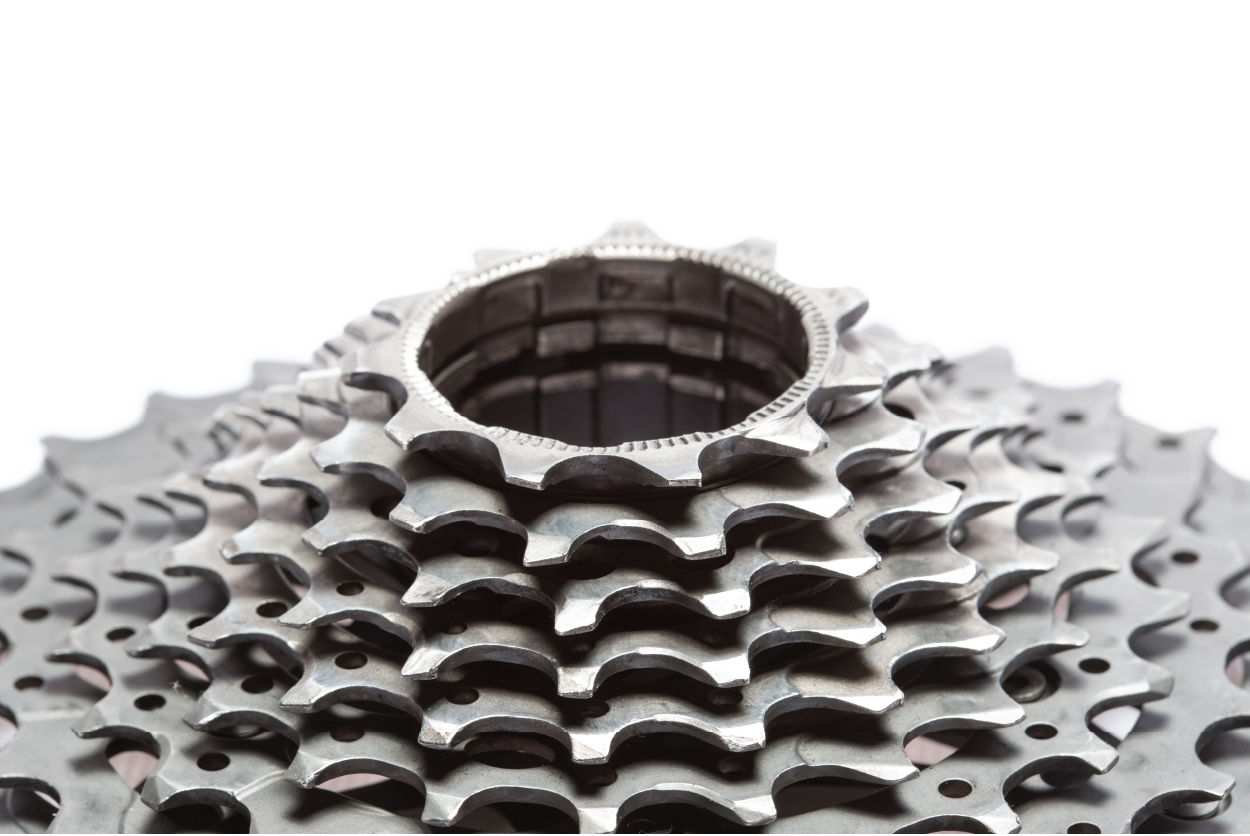
Titanium is also popular in consumer products. Its strength, lightweight, and hypoallergenic properties make it ideal for high-end watches, jewelry, sporting equipment, and outdoor gear.
Industrial and Chemical Processing
Titanium is valuable in industrial and chemical processing. Its resistance to corrosion makes it suitable for equipment and piping in industries such as power generation and desalination, and its strength allows it to withstand harsh conditions in these settings.
Medical and Dental Applications
Titanium is a top choice in medicine and dentistry because it is biocompatible and does not rust. Doctors use it for dental implants, hip replacements, knee replacements, and orthodontic devices. Its ability to bond with the body makes it a preferred material for these uses.
| Industry | Key Applications |
|---|---|
|
Aerospace |
Airframes, jet engines, landing gear, fasteners, and hydraulic tubing. |
|
Automotive |
Engine parts, exhaust systems, and suspension components (Especially in high-performance vehicles). |
|
Consumer Goods |
Bicycles, golf clubs, jewelry, and electronics. |
|
Industrial and Chemical |
Reactors, heat exchangers, piping, and pollution control equipment. |
|
Medical |
Orthopedic and dental implants, surgical instruments, and cardiovascular devices. |
In summary, titanium is a versatile metal found in many industries. Its unique properties and wide-ranging applications are key in modern manufacturing and engineering.
What are the benefits of using this material?
- Strength-to-Weight Ratio: Outperforms steel and aluminum in weight sensitive applications.
- Corrosion Resistance: Superiour to most metals, especially in marine and chemical situations.
- Biocompatibility: Ideal for both medical devices and implants.
- Fatigue and Fracture Toughness: Reliable under cyclical loading.
- Lifecycle Cost Savings: Titanium’s durability and low maintenance can offset high initial costs in critical situations.
What are the limitations of using this material?
- High Material and Processing Costs: It is about 10X more expensive than aluminum and several times more expensive than steel. These costs are due to the energy-intensive extraction and complex processing titanum needs.
- Machining Challenges: It is difficult to machine and can cause rapid tool wear. Prototek has the skilled team and tools to get projects done! Get a quote.
- Welding: A strictly monitored environment is necessary to prevent contamination.
- Are you ready to make your manufacturing project a reality, or do you have questions?
Why choose this material for your project?
Titanium is an excellent choice for your project because it is strong, lightweight, and corrosion-resistant. Prototek Digital Manufacturing uses titanium to make high-quality parts that meet strict requirements. It offers a strong yet lightweight design, along with precisely machined parts, custom castings, and advanced 3D-printed components. Our team of experts is ready to help you make the most of this impressive material for your next project.
FAQs
What is titanium?
It is a strong, lightweight, corrosion-resistant metal used across industries such as aerospace, medical, and consumer products.
What color is titanium?
This lustrous, silver-gray metal, with a high strength-to-weight ratio, is a popular choice across various industries.
Is titanium magnetic?
It is a non-magnetic metal that is not attracted to magnetic fields. This unique property makes titanium popular for a wide range of industrial and medical applications.
Does titanium rust?
This material is highly corrosion-resistant and does not rust. Its strong, durable, and lightweight properties make it a popular choice for a wide range of industrial and medical applications.
Does titanium react with oxygen?
It is a highly reactive metal that readily forms a protective oxide layer when exposed to oxygen, making it resistant to corrosion.
Is titanium on the periodic table?
It is indeed found on the periodic table and is classified as a transition metal with the atomic number 22. It is a strong, lightweight, and corrosion-resistant element.