Stereolithography vs. Digital Light Processing vs. Hybrid PhotoSynthesis
Additive manufacturing photopolymer technologies are leading a revolution, offering incredible capabilities. These cutting-edge technologies, including stereolithography, digital light processing, and hybrid photosynthesis, have unlocked new possibilities for creating innovative and intricate shapes previously impossible with traditional manufacturing methods. With exceptional accuracy, flexibility, and speed, these additive manufacturing photopolymer technologies are reshaping the manufacturing and design world. Whether it’s crafting detailed molds, functional prototypes, or highly intricate models, these technologies are redefining the boundaries of what’s achievable, making the impossible within reach. In conclusion, the unparalleled capabilities of additive manufacturing photopolymer technologies provide limitless opportunities for creativity, innovation, and efficiency in the manufacturing world.
Stereolithography
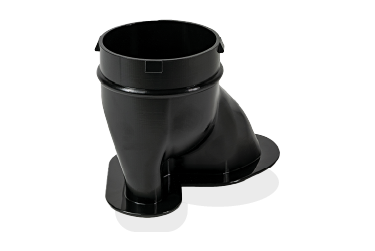
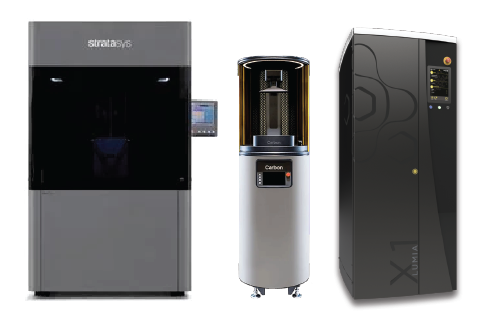
Stratasys’s and 3D System’s stereolithography is an impressive photopolymer-based additive manufacturing process that uses advanced technology to create detailed 3D objects. By selectively curing liquid resin with a laser, this innovative process brings your creative vision to life with precision and accuracy. Its capability to produce complex shapes and designs makes stereolithography the future of manufacturing. If you need a reliable and highly effective way to create high-quality 3D objects, stereolithography is the ultimate solution for all your additive manufacturing needs.
Digital Light Processing
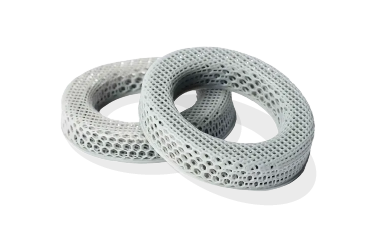
Photopolymer-based technology: Carbon’s digital light processing is an advanced additive manufacturing technique that uses light-sensitive resins to produce detailed, high-resolution parts. This process involves curing the resin layer by layer using a light projector, allowing for the creation of intricate shapes with exceptional accuracy and surface finish. Carbon offers 2-part resins that undergo a thermal post-bake to achieve production-grade materials. Prototek’s cutting-edge DLP capabilities provide unmatched precision and efficiency for industrial applications.
Hybrid PhotoSynthesis
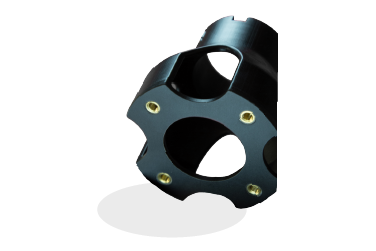
Axtra’s Hybrid PhotoSynthesis is an innovative technology that enables the creation of complex, high-precision parts with exceptional surface finishes by combining a laser (such as stereolithography) and a light projector (such as digital light processing), making it an ideal solution for diverse manufacturing applications.
Comparing these photopolymer based technologies.
Stereolithography, digital light processing, and hybrid photosynthesis are exceptional examples of photopolymer-based manufacturing technologies. These techniques have become the new frontiers of modern manufacturing, thanks to their ability to create complex designs with unprecedented accuracy and precision.
Stereolithography entails printing a 3D object layer by layer using an ultraviolet laser. Digital light processing uses a digital light projector to cure liquid resin, resulting in a highly detailed 3D object. Lastly, hybrid photosynthesis combines the strengths of these two technologies to streamline the process of producing high-quality prototype models.
These photopolymer-based manufacturing technologies have unlocked opportunities across various industries, including automotive, aerospace, medical, and dental. Their capacity to produce intricate designs has revolutionized manufacturing, empowering manufacturers to create products with speed, accuracy, and consistency.
In summary, the future of manufacturing rests in the capabilities of photopolymer-based manufacturing technologies such as stereolithography, digital light processing, and hybrid photosynthesis. As these technologies evolve, we can anticipate even more remarkable applications that could transform how we produce and create products.
Photopolymer Based Technologies in a Glance
Stereolithography
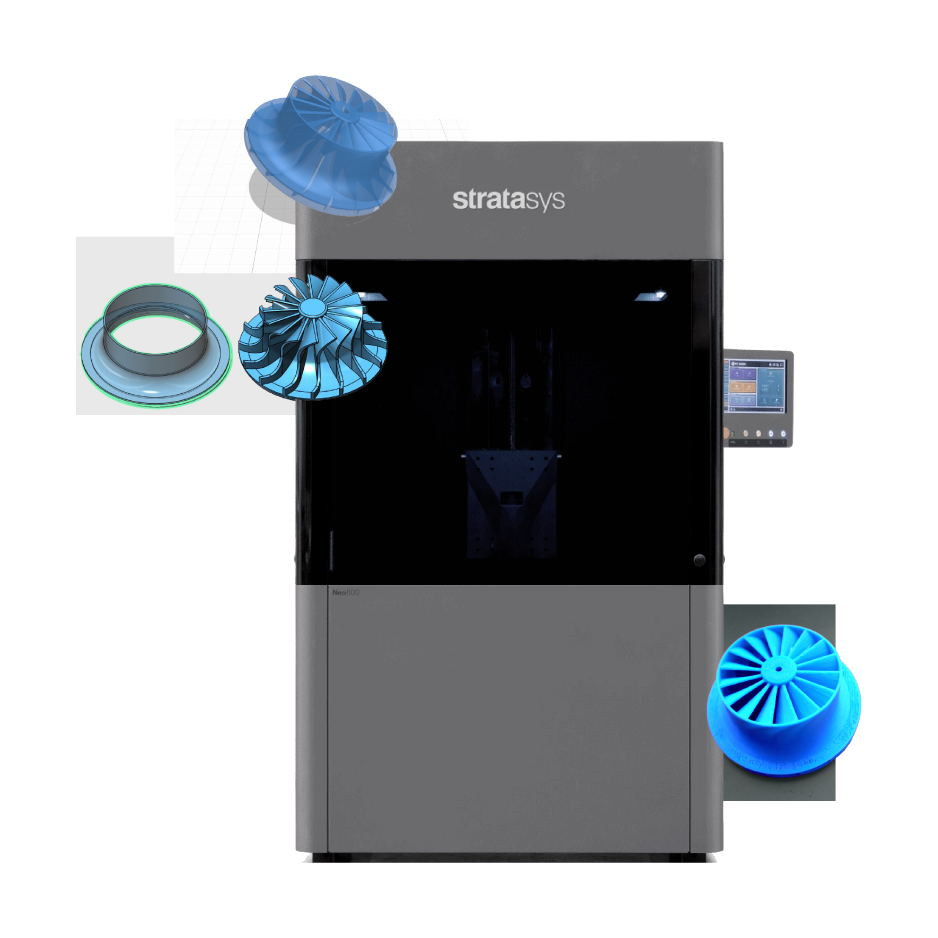
OEM: 3D Systems & Stratasys
Max Build Area: 31 x 31 x 23 in
Lead Time: 1 – 2 Days
Materials:
Accura®: 25, 60, ClearVue, ABS Black, AMX Black, AMX Tough FR V0 Black, SL 5530, Xtreme, Xtreme White 200
Somos®: BioClear, EvoLVe, PerFORM, ProtoTherm, Taurus, WaterClear Ultra 10122, WaterShed Black, WaterShed XC 11222
Tolerances: First inch ± 0.005 in and additional inches ± 0.0015 in/in
Layer Thickness: Normal resolution 0.004 in and minimum feature size 0.012 in. High-resolution 0.002 in and minimum feature 0.006 in (feature size depends on geometry).
Digital Light Processing
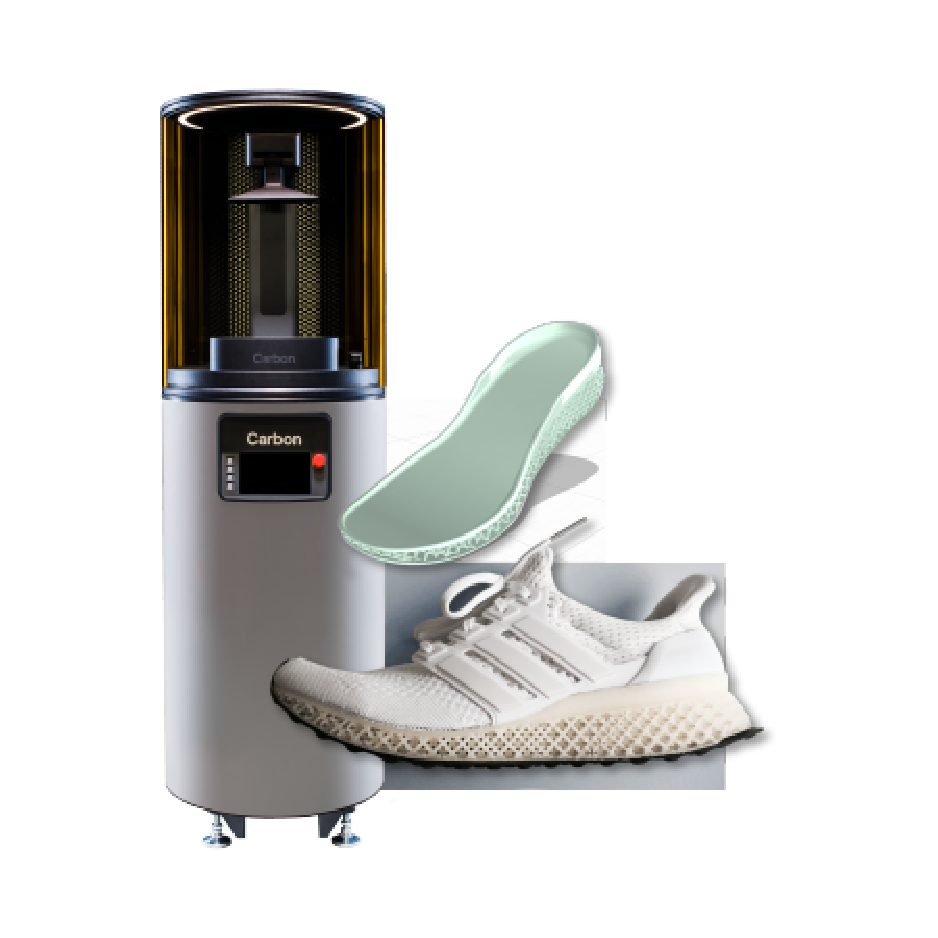
OEM: Carbon
Max Build Area: 7.4 x 4.6 x 12.8 in
Lead Time: 1 – 2 Days
Materials: EPU 40 & 41, EPX 82 & 86FR, FPU 50, LOCTITE® 3D IND405 Clear, MPU 100, RPU 70 & 130, SIL 30, UMA 90
Tolerances: UMA 90 first inch ± 0.005 in additional inches ± 0.002 in/in. Two-part engineering materials depend on the geometries.
Layer Thickness: Standard resolution 0.004 in, fine resolution 0.002 in, and ultra-fine resolution 0.001 in.
Hybrid PhotoSynthesis

OEM: Axtra3D
Max Build Area: 9.5 x 5.25 x 19.25 in
Lead Times: 3 – 5 Days
Materials: LOCTITE® 3D 3843 and Ultracur3D 3280
Tolerances: First inch ± 0.005 in and additional inches ± 0.0015 in/in.
Layer Thickness: Standard resolution 0.004 in and fine resolution 0.002 in.
Stereolithography
Digital Light Processing
Hybrid PhotoSynthesis
OEM
3D Systems & Stratasys
Carbon
Axtra3D
Max Build Area
31 x 31 x 23 in
7.4 x 4.6 x 12.8 in
9.5 x 5.25 x 19.25 in
Lead Time
1 – 3 Days
(Depending on materials.)
3 – 5 Days
Materials
Tolerances
Add. inches ± 0.0015 in/in
Add. inches ± 0.002 in/in
Two-part engineering materials depend on the geometries.
Add. inches ± 0.0015 in/in
Layer Thickness
Minimum Feature Size: 0.012 in.
High-Resolution 0.002 in
Minimum Feature: 0.006 in (feature size depends on geometry).
Standard Resolution: 0.004 in
Fine Resolution: 0.002 in
Ultra Fine Resolution: 0.001 in
Fine Resolution: 0.002 in
Design Recommendations
Stereolithography and Hybrid PhotoSynthesis
| Feature | Measurement | |
|---|---|---|
|
|
Connecting & Moving Parts |
0.03 in |
|
|
Escape Holes |
0.04 in |
|
|
Embossing & Engraving |
Width: 0.016 in |
|
|
Holes & Openings |
0.02 in |
|
|
Horizontal Spans |
0.08 in |
|
|
Minimum Features |
0.008 in |
|
|
Pin Diameter |
0.03 in |
|
|
Supports & Overhangs |
Base Supports Otherwise 45° |
|
|
Walls (Supported) |
0.02 in |
|
|
Walls (Unsupported) |
0.04 in |
| Feature | Measurement | |
|---|---|---|
|
|
Connecting & Moving Parts |
0.7 mm |
|
|
Escape Holes |
1 mm |
|
|
Embossing & Engraving |
Width: 0.4 mm |
|
|
Holes & Openings |
0.5 mm |
|
|
Horizontal Spans |
2 mm |
|
|
Minimum Features |
0.2 mm |
|
|
Pin Diameter |
0.7 mm |
|
|
Supports & Overhangs |
Base Support Otherwise 45° |
|
|
Walls (Supported) |
0.5 mm |
|
|
Walls (Unsupported) |
1 mm |
Digital Light Processing
| Feature | Measurement | |
|---|---|---|
|
|
Connecting & Moving Parts |
Rigid: 0.01 in |
|
|
Escape Holes |
Rigid: 0.04 in Flexible: 0.04 in |
|
|
Embossing & Engraving |
Rigid: W: 0.008 in H/D: 0.004 in Flexible: W: 0.035 in H/D: 0.02 in |
|
|
Holes & Openings |
Rigid: 0.008 in |
|
|
Horizontal Spans |
Rigid: 0.12 in Flexible: 0.04 in |
|
|
Minimum Features |
Rigid: 0.004 in Flexible: 0.04 in |
|
|
Pin Diameter |
Rigid: 0.004 in Flexible: 0.04 in |
|
|
Supports & Overhangs |
Rigid: 25° Flexible: 45° |
|
|
Walls (Supported) |
Rigid: 0.008 in Flexible: 0.04 in |
|
|
Walls (Unsupported) |
Rigid: 0.012 in Flexible: 0.098 in |
| Feature | Measurement | |
|---|---|---|
|
|
Connecting & Moving Parts |
Rigid: 0.25 mm |
|
|
Escape Holes |
Rigid: 1 mm |
|
|
Embossing & Engraving |
Rigid: W: 0.2 mm H/D: 0.1 mm Flexible: W: 0.9 mm H/D: 0.5 mm |
|
|
Holes & Openings |
Rigid: 0.2 mm Flexible: 0.9 mm |
|
|
Horizontal Spans |
Rigid: 3.05 mm Flexible: 1 mm |
|
|
Minimum Features |
Rigid: 0.1 mm |
|
|
Pin Diameter |
Rigid: 0.1 mm |
|
|
Supports & Overhangs |
Rigid: 25°
Flexible: 45° |
|
|
Walls (Supported) |
Rigid: 0.35 mm Flexible: 2.5 mm |
|
|
Walls (Unsupported) |
Rigid: 0.2 mm Flexible: 1 mm |
Finishing and Post-Processing
Stereolithography and Hybrid PhotoSynthesis
| Level | Process |
|---|---|
|
Unfinished |
Straight off the machine no extra finishing or post-processing. |
|
Natural |
Support faces are sanded, and layer lines are visible. |
|
Standard |
Support faces are sanded, and the entire part is bead-blasted for a matte/opaque finish with some layer lines visible (black will appear grey). |
|
Improved Exterior |
Exterior (cosmetic) surfaces are sanded, and the entire part is bead-blasted for a smooth matte finish. |
|
Improved All |
All accessible surfaces are sanded, and the entire part is bead-blasted for a smooth matte finish. |
|
Clear |
Natural finish with clear coat. The layer lines are still visible. |
|
Improved Clear |
All accessible surfaces are sanded smooth with a clear coat for optimal clarity on transparent materials. |
|
Primed Exterior |
Exterior (cosmetic) surfaces are sanded, bead-blasted, and primed grey. |
|
Primed All |
All accessible surfaces are sanded, bead-blasted, and primed grey. |
|
Painted |
All accessible surfaces are sanded, bead-blasted, primed, and painted (provide a drawing with your paint specifications). |
|
Custom |
Custom finish. Let us know if your project requires special finishing. Please fill out our engineer-assisted quote form. |
Digital Light Processing
| Level | Process |
|---|---|
|
Unfinished |
Straight off the machine no extra finishing or post-processing. |
|
Natural |
Support faces are sanded, and layer lines are visible. |
|
Standard |
Support faces are sanded, and the entire part is bead-blasted for a matte/opaque finish with some layer lines visible (black will appear grey). |
|
Improved Exterior |
Exterior (cosmetic) surfaces are sanded, and the entire part is bead-blasted for a smooth matte finish. |
|
Improved All |
All accessible surfaces are sanded, and the entire part is bead-blasted for a smooth matte finish. |
|
Clear |
Natural finish with clear coat. The layer lines are still visible. |
|
Improved Clear |
All accessible surfaces are sanded smooth with a clear coat for optimal clarity on transparent materials. |
|
Primed Exterior |
Exterior (cosmetic) surfaces are sanded, bead-blasted, and primed grey. |
|
Primed All
|
All accessible surfaces are sanded, bead-blasted, and primed grey. |
|
Painted |
All accessible surfaces are sanded, bead-blasted, primed, and painted (provide a drawing with your paint specifications). |
|
Custom |
Custom finish. Let us know if your project requires special finishing. Please fill out our engineer-assisted quote form. |