Aerodynamics is a critical aspect of designing any object that moves through the atmosphere—whether it’s an airplane, automobile, drone, or even a sports ball. Especially integral in aerospace engineering, aerodynamics can affect aircraft performance, efficiency, safety, and acoustics.
In this post, we’ll focus on aircraft and discuss the basics of aerodynamics and its role in design, and examine how it affects manufacturing considerations.
Key Roles of Aerodynamics in Design
Terms
- Lift: The upward force that counters gravity. Generated by the angle and shape of the wings, lift is the way air flows over and around them.
- Thrust: Is the forward force that propels the aircraft through the air, and propellers and engines generate it.
- Drag: The force that fights an object’s motion. It is the friction between the object’s molecules, like those of an airplane, and the air as they slide over one another. The more streamlined the object, the less drag it creates. It increases with the square of the speed.
- Speed: Often referred to as airspeed or Mach number, the speed is relative to the air and can be significantly affected by lift and drag. The Mach number references the ratio of the speed of an entity to the speed of sound. For example, subsonic (<1), transonic (0.8−1.20.8), supersonic (>1), and hypersonic (>5). The power required increases with the cube of the speed.
- Maneuverability: Refers to the ability of the aircraft to quickly and easily change its velocity, allowing it to execute a variety of turns, climbs, and other changes in attitude. It measures an aircraft’s agility, influenced by its weight, size, controls, and power.
- Stability: Is an aircraft’s ability to return to its original flight path after being disturbed by forces like turbulence or pilot inputs.
Why reduce drag?
- Fuel Efficiency: The lower the drag, the better the fuel efficiency. When an engine requires less effort, it conserves fuel and reduces emissions, leading to cost savings and a smaller carbon footprint.
- Range: Minimizing drag increases range, allowing the airplane to travel farther without refueling.
How to increase the stability and control?
- Predicatable Handling: Features such as stabilizers and control surfaces —such as rudders, ailerons, and elevators — are engineered for predictable handling. Stability leads to safety under a range of conditions, from turbulent weather to sudden maneuvers.
- Safety: Well-executed aerodynamic design prevents stalls, spins, and flutter, enhancing flight safety.
- Stall: A sudden loss of lift when the angle between the wing and the oncoming air exceeds a critical value.
- Spin: Occurs when an aircraft stalls and has uncontrollable rotation.
- Flutters: Aeroelastic instability.
How does aerodynamics affect noise?
Noise Reduction: The aircraft’s shape helps reduce noise. For example, smooth nacelles and winglets can minimize noise for both passengers and communities surrounding airports.
Materials for Aerodynamic Performance
Composites
- Carbon Fiber Reinforced Polymers (CFRP): With an exceptional strength-to-weight ratio, CFRPs are lightweight and can be molded into aerodynamically optimized shapes. The tensile strength can reduce surface irregularities that can increase aerodynamic drag. The flexibility can enable the creation of dynamic curves and features that improve airflow management compared to traditional metal components.
- Glass Fiber Composites: Offer good tensile strength and a balance of performance and cost-effectiveness. They’re suitable for a variety of applications that require preservation of their properties in harsh environments, thanks to their moisture and chemical resistance.
Advanced Metals
- Aluminum Alloys: A time-tested material in aerospace, aluminum has a high strength-to-weight ratio and is easy to fabricate. Alloys such as 6061 and 7075 are valued for their mechanical properties, including corrosion resistance and durability, in airframe structures.
- Titanium: Also has a high strength-to-weight ratio and corrosion and fatigue resistance. Titanium has a lower density than steel, making it ideal for aerodynamic components. High-temperature applications, such as jet engine parts, use titanium.
- Superalloys: Specifically designed to withstand extreme temperatures and stresses, these materials are outstanding for turbine and jet engine components. They are high-performance materials that have proven themselves under the harshest conditions.
Adaptive and Morphing Materials
Active Materials: Innovative materials, such as shape-memory alloys (SMAs) and electroactive polymers (EAPs), can change shape in response to external stimuli. These stimuli can include electrical signals or temperature variations, enabling adaptive aerodynamic components and optimizing maneuverability, efficiency, and system responsiveness.
Why do these materials matter?
- Lightweighting: Crucial for improving fuel efficiency, which extends operational range and minimizes emissions. Strength, along with lightweight, is essential to maintaining safety and performance standards.
- Smooth Surfaces: Aerodynamics works well when there are no hitches or hang-ups with component surface quality. High precision reduces friction drag; finishing and post-processing techniques, like coatings, can help create and enhance smoothness, minimizing turbulence.
- Corrosion Resistance: Materials that withstand moisture, salt, and other corrosive substances increase the lifespan of the components.
Traditional Vs. Advanced Manufacturing Processes in Aerospace
Traditional Processes
- CNC Machining: High precision, suitable for complex geometries, but can be wasteful and costly for low volumes.
- Casting: Good for complex shapes and mass production, but may require secondary machining to achieve a surface finish.
- Forming/Shaping (Stamping, Rolling, Forging): Efficient for large, thin-walled structures like panels and skins.
- Welding/Joining: For large structures, welding is a good choice, but joints may require additional finishing to achieve a smooth finish.
- Chemical Milling: Can thin panels and create smooth, lightweight structures.
Advanced Processes
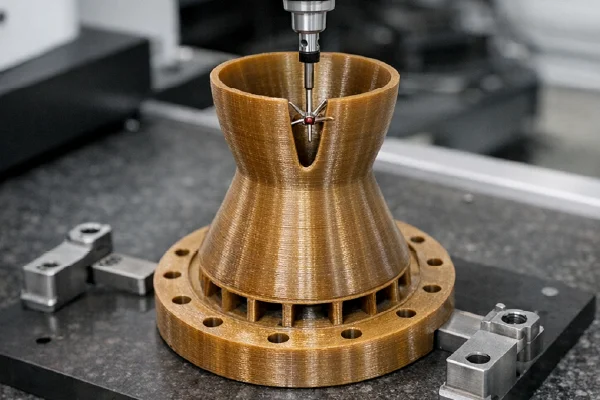
- 3D Printing (Additive Manufacturing): Unmatched design freedom, material efficiency, and rapid prototyping. Ideal for complex, lightweight, and integrated aerodynamic parts.
- Composite Layup: Superior strength-to-weight ratio, tailored properties, and corrosion resistance. Used for wings, fuselage panels, and high-performance sports equipment.
Hybrid Approaches:
Modern workflows often combine these techniques—e.g., 3D printing for prototyping, CNC machining for finishing, and composite layup for final production.
Surface Finishing: The Secret to Aerodynamic Gains
Surface finishing is often the final, but critical, step in manufacturing aerodynamic components:
- Polishing and Sanding: Achieve ultra-smooth surfaces that reduce drag.
- Electroplating and Anodizing: Enhance surface hardness, corrosion resistance, and smoothness.
- Biomimetic Textures: Shark skin-inspired riblets and other micro-patterns can reduce drag and even increase lift.
- Powder Coating and Passivation: Provides durable, smooth finishes that maintain aerodynamic properties over time.
Step-by-Step Guide: Choosing the Right Manufacturing Process
- Define Aerodynamic Goals: What are your performance targets? Examples can be drag reduction or weight savings.
- List Candidate Processes: Consider both traditional and advanced options.
- Evaluate Surface Finish and Tolerance Needs: How smooth and precise must your surfaces be?
- Assess Material Requirements: What materials best support your aerodynamic and structural needs?
- Estimate Costs and Benefits: Use a CBA framework to compare options.
- Prototype and Test: Use rapid prototyping (e.g., 3D printing) and simulation (e.g., CFD) to validate designs.
- Consider Production Volume: High-volume may favor forming/casting; low-volume or custom may favor additive/composite methods.
- Plan for Quality Control: Ensure your process can consistently deliver the required aerodynamic performance.
- Factor in Sustainability and Innovation: Consider the environmental impact and future-proofing your process.
- Make an Informed Decision: Select the process that best balances performance, cost, manufacturability, and sustainability.
- Still Have Questions? Ask one of our Solutions Managers!
FAQs
Define: Aerodynamics
The study of the behavior of air and its interaction with solid objects.
Can dimples make things more aerodynamic?
Yes, dimples can enhance aerodynamics. They create a turbulent boundary layer that reduces drag, allowing objects to move more efficiently through the air. This principle is utilized in the design of golf balls, aircraft, and other streamlined shapes to improve performance and fuel efficiency.
What are aerodynamic shapes?
Streamlined forms that reduce air resistance and improve efficiency.
How to improve aerodynamics in a design?
Streamline shapes, reduce drag, optimize airflow, and incorporate aerodynamic features to enhance performance and efficiency in your design.